

50g of butter is approximately 3.57 U.S. tablespoons. In a normal kitchen, measure that as 3 tablespoons plus about 1 3/4 teaspoons.
That answer assumes a standard U.S. tablespoon and ordinary stick butter. Land O’Lakes lists one tablespoon of butter as 14 grams and one full U.S. stick as 113 grams. NIST rounds a U.S. kitchen tablespoon to 15 milliliters, but butter conversion is best handled by weight rather than volume because grams measure mass while tablespoons measure volume.
50g butter conversion at a glance
| Measure | Equivalent for 50g butter |
|---|---|
| U.S. tablespoons | 3.57 tbsp |
| Practical spoon measure | 3 tbsp + 1 3/4 tsp |
| U.S. cups | About 0.22 cup |
| U.S. sticks | About 0.44 stick |
| Ounces by weight | About 1.76 oz |
| Milliliters by volume | Roughly 53 mL, depending on butter density and temperature |
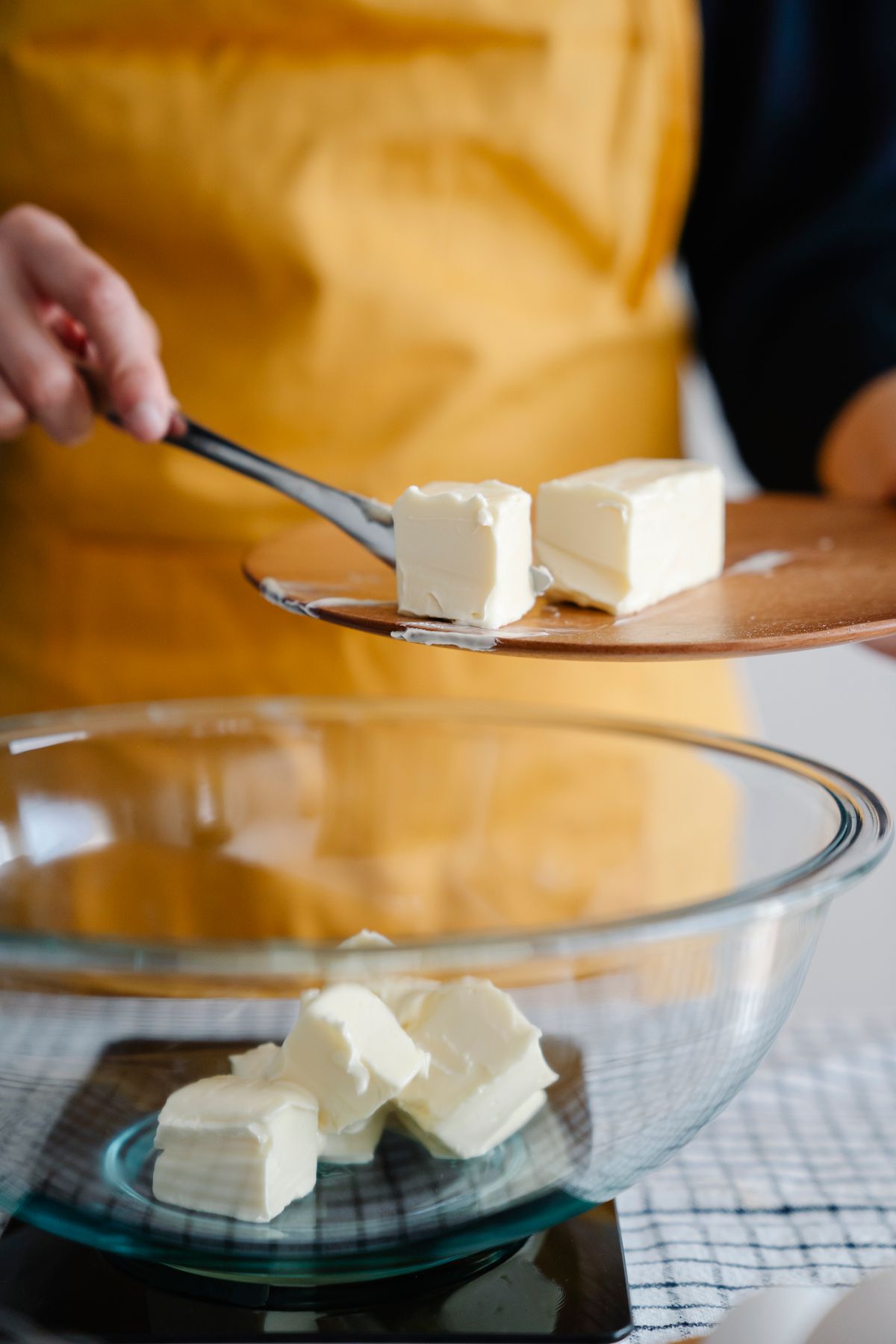
For baking, the scale remains the most accurate choice. For sautéing, sauces, or finishing vegetables, the spoon conversion is usually more than precise enough.
Why 50g is not exactly 3 1/2 tablespoons
A common kitchen shortcut treats one tablespoon of butter as 14 grams:
50 ÷ 14 = 3.57 tablespoons
Three and a half tablespoons would equal about 49 grams, which is close enough for most savory cooking. In a sensitive pastry formula, however, use the full 50 grams on a scale.
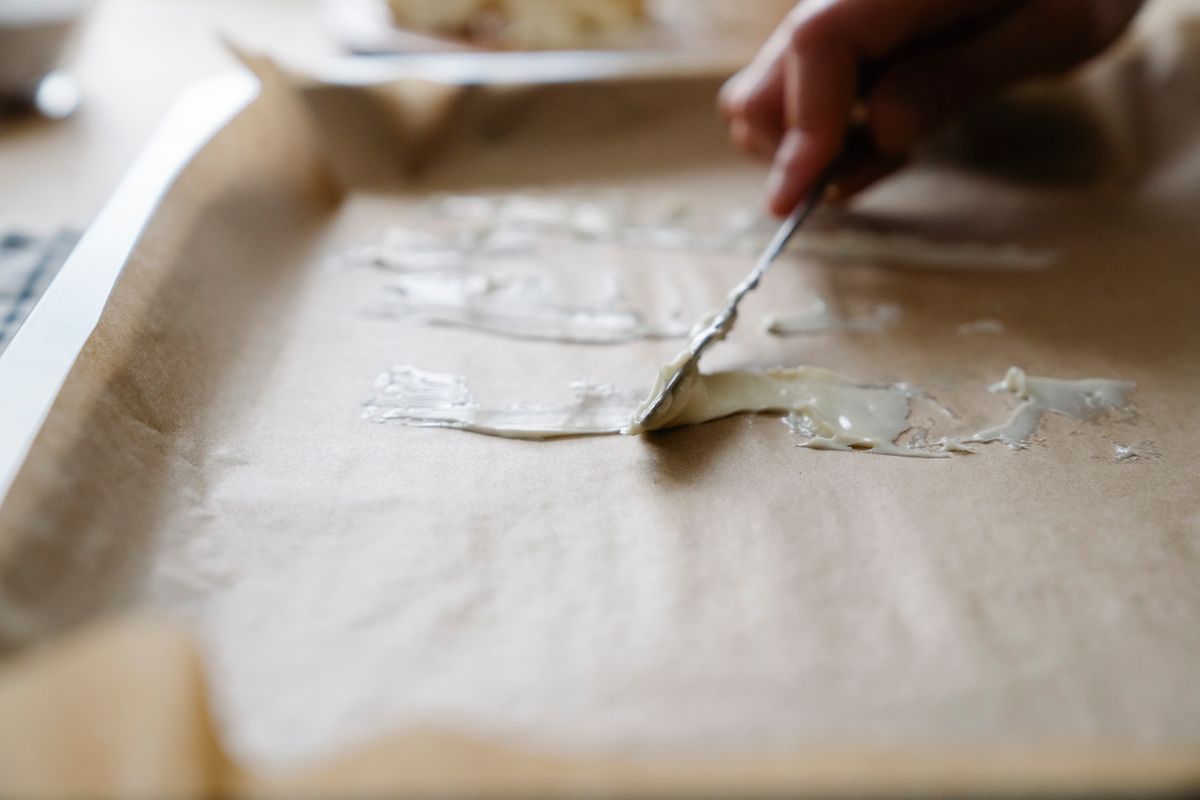
How to measure 50g from a U.S. butter stick
A standard U.S. stick weighs about 113 grams and is divided into eight tablespoon marks. Fifty grams is a little less than half a stick.
The simplest wrapper method is:
- Cut at the 3-tablespoon mark.
- Add another piece equal to roughly 1 3/4 teaspoons.
When the wrapper only has quarter-cup markings, cut slightly less than the 1/4-cup line. A quarter cup is 4 tablespoons or about 57 grams of butter.
Quick butter conversion chart
| Butter weight | Tablespoons | Common U.S. measure |
|---|---|---|
| 14g | 1 tbsp | 1/8 stick |
| 28g | 2 tbsp | 1/4 stick |
| 42g | 3 tbsp | 3/8 stick |
| 50g | 3.57 tbsp | Just under 1/2 stick |
| 57g | 4 tbsp | 1/4 cup / 1/2 stick |
| 85g | 6 tbsp | 3/8 cup |
| 113g | 8 tbsp | 1/2 cup / 1 stick |
| 227g | 16 tbsp | 1 cup / 2 sticks |
| 454g | 32 tbsp | 2 cups / 4 sticks / 1 pound |
Salted and unsalted butter weigh the same for conversion purposes
The salt content changes flavor, not the practical gram-to-tablespoon conversion. A tablespoon of salted butter and a tablespoon of unsalted butter are both generally treated as about 14 grams on U.S. packaging.
The more important substitution issue is recipe seasoning. When replacing unsalted butter with salted butter, reduce added salt slightly and adjust after tasting when possible.
Melted butter versus solid butter
Fifty grams remains 50 grams whether the butter is cold, softened, browned, or melted. Weight does not change when the shape changes.
Volume is less reliable. Soft butter can trap air, and melted butter settles into the spoon differently. If a recipe gives grams, weigh the butter before or after melting. If it gives tablespoons, follow the recipe’s state—“melted,” “softened,” or “cold”—because texture may matter even when the quantity is similar.
Can you convert other ingredients with the same formula?
No. A tablespoon is a volume measure, and ingredients have different densities. Fourteen grams of butter is about one tablespoon, but 14 grams of flour, honey, cocoa powder, and salt each occupies a different volume.
Use ingredient-specific conversions rather than a universal “grams to tablespoons” calculator.
Frequently asked questions
Is 50g butter equal to 4 tablespoons?
Not quite. Four tablespoons is about 57 grams. In a forgiving savory recipe, the difference may be acceptable. In baking, use 3.57 tablespoons or a scale.
Is 50g butter half a cup?
No. Half a cup of butter is about 113 grams. Fifty grams is a little under a quarter cup.
Is 50g butter half a stick?
Almost. Half a U.S. stick is about 56.5 grams. Fifty grams is roughly 44% of a full stick.
What is the easiest no-scale measurement?
Use 3 tablespoons plus 1 3/4 teaspoons. For a pan sauce or sauté, a slightly rounded 3 1/2 tablespoons is close enough.
