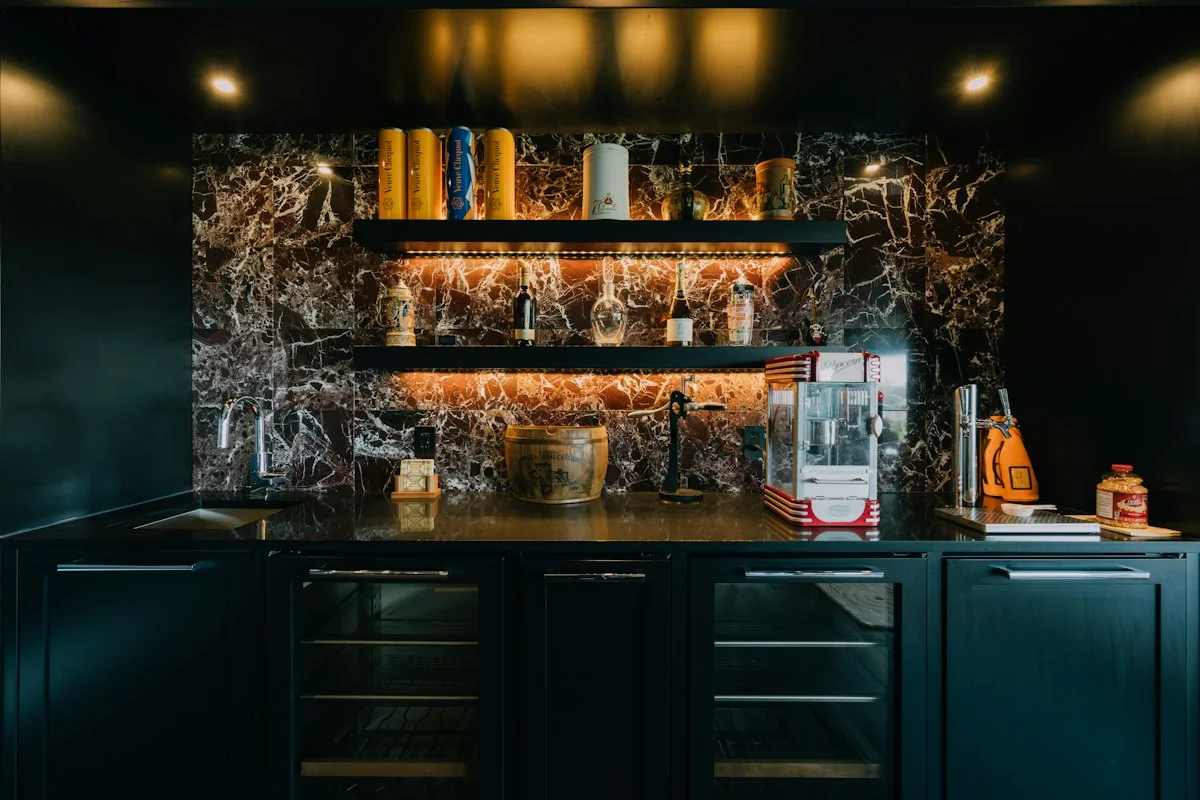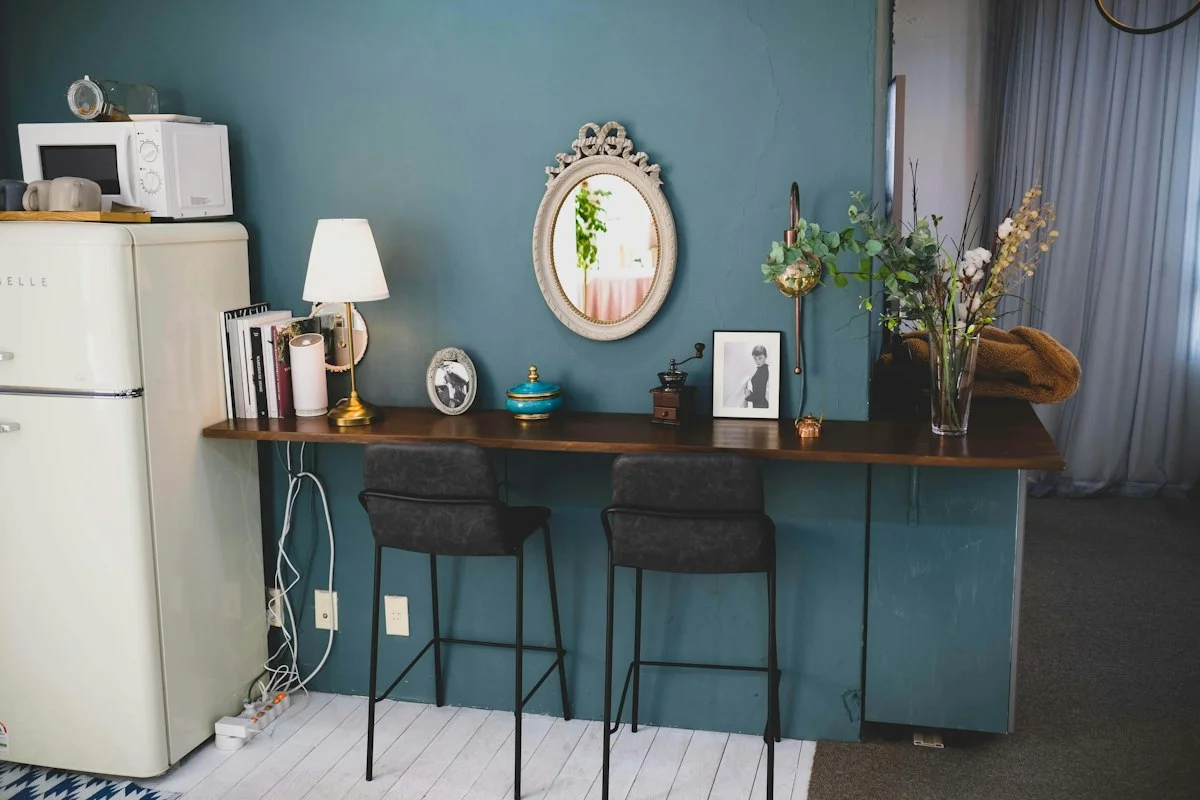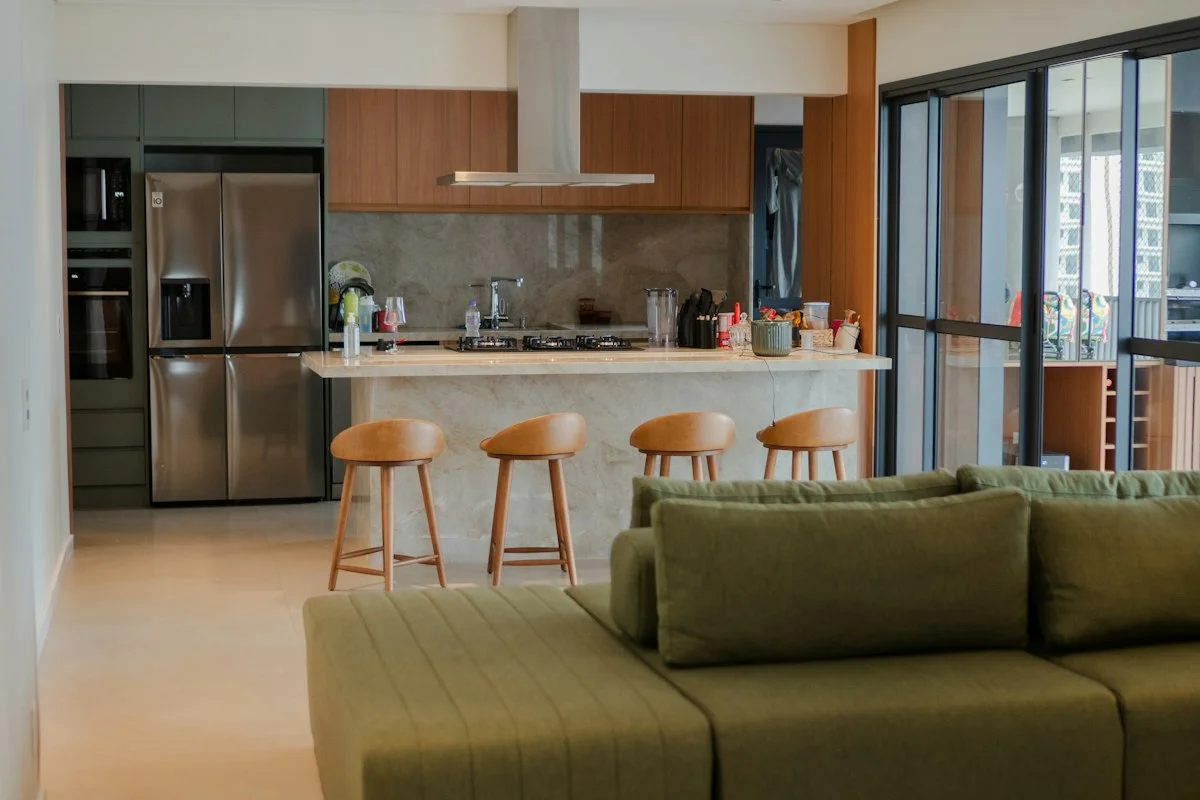
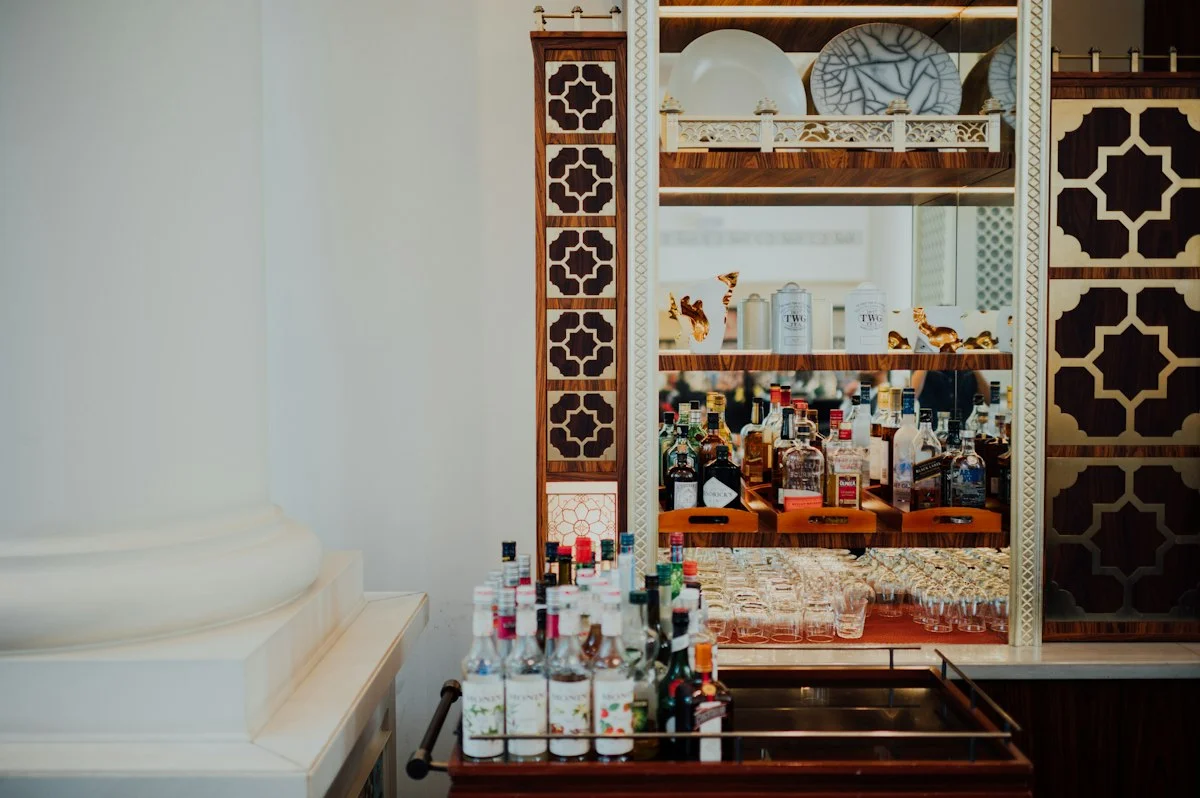
Most enclosed home bar cabinets do not need special vents or a fan. Bottles of spirits, unopened liqueurs, dry glassware, bar tools, and shelf-stable mixers are generally fine in a closed cabinet as long as the space stays dry, reasonably cool, and out of direct sun.
Bar cabinet ventilation becomes important when the cabinet holds an appliance that produces heat or removes heat—especially a wine fridge, beverage refrigerator, or countertop ice maker—or when moisture is regularly trapped inside. In those cases, the goal is not to ventilate the bottles. It is to give the appliance a way to release heat and prevent the cabinet from becoming damp.
What needs airflow—and what usually does not
A useful rule is to separate ordinary bar storage from equipment storage.
| What is in the cabinet? | Does it need dedicated ventilation? | What matters most |
|---|---|---|
| Spirits and unopened liqueurs | Usually no | A stable location away from heat and sun |
| Dry glassware and bar tools | Usually no | Clean, dry shelves and enough space to prevent breakage |
| Wine stored at room temperature | Usually no | Consistent conditions and protection from heat and light |
| Opened wine | Not cabinet ventilation, but appropriate preservation | Refrigeration or a preservation method, depending on the wine and how soon it will be served |
| Wine fridge or beverage refrigerator | Yes, according to the manufacturer | Required clearance or a front-venting built-in design |
| Countertop ice maker | Yes | Open-air placement and the maker’s specified clearance |
| Decorative lighting | Sometimes | Low heat output, safe wiring, and clearance from bottles and finishes |
| Damp barware, wet towels, or spill-prone supplies | Helpful, but not necessarily mechanical | Drying, cleaning, and not closing moisture into the cabinet |
Does a bar cabinet need ventilation for liquor?
For most households, no. Storing alcohol in a closed cabinet is normal and practical. A cabinet protects bottles from dust, sunlight, and visual clutter, and a closed door does not harm distilled spirits simply because the air is still.
The bigger concerns are heat, light, and leaks. Choose a cabinet location away from a radiator, heating vent, fireplace, sunny window, or the warm side of a frequently used oven. Avoid placing bottles directly beneath a heat-producing light fixture. If a bottle leaks or a pour spout drips, wipe the shelf before closing the cabinet; sticky residue can attract pests and make the space smell stale.
Keep spirits upright. This reduces the chance of seepage around the closure and avoids leaving high-proof alcohol in prolonged contact with a cork or other closure material.
Glassware needs dryness, not constant airflow
Clean glassware can be stored behind closed doors without a problem. The important point is that it should be fully dry before it goes away. Closing damp glasses into a dark cabinet can create a musty smell and leave water marks or residue behind.
If you often entertain, build a simple reset into cleanup:
- Let washed glasses air-dry completely before returning them to the cabinet.
- Remove damp bar towels rather than folding them onto a shelf.
- Check the cabinet floor and lower corners after a spill.
- Leave the doors open briefly after cleaning the interior, especially if you used a damp cloth.
A cabinet that smells musty is not necessarily under-ventilated by design. More often, it has an ongoing moisture source: wet glassware, a small leak, a damp nearby wall, or a spill that reached a hidden corner.
Wine storage is a temperature and light question first
A bottle rack inside a standard bar cabinet does not automatically need vents. For wine that will be opened in the near future, a dark, stable part of the home is usually more useful than an elaborate airflow system.
Do not confuse a bottle rack with a wine cellar. A room-temperature cabinet cannot actively cool wine, and it cannot correct a location that becomes hot in the afternoon or fluctuates sharply near a kitchen appliance. If you want to keep wine longer term or serve it at a controlled temperature, a purpose-built wine refrigerator may be the better tool.
Wine fridges have their own ventilation requirements. Freestanding and built-in models are designed differently: a freestanding unit may need open space around its exterior, while a built-in model may vent through the front. Manufacturer installation instructions—not the dimensions of the empty cabinet—should determine whether a unit can be enclosed. Wine-fridge guidance commonly emphasizes checking the required clearances and whether the model is designed for built-in use before installation.
Appliances are the reason many cabinets need vents
A refrigerator or wine cooler moves heat out of its cooled compartment and into the surrounding area. If it is enclosed without the clearance or venting the manufacturer requires, that heat can build up around the unit. The appliance may have trouble maintaining its set temperature, run more often, or experience unnecessary strain.
The same principle applies to countertop ice makers. These machines need room around their air intake and exhaust areas, and they should not be installed inside a closed liquor cabinet unless the manufacturer specifically permits that installation. They also introduce water into the bar area, which makes routine drying and cleaning more important.
Before building an appliance into cabinetry, verify all of the following in that appliance’s manual:
- Whether it is rated for freestanding, built-in, or either type of installation.
- Where it draws in and exhausts air: rear, side, top, bottom, or front.
- The required open space around the unit.
- Electrical requirements and outlet placement.
- Whether the cabinet cutout needs a grille, open back, or other ventilation path.
Do not assume a slatted door, a decorative mesh panel, or a few drilled holes make any appliance safe to enclose. Those details may improve general air movement, but they do not replace the specific installation design required by the appliance maker.
How to ventilate a liquor cabinet when moisture is the issue
If the cabinet itself is dry and contains no appliance, passive habits are usually enough. Start with the least complicated fix.
1. Find the moisture source
Look for a leaking bottle, damp stemware, a wet cleaning cloth, a nearby plumbing line, or condensation from an appliance. A vent will not solve recurring moisture if the source remains inside the cabinet.
2. Clean and dry the cabinet thoroughly
Remove bottles and tools, wipe down shelves, and let the interior dry with the doors open. Check shelf-pin holes, back corners, and the cabinet base, where moisture can linger unnoticed.
3. Improve placement
Move the cabinet away from a damp basement wall, direct sun, heating equipment, and areas where steam accumulates. If the room itself is humid, address the room conditions rather than relying on cabinet vents alone.
4. Add passive airflow only when it solves a real problem
A cabinet that repeatedly smells damp may benefit from a modest gap at the back, a vented rear panel, or discreet grille openings. This is most useful where the cabinet sits tightly against a wall or where the surrounding room tends to hold moisture. Keep openings small enough that they do not turn the cabinet into a dust collector.
5. Use active ventilation cautiously
A fan is rarely necessary for a liquor-and-glassware cabinet. It may make sense in a custom enclosure around equipment only when it is part of a plan that follows the equipment manufacturer’s requirements. A fan that simply moves warm air within a sealed cabinet does not create a proper path for heat to escape.
Lighting deserves its own check
Lighting can make a bar cabinet easier to use, but it should not become a heat source. Choose fixtures appropriate for enclosed cabinetry, keep wiring orderly, and follow the fixture manufacturer’s installation instructions. Avoid placing hot bulbs close to bottle labels, wood finishes, or stored linens.
For a simple cabinet used primarily for spirits and glassware, low-heat lighting and a door switch are often more practical than permanently lit display lighting.
A practical setup for most home bars
For a typical enclosed bar cabinet, you can keep the design simple:
- Store spirits upright on sturdy, wipeable shelves.
- Put glassware away only when dry.
- Keep wine away from direct sun and obvious heat sources.
- Clean spills promptly and remove damp towels.
- Do not enclose a refrigerator, wine fridge, or ice maker without confirming its installation requirements.
- Leave enough access around the cabinet to clean behind it and inspect for moisture.
The short answer is that a standard bar cabinet needs good conditions, not a ventilation system. Add dedicated airflow only when heat-producing or cooling equipment requires it, or when a persistent moisture problem calls for a targeted fix.