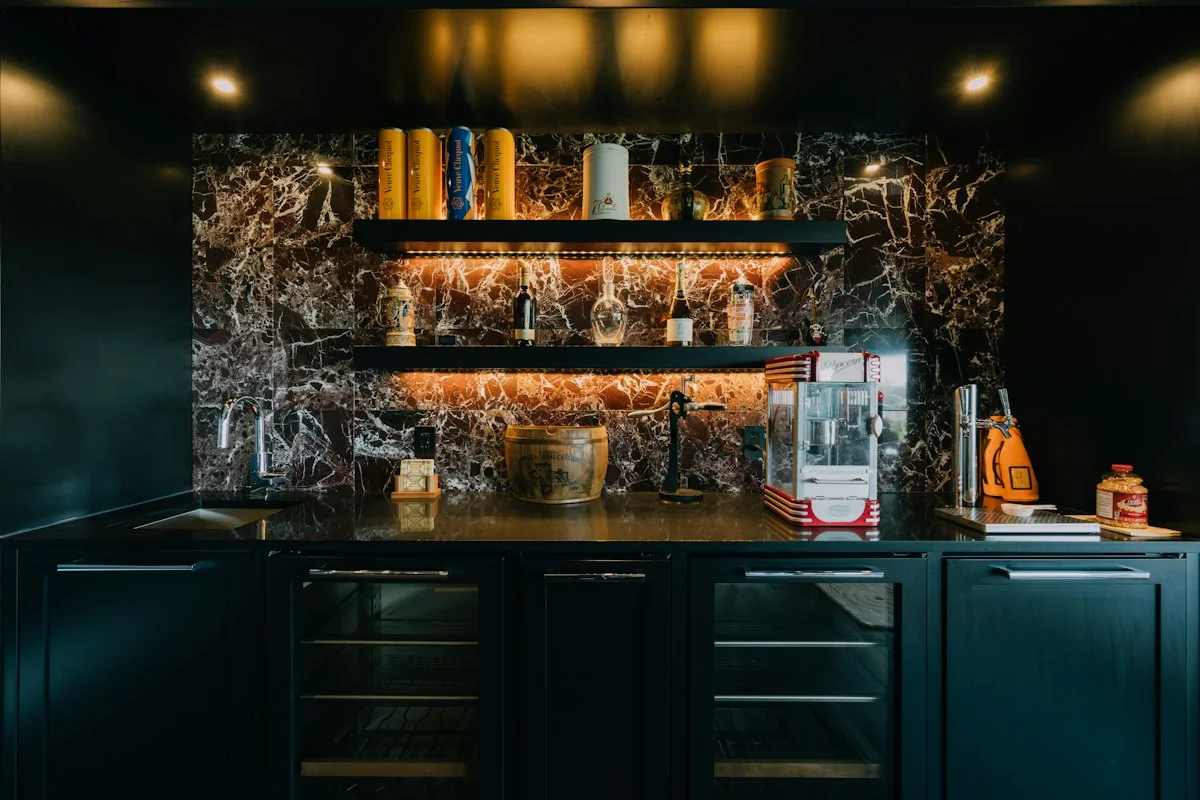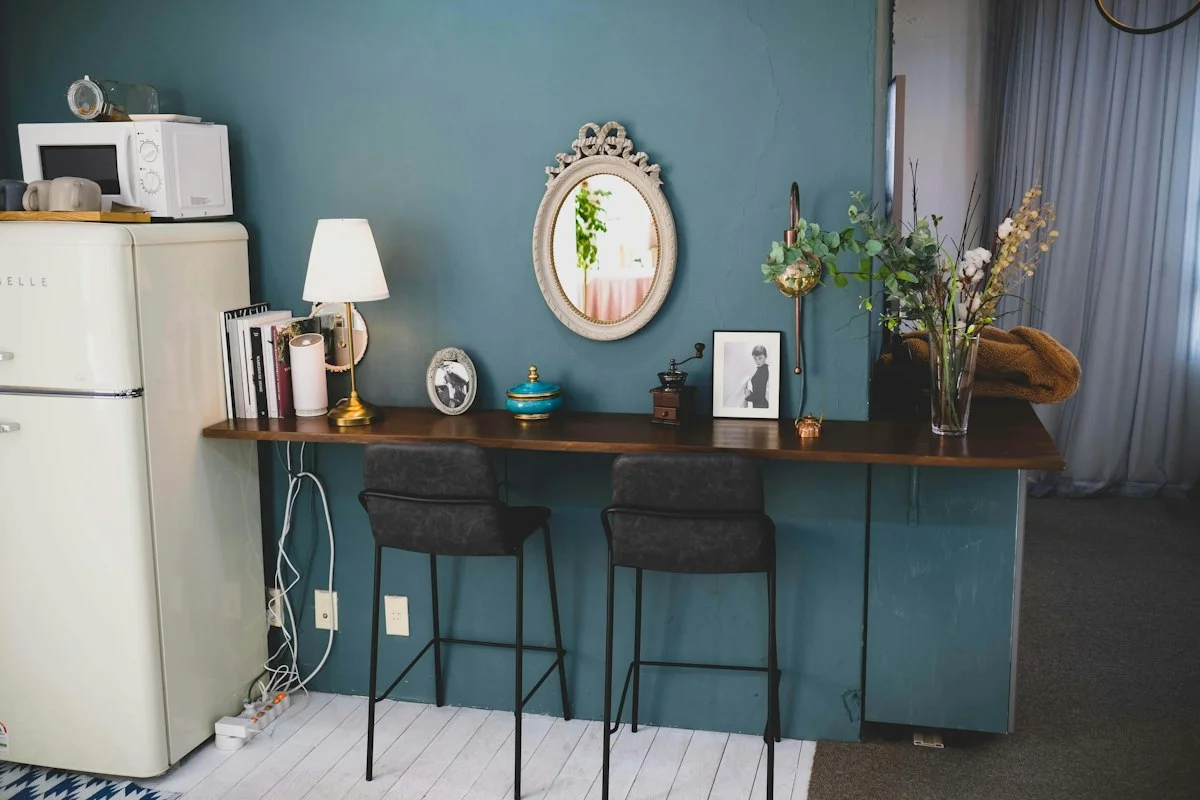
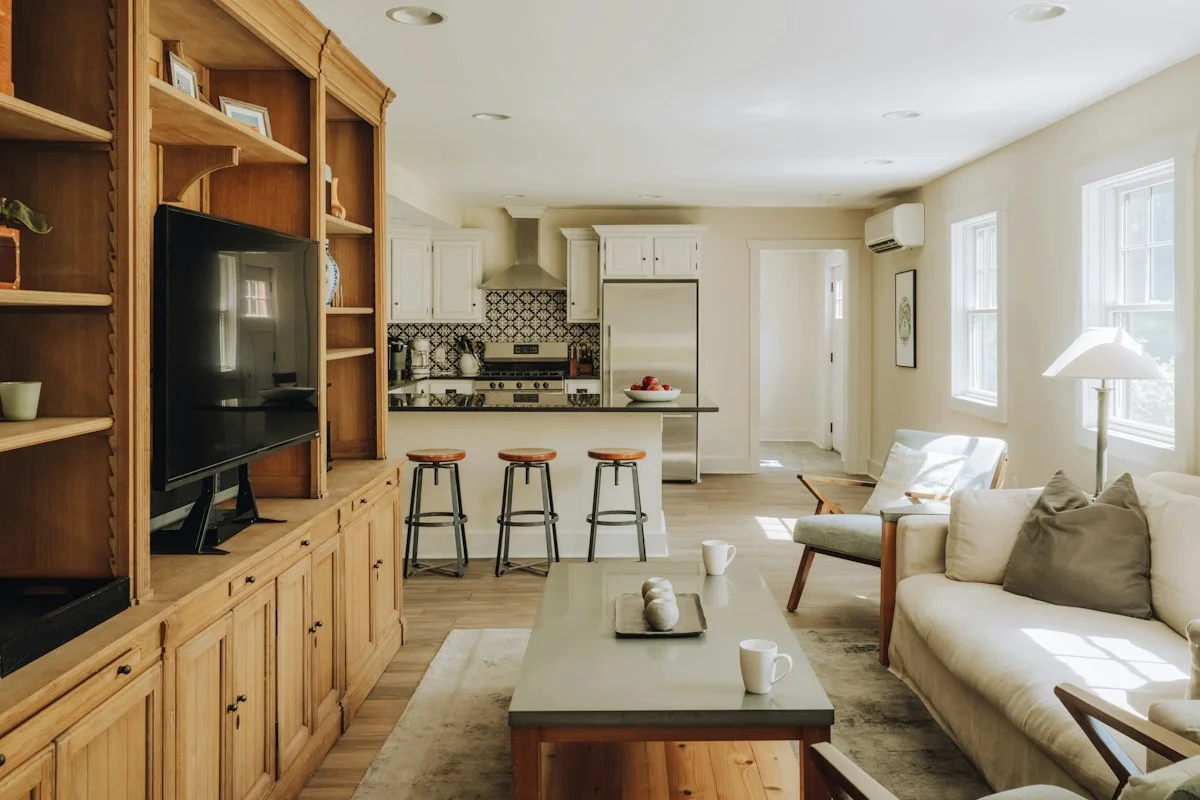
If you want storage that stays tidy with minimal upkeep, choose a bar cabinet with doors. It keeps bottles and glassware out of the dust, softens visual clutter, and gives you room to store backup bottles, tools, napkins, and less-attractive essentials without putting them on display.
Open shelves are better when your bar is small, your collection is deliberately limited, and you want the bottles themselves to be part of the room. They make everyday access easy, but they also ask more of you: bottles need regular dusting, glassware needs attention, and the display can look crowded quickly.
For many homes, the best answer is not strictly one or the other. Use closed storage for the working inventory and open shelving for a short list of bottles, glassware, and objects you reach for often.
Quick recommendation
Choose a closed bar cabinet if you:
- Keep more bottles than you use in a typical week
- Store glassware you want to keep clean between gatherings
- Prefer a calmer-looking kitchen, dining room, or living area
- Need storage for tools, mixers, linens, and backups
- Have pets, children, or a busy household where an exposed display is less practical
Choose open shelving for a home bar if you:
- Have a small, tightly edited bottle collection
- Make drinks often and value immediate access
- Want bottles and glassware to contribute to the room’s look
- Can place shelves away from direct sun, steam, and cooking splatter
- Do not mind routine dusting and resetting
Bar cabinet with doors vs open shelves at a glance
| Consideration | Bar cabinet with doors | Open shelves |
|---|---|---|
| Dust protection | Better for bottles, tools, and glassware | Requires regular wiping and washing |
| Light exposure | Easier to keep bottles out of direct light | Depends entirely on placement |
| Visual clutter | Hides mismatched bottles and supplies | Makes every item part of the display |
| Daily access | One extra step to open doors | Fast and convenient |
| Glassware storage | Better for glasses used occasionally | Best for glasses used and washed often |
| Small-space feel | Can look substantial or heavy | Often feels lighter and less bulky |
| Inventory capacity | Usually better for backups and supplies | Limited by shelf width and visual crowding |
| Hosting setup | Keeps preparation supplies contained | Keeps commonly used bottles within reach |
Light exposure: what actually matters
A cabinet with solid doors is the simplest way to reduce light exposure. This is especially useful if your only available bar location is near a sunny window or in a bright room for much of the day.
That said, not every bottle needs to be treated like a delicate wine. Most distilled spirits are reasonably stable when stored upright in a cool, consistent place. The practical concern is repeated direct sunlight, heat, and a prominent window display—not ordinary room light across a normal day.
If you use open shelves, place them away from direct sun when possible. A shelf on an interior wall is generally easier to manage than one opposite a bright window. Avoid placing bottles directly above a radiator, beside a heat source, or where cooking steam and grease regularly reach them.
Glass-front cabinets sit in the middle. They contain dust and reduce visual noise, but clear glass does not provide the same light barrier as a solid door. They work well when the cabinet is not in direct sun and you want protected display storage.
Dust and glassware: the everyday difference
Dust is where closed cabinetry earns its keep. Liquor bottles are easy enough to wipe down, but open glassware can become a repetitive chore—particularly stemware, coupes, and any glass with a wide bowl that collects dust.
A glassware storage cabinet makes the most sense for:
- Special-occasion glasses
- Extra wine glasses or highballs
- Delicate stemware
- Bar tools that do not need to sit on the counter
- Paper napkins, straws, coasters, and serving accessories
Open shelves are still useful for a small rotation of sturdy glasses. Keep only the glasses you actually use there, and return the rest to a cabinet. This prevents the common problem of displaying every glass you own simply because there is an empty shelf.
If you store glassware in a cabinet, avoid cramming pieces together. A shelf that is slightly underfilled is easier to unload, less likely to chip glasses, and faster to reset after guests leave.
Visual clutter: the overlooked tradeoff
Open shelves can look composed in photographs because the collection is limited and every label, bottle shape, and glass has been chosen to work together. In a real home, collections change. Half-empty bottles accumulate, mixers appear, and the shelf becomes a holding area for random items.
A closed cabinet gives you more forgiveness. It allows your bar to function without requiring it to look styled every day.
Open shelving works best when you treat it as display space rather than total storage. A useful limit is to show only your current favorites: a few core spirits, one or two liqueurs, a decanter only if you genuinely use it, and a modest group of glasses. Store the rest behind doors.
Keep an open shelf from looking crowded
- Group bottles by height rather than trying to show every label.
- Leave visible empty space on each shelf.
- Keep mixers, syrups, and backup bottles out of sight.
- Use one tray to contain small tools such as jiggers, openers, and bitters.
- Remove bottles that are empty, sticky, or rarely used.
- Do not use open shelves as overflow storage for the kitchen.
Access and hosting: which setup is easier to use?
Open shelves are undeniably convenient during drink-making. If you make a simple highball after work or regularly prepare drinks for a few people, being able to reach a bottle, glass, and jigger without opening doors can be pleasant.
But convenient does not have to mean fully exposed. A cabinet can be organized so the active setup is just as practical:
- Keep everyday spirits at the front of the top shelf.
- Store tools in one shallow drawer or bin.
- Put frequently used glasses on the easiest-to-reach shelf.
- Keep backup bottles and seasonal ingredients lower down or toward the back.
- Use the cabinet top as a temporary serving surface when guests arrive.
For entertaining, a cabinet with doors often makes cleanup easier. Once bottles are capped, tools are washed, and glasses are cleared, closing the doors immediately makes the room feel put away—even if the full reset happens later.
Small-space practicality
Open shelves can make a tight room feel more open, especially when wall space is available but floor space is limited. A narrow wall-mounted shelf may be enough for a few bottles and glasses in an apartment or compact dining area.
The downside is that open storage has no place for the unglamorous parts of a home bar. If your shelf holds the bottles, where will you keep tonic, cocktail napkins, a shaker, a citrus press, ice molds, cleaning cloths, and extra glassware? Those items tend to migrate to counters and drawers.
A shallow sideboard, buffet, or dedicated bar cabinet can solve more problems in one footprint. When shopping, think beyond bottle count. Look for adjustable shelves, doors that open comfortably in the room, and storage that accommodates both tall bottles and ordinary supplies. Some cabinet designs combine doors, drawers, racks, and open sections, which can be useful when one piece must do several jobs.
The hybrid home-bar storage plan
The most practical home bar storage idea is to divide items by frequency of use.
Keep behind closed doors
- Backup bottles and unopened purchases
- Less-used liqueurs and specialty spirits
- Extra glassware
- Cocktail tools and cleaning supplies
- Paper goods, coasters, and linens
- Syrups, mixers, and miscellaneous hosting supplies
Keep on open shelves or a bar top
- A few frequently used base spirits
- Bitters or a small tool tray
- Two to six everyday glasses
- One bowl, small lamp, or simple decorative object if space allows
This arrangement provides the accessibility of open shelving without asking the whole bar to perform as permanent display furniture.
A simple decision guide
Choose a bar cabinet with doors when the answer to two or more of these is yes:
- Do you have more than a small handful of bottles?
- Do you want to protect glassware from dust?
- Is your bar near direct sunlight or a busy kitchen?
- Do you need to hide supplies and backups?
- Would visible bottles make the room feel cluttered?
Choose open shelves when the answer to most of these is yes:
- Is your collection small and regularly used?
- Do you enjoy seeing your bottles and glassware?
- Can you keep the shelves away from direct sun and cooking mess?
- Are you comfortable dusting and editing the display?
- Do you need to preserve floor space?
The bottom line
A closed bar cabinet is the better default for most households because it protects the practical parts of a home bar from dust, reduces visual clutter, and stores more than bottles alone. Open shelving is best considered a display and access tool, not a complete storage system.
If you are deciding between the two, start with the amount of hidden storage you need. Then add a small open shelf only if it improves your daily routine or makes the room feel more inviting. The goal is not to display every bottle. It is to keep the few things you use easy to reach and everything else easy to live with.