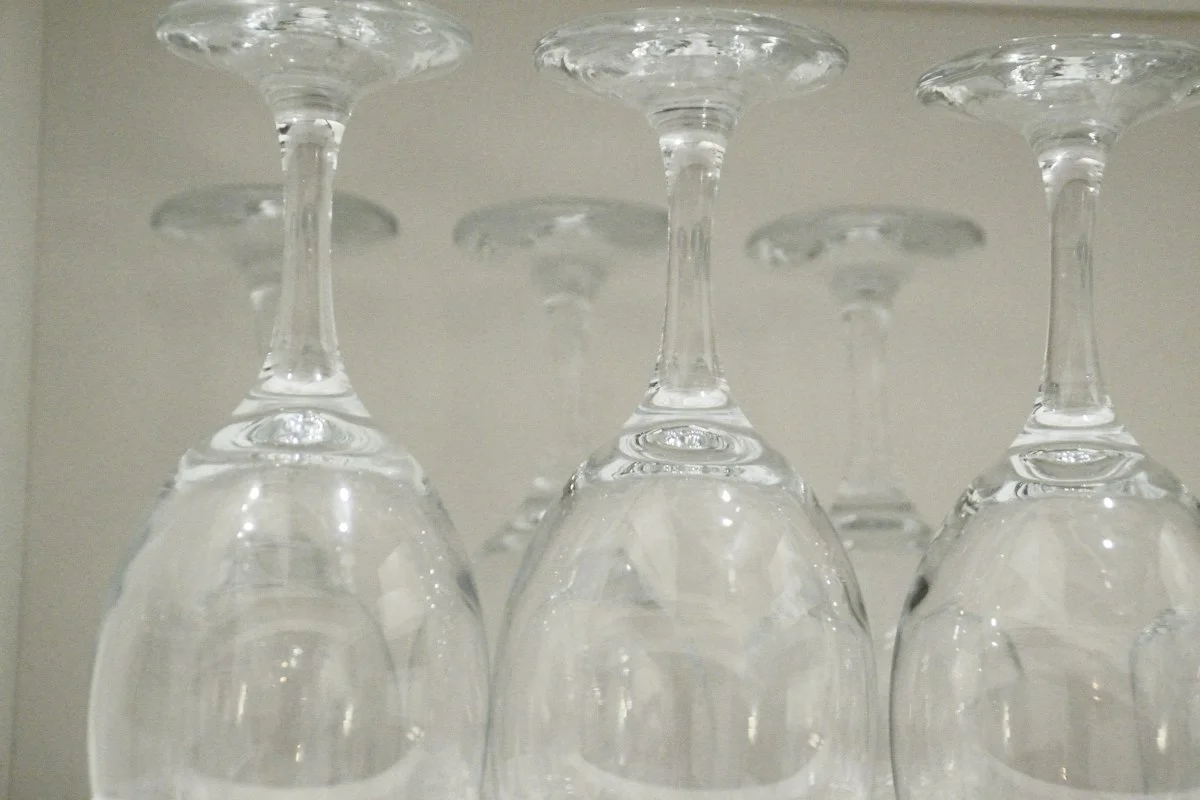

Most modern, plainly made wine glasses can go in the dishwasher if the manufacturer identifies them as dishwasher-safe and you load them carefully. The safest approach is to use the upper rack, keep glasses from touching, choose a gentle cycle, and remove the glasses soon after washing.
Not every wine glass belongs in the machine. Hand-wash delicate crystal, antique or inherited glasses, hand-painted glassware, glasses with metallic rims or decoration, and anything without clear care guidance. Dishwasher heat, strong detergent, water pressure, and contact with other items can gradually dull glass or cause chips, cracks, and broken stems.
Start With the Glass, Not the Dishwasher
The question is not simply whether wine glasses are safe in a dishwasher. It is whether your particular glasses are designed to tolerate repeated dishwasher use.
Check the original packaging, the maker’s website, or a care mark on the glass when one is available. “Dishwasher-safe” is the most useful instruction. If the glass is marked hand-wash only, treat that as a firm instruction rather than a suggestion.
When no instructions are available, consider the glass’s construction and finish. A sturdy, newer, unadorned glass is generally a better candidate for the dishwasher than a thin, unusually tall, decorated, or sentimental one.
Usually suitable for the dishwasher
These glasses are often reasonable candidates, provided the maker permits dishwasher cleaning:
- Modern machine-made wine glasses with no painted decoration
- Stemless wine glasses made from ordinary glass
- Thicker everyday wine glasses
- Glasses sold specifically as dishwasher-safe
- Some durable crystal glassware clearly labeled for dishwasher use
“Usually” matters here. A dishwasher-safe label does not mean a glass is unbreakable. It means the material and finish should tolerate normal machine washing when loaded and washed appropriately.
Better washed by hand
Hand-washing is the lower-risk choice for:
- Antique, vintage, or inherited wine glasses
- Very thin stemware
- Handmade or mouth-blown glasses, unless the maker says otherwise
- Cut crystal without explicit dishwasher-safe guidance
- Glasses with gold, silver, platinum, painted, or colored details
- Glasses with decals, lettering, or screen-printed designs
- Damaged glasses with chips, cracks, or loose stems
Decorative finishes are especially vulnerable. A metallic rim or painted pattern may fade, lift, or become uneven after repeated exposure to detergent and heat. Even if a decorated glass survives a few cycles, gradual wear can still appear over time.
Can Crystal Glasses Go in the Dishwasher?
Some modern crystal glasses can go in the dishwasher, but many should not. Crystal is not one uniform category: the material, manufacturing method, and finish vary widely. The answer should come from the manufacturer’s care instructions whenever possible.
If a crystal glass is labeled dishwasher-safe, use the gentlest practical settings and give it space in the rack. Avoid a crowded load, aggressive cycles, and high-heat drying. If it is older, hand-cut, unusually thin, decorated, or unmarked, hand-washing is the safer default.
One common concern is cloudiness. Clouding can come from mineral residue left by hard water, but permanent etching is another possibility. Etching is gradual surface damage caused by a combination of heat, detergent, water conditions, and repeated washing. Unlike residue, it does not rinse away or polish off easily.
How to Wash Wine Glasses in the Dishwasher
A dishwasher-safe glass still needs a careful setup. Most breakage happens when glasses knock together, shift under water pressure, or sit where another item can fall onto them.
1. Use the upper rack when the glass fits securely
The upper rack generally offers a calmer environment for stemware than the lower rack. Place each glass in a stable position according to the rack design. If your dishwasher has stemware clips, soft supports, or a dedicated glass holder, use them only when the glass fits without force.
Very tall glasses can be awkward. Do not wedge a bowl against the rack, bend a stem to make it fit, or place the glass where it can strike the spinning spray arm. If it does not fit securely, wash it by hand.
2. Keep every glass separate
Wine glasses should not touch one another, plates, mugs, utensils, or cookware. This is particularly important around bowls and rims, where a small collision can create a chip.
Leave enough room for water to circulate. Overloading may seem efficient, but it raises the chance of breakage and can leave detergent residue behind.
3. Avoid pressure on the rim and bowl
Do not force a wine glass down over a rack tine if the fit is tight. Pressure can stress the bowl or stem, especially on thin glass. A glass should sit supported and stable, not squeezed into place.
Make sure large pans, cutting boards, and tall utensils cannot shift into the glassware during the cycle.
4. Choose a gentle cycle when available
Use a glassware, delicate, or normal cycle if it suits the rest of the load. A heavily soiled pot cycle is rarely necessary for wine glasses and may expose them to more heat and stronger washing conditions than they need.
If your dishwasher offers a high-heat option, consider whether it is necessary. Lower-heat drying or air-drying is generally gentler on delicate glassware and decorative finishes.
5. Use detergent carefully
Use the appropriate amount of dishwasher detergent for your machine and water conditions. More detergent is not necessarily better, particularly with lightly soiled glasses.
Avoid washing wine glasses alongside cookware coated in grease or baked-on food when possible. A load built around oily pans may need a stronger cycle, while wine glasses usually benefit from gentler treatment.
If white spots appear, review your dishwasher’s rinse-aid setting and consider whether hard-water minerals are contributing. If the haze remains after careful rinsing and hand polishing, it may be etching rather than residue.
6. Unload with care
Let the dishwasher finish and cool enough for safe handling, then unload glasses by holding the bowl rather than twisting the stem. If moisture remains inside a bowl, dry it with a clean, lint-free towel rather than leaving it upside down on a closed surface, where trapped moisture can leave marks.
What Dishwasher Damage on Glassware Looks Like
Different marks point to different problems. Knowing the distinction can help you change your routine before more glasses are affected.
| What you see | Likely cause | What to do |
|---|---|---|
| White spots or film | Mineral residue or detergent residue | Adjust loading, detergent use, and rinse-aid settings; check for hard-water buildup |
| Overall dullness that does not wash off | Possible etching | Hand-wash delicate glasses going forward and use gentler machine settings for approved glasses |
| Small chips on rims or bases | Glasses touching or hitting other items | Increase spacing and avoid crowded loads |
| Broken stems or cracked bowls | Unstable loading, forced fit, or impact | Use a secure upper-rack position or hand-wash |
| Faded decoration or metallic trim | Heat and detergent exposure | Hand-wash decorated glasses from now on |
A chipped or cracked wine glass should not return to regular service. Small flaws can worsen during washing, drying, or use, and a damaged rim can be unpleasant or unsafe to drink from.
A Practical Decision Guide
Use this quick check before adding a wine glass to the dishwasher:
- Is it clearly labeled dishwasher-safe?
- Is it a modern, undecorated glass without metallic trim?
- Is it free from chips, cracks, and loose stems?
- Can it stand securely in the upper rack?
- Can it sit without touching another item?
- Can you use a normal or gentle cycle rather than an intensive cookware cycle?
If the answer to any of the first four questions is no, hand-washing is usually the better choice.
The Best Hand-Washing Method for Delicate Wine Glasses
For glasses that should stay out of the dishwasher, wash one or two at a time in a clean sink or plastic basin. Use warm water, a small amount of mild dish soap, and a soft sponge or cloth. Avoid abrasive scrubbers, which can scratch glass or catch on decoration.
Hold the bowl in one hand and support the base or stem with the other. Do not twist the bowl and stem in opposite directions. Rinse thoroughly, then dry promptly with a lint-free towel. For a clearer finish, polish the bowl gently while holding it by the bowl rather than pulling on the stem.
The Sensible Middle Ground
There is no need to hand-wash every wine glass after every dinner. Reserve hand-washing for delicate, decorative, older, and meaningful pieces. For sturdy glasses made and labeled for dishwasher use, a properly loaded upper rack and gentle cycle can make cleanup much easier.
The key is to treat dishwasher-safe as a care instruction, not a guarantee against damage. Space the glasses well, avoid harsh conditions, and retire any glass that begins to show cracks or chips. That routine keeps everyday cleanup simple without being careless with the glassware you enjoy using.