
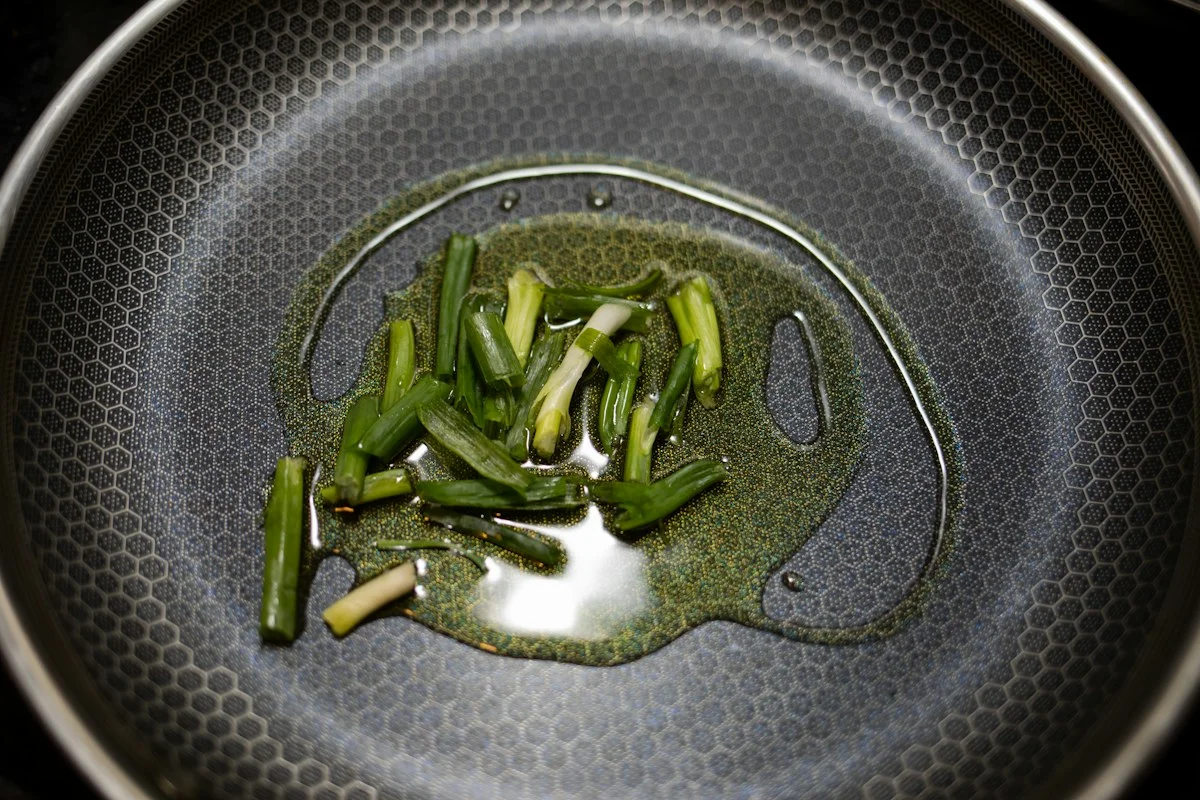
Blooming spices means briefly frying dried spices in oil, butter, ghee, or another cooking fat before adding the rest of a dish. For most ground spices, the process takes only a short time: warm the fat over moderate heat, add the spices, stir continuously until they smell vivid and aromatic, then promptly add onions, garlic, tomatoes, broth, or another ingredient that moves the cooking along.
If your chili, curry, soup, or lentils taste dusty, flat, or oddly raw despite using enough seasoning, blooming can help. Fat carries many of the aromatic compounds in spices, so this step distributes their flavor through the dish rather than leaving it suspended in a watery sauce or broth.
The basic blooming spices technique
Use a pan large enough to stir comfortably and have your next ingredient measured and ready before you start. Ground spices can burn quickly, particularly chile powder, paprika, turmeric, garlic powder, and spice blends containing finely ground ingredients.
- Add the cooking fat to a pan over medium to medium-low heat.
- Let the fat warm until it looks fluid and lightly shimmering. It should not be smoking.
- Add the spices and immediately stir or swirl the pan so they are evenly coated.
- Cook only until the spices sizzle gently and become noticeably fragrant.
- Add the next ingredient right away. Onions, other aromatics, a sauce base, or liquid will slow the cooking and help prevent scorching.
For a typical weeknight dish, a short window of roughly 30 to 60 seconds is often enough for ground spices. Treat that as a guideline rather than a timer to follow blindly: the pan, fat, quantity of spices, and fineness of the grind all affect the pace.
When to add spices to oil
Add spices after the fat has warmed but before watery ingredients enter the pan. Water-rich ingredients lower the pan temperature and dilute the fat, which makes blooming less effective.
A common order for a soup, bean dish, or curry is:
- Warm oil, ghee, butter, or another fat.
- Bloom whole spices that need a little more time, if using them.
- Add ground spices and stir briefly.
- Add onions, garlic, ginger, tomato paste, or other aromatics.
- Continue with vegetables, proteins, broth, tomatoes, beans, or other liquid ingredients.
This order is flexible. In many dishes, onions are cooked first for softness and sweetness, then spices are stirred into the fat left in the pan. That works well, especially if the onions have already released moisture and you can clear a small space in the center of the pan for the spices. The important point is that spices have direct contact with warm fat for a brief period rather than being dropped straight into a large volume of liquid.
How long to cook spices in oil
Cook spices in oil only until their aroma opens up. You are looking for a quick transition from dry and dusty to warm, rounded, and distinct.
Ground spices
Most ground spices need the least time. Stir constantly and plan to add the next ingredient within about a minute. Fine powders have a large surface area, so they can go from fragrant to bitter quickly.
Whole spices
Whole cumin, coriander, mustard seed, fennel seed, peppercorns, cardamom, cinnamon, cloves, and similar spices are more forgiving than powders. They can go into warm oil first, often with a little more time to sizzle and release their aroma. Watch mustard seeds especially closely if they begin to pop, and keep the pan from becoming overly hot.
Spice blends
Curry powder, chili powder, garam masala, taco seasoning, and other blends need extra attention because their ingredients brown at different rates. A blend with paprika or dried garlic can burn sooner than one made mostly of whole or coarsely ground seeds. Use moderate heat and keep it moving.
Signs spices are properly bloomed
The best signal is smell. Properly bloomed spices smell clearer, warmer, and more integrated with the cooking fat than they did from the jar.
Look and listen for these signs:
- Gentle, steady sizzling rather than aggressive frying.
- Spices spreading easily through the oil instead of sitting in dry clumps.
- A stronger aroma that reaches you quickly when you stir.
- Slightly deeper color in some spices, without brown or black spots.
Do not wait for a dark toast color. Ground spices do not need visible browning to be ready, and waiting for it is one of the easiest ways to scorch them.
How to avoid burning spices
The practical rule is simple: lower heat and preparation beat speed. Set out the onions, garlic, broth, or other next ingredient before the spices hit the pan.
Use enough fat
The spices should be coated and able to move around the pan. If a large amount of spice forms a thick, dry paste, it is more likely to catch. Add a little more fat if needed, then stir well.
Keep the heat moderate
Medium heat is usually a more useful starting point than high heat. If the fat smokes before you add spices, the pan is too hot for delicate ground spices. Move the pan off the heat briefly if necessary, then continue at a lower setting.
Stir continuously
Spices settle quickly, especially in a thin pan or a pan with a hot center. Use a spoon or spatula to scrape across the surface and prevent a layer of spice from sticking in one place.
Add moisture at the right moment
Onions, garlic, tomato paste, canned tomatoes, broth, and other ingredients can stop the spices from cooking further. Add them as soon as the spices are fragrant. If you hesitate and the spices begin smelling acrid or smoky, add the next ingredient immediately and lower the heat.
Watch butter closely
Butter adds good flavor but can brown faster than neutral oil or ghee. If using butter, keep the heat lower and work quickly. A mix of oil and butter can offer more room for error.
Common mistakes and how to fix them
Adding spices to cold oil
Cold oil will not immediately release aroma, and it can encourage you to leave spices in the pan too long while waiting for a reaction. Warm the fat first, then add spices.
Using high heat to make the process faster
High heat gives ground spices very little margin before they burn. Lower the heat instead. Blooming is quick even at a controlled temperature.
Letting garlic cook alongside spices from the start
Garlic, especially minced garlic, can brown faster than many spices. If both are in the pan, the garlic may burn before the spices have fully opened up. Bloom the spices first, then add garlic for a shorter cook.
Trying to rescue burned spices
If spices are visibly blackened or smell harsh and bitter, it is usually better to start over with fresh fat and spices. Burned flavors spread through a dish and are difficult to conceal.
Blooming directly in a large pot of liquid
Spices added directly to broth, beans, tomatoes, or sauce can still cook, but they will not get the same brief contact with hot fat. If possible, bloom them in a small pool of fat in the pot before adding liquid, or make a separate spiced oil and stir it in.
Blooming versus dry-toasting spices
Blooming and dry-toasting are related but not interchangeable.
Dry-toasting means heating spices in an empty pan without fat. It is particularly useful for whole spices that you plan to grind, such as cumin seed, coriander seed, fennel seed, and peppercorns. Dry heat changes and deepens the flavor of the spice itself. Let toasted whole spices cool before grinding.
Blooming means heating spices in fat. Its main advantage is extraction and distribution: the fat picks up spice flavor and carries it through the dish.
You can use both methods when the recipe benefits from them. Dry-toast whole spices first, cool and grind them, then bloom the ground mixture in fat at the beginning of cooking. For an ordinary pot of soup or beans, however, blooming pre-ground spices alone is often the simpler and more useful move.
A reliable starting point for everyday dishes
For a sauce, soup, stew, or braise, begin with a modest amount of cooking fat in a pan over medium-low to medium heat. Add your ground spices, stir for a brief aromatic moment, then add onions or another prepared ingredient. Continue the recipe normally.
That small change is enough to make spice flavor seem more present without increasing the amount of seasoning. The goal is not to fry spices hard or make them visibly brown. It is to give them a short, attentive moment in warm fat, then carry that flavor into the rest of the dish.


