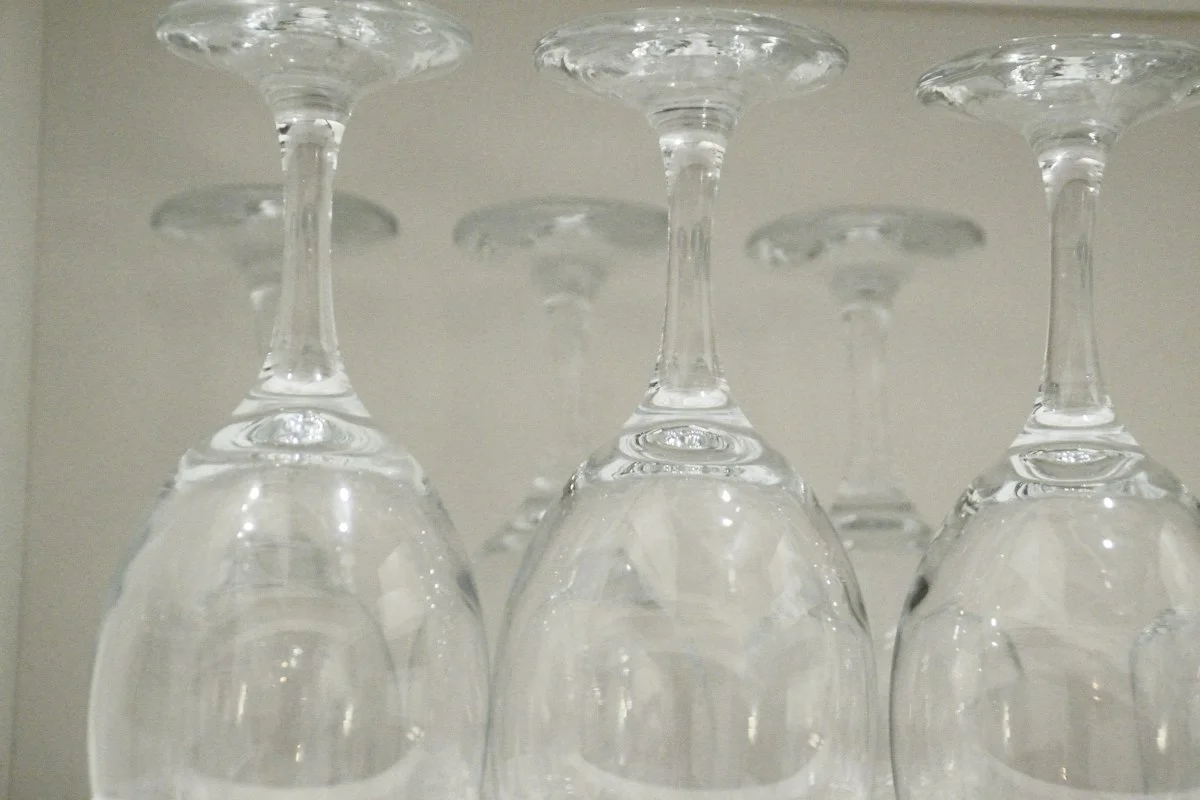

Clean wine glasses can still look unfinished under dining-room light. The usual culprits are dried water spots, lint from towels, and fingerprints left behind while setting the table. The most reliable answer to how to polish wine glasses without streaks is to use gentle steam and a clean, lint-free microfiber cloth, then handle the glass only by its stem or base.
Polish glasses after they are fully washed and dry, ideally shortly before guests arrive. Steam loosens light residue without adding more detergent, while microfiber lifts moisture and oils rather than pushing them around the bowl.
What you need
- Clean, dry wine glasses
- A clean microfiber polishing cloth
- A kettle, saucepan, or another source of gentle steam
- A second clean microfiber cloth, if you are polishing many glasses
- A tray, rack, or clean cabinet shelf for finished glasses
A smooth microfiber cloth is more useful here than a paper towel or everyday dish towel. Paper towels can shed fibers, and kitchen towels may carry detergent residue, cooking oil, or lint. Reserve at least one cloth for glassware only, and avoid fabric softener when laundering it; softener can leave a film that transfers back onto the glass.
The steam-and-microfiber method
1. Start with a truly clean glass
Polishing works best on glasses that have already been washed. If the bowl still feels greasy or has visible lipstick marks, wash it again first. A polishing cloth can remove a faint haze, but it is not a substitute for cleaning away wine residue, oils, or detergent film.
Let the glass dry before polishing. If it has air-dried with visible droplets or mineral spots, that is fine; steam will help soften the remaining marks.
2. Create gentle steam
Bring water to a point where it produces steady steam. You do not need to hold the glass close to boiling water or immerse it in hot water. Instead, hold the bowl briefly above the steam so a light fog forms inside the glass.
Keep a comfortable distance from the steam and work slowly. The goal is a little moisture on the interior surface, not a hot or dripping glass.
3. Polish the inside first
Drape the microfiber cloth over your hand and insert the cloth into the bowl. Rotate the glass slowly while keeping the cloth in contact with the inside surface. Work from the rim down toward the bowl, using light pressure.
Polishing the interior first prevents you from transferring residue from the outside of the glass back into the bowl. Pay attention to the rim, where lip marks and dishwasher residue are often most visible.
4. Polish the outside with a fresh area of cloth
Move to a clean, dry section of the cloth before polishing the exterior. Hold the glass by the stem or base, not by the bowl. Rotate the glass against the cloth rather than gripping and twisting the bowl with both hands.
Use long, overlapping passes around the bowl. Then polish the stem, foot, and the underside of the base. Those lower areas are easy to miss and can show fingerprints when the glass is lifted in front of a light source.
5. Check the glass in good light
Hold the glass by the stem and tilt it toward a window, lamp, or other bright but indirect light. Look across the surface rather than directly through it. Streaks, lint, and fingerprints are easier to see at an angle.
If you spot a mark, use a fresh portion of the microfiber cloth and polish that area again. Do not keep rubbing with a damp or visibly soiled section of cloth; that is how smears return.
How to hold stemware safely while polishing
Wine glasses are most vulnerable when pressure is applied to the bowl and stem at the same time. Keep the bowl supported in the cloth, but do not squeeze it. Use your other hand to steady the stem or foot.
Avoid twisting the bowl in one direction while holding the base firmly in the other. That motion concentrates force at the stem, where delicate glassware can be most fragile. Instead, turn the entire glass gently as you polish.
For stemless wine glasses, hold the lower portion of the vessel through the cloth and rotate it slowly. Once polished, avoid touching the upper half where fingerprints are most obvious.
How to remove stubborn water spots from wine glasses
Cloudy dots or pale rings are often dried mineral deposits left behind after washing. Light spots may disappear with steam and microfiber alone. If they do not, wash the glass again using a mild dishwashing approach appropriate for the glass, rinse thoroughly, and dry or polish it promptly.
For persistent spotting, the issue may be the water rather than the glass. If many glasses develop the same pale marks after air-drying, try polishing them before droplets dry completely, or use a final rinse method that is suitable for your glassware and household water conditions.
Be cautious with decorative, hand-painted, metallic-rimmed, antique, or especially delicate glasses. Abrasive powders, rough scrubbing pads, and aggressive cleaners can damage finishes or leave permanent scratches. When in doubt, follow the maker’s care guidance.
Common mistakes that leave streaks or lint
Using a dish towel straight from the kitchen
Even a towel that looks clean may contain lint, grease, or laundry residue. Use a dedicated microfiber cloth for stemware instead.
Polishing with a wet cloth
A damp cloth can spread water marks across the bowl. Steam the glass lightly, then polish with a dry portion of microfiber.
Touching the bowl after polishing
This is the most common way to undo your work. Carry finished glasses by the stem or base. For stemless glasses, hold the bottom edge or use a clean cloth while moving them.
Over-steaming the glass
Too much steam leaves condensation that can dry into fresh spots. A brief fog inside the bowl is enough.
Using too much pressure
Polishing is about lifting film, not scrubbing. Light, steady contact is safer for delicate stemware and produces a clearer finish.
When to polish glasses for a party
For the cleanest result, polish wine glasses after washing and as close to service as practical. If you are setting the table well in advance, polish them first, then store them upright in a clean, dry cabinet or place them on a tray away from cooking activity, dust, and splatter.
If glasses must sit out before guests arrive, avoid handling the bowls during final table adjustments. Set each glass down by the base, and make a quick final inspection before pouring wine.
A practical finishing routine
Use this short sequence when preparing several glasses:
- Wash and rinse all glasses before polishing.
- Lay out one clean microfiber cloth for polishing and another as a backup.
- Steam and polish one glass at a time.
- Inspect each glass in light before placing it on a clean tray or table.
- Carry glasses by the stem or base only.
- Keep a folded microfiber cloth nearby for last-minute fingerprints.
The finished glass should look clear rather than merely dry. With a clean microfiber cloth, a little steam, and careful handling, you can make wine glasses shine without the lint, streaks, and repeated re-polishing that paper towels and ordinary dish towels often create.