
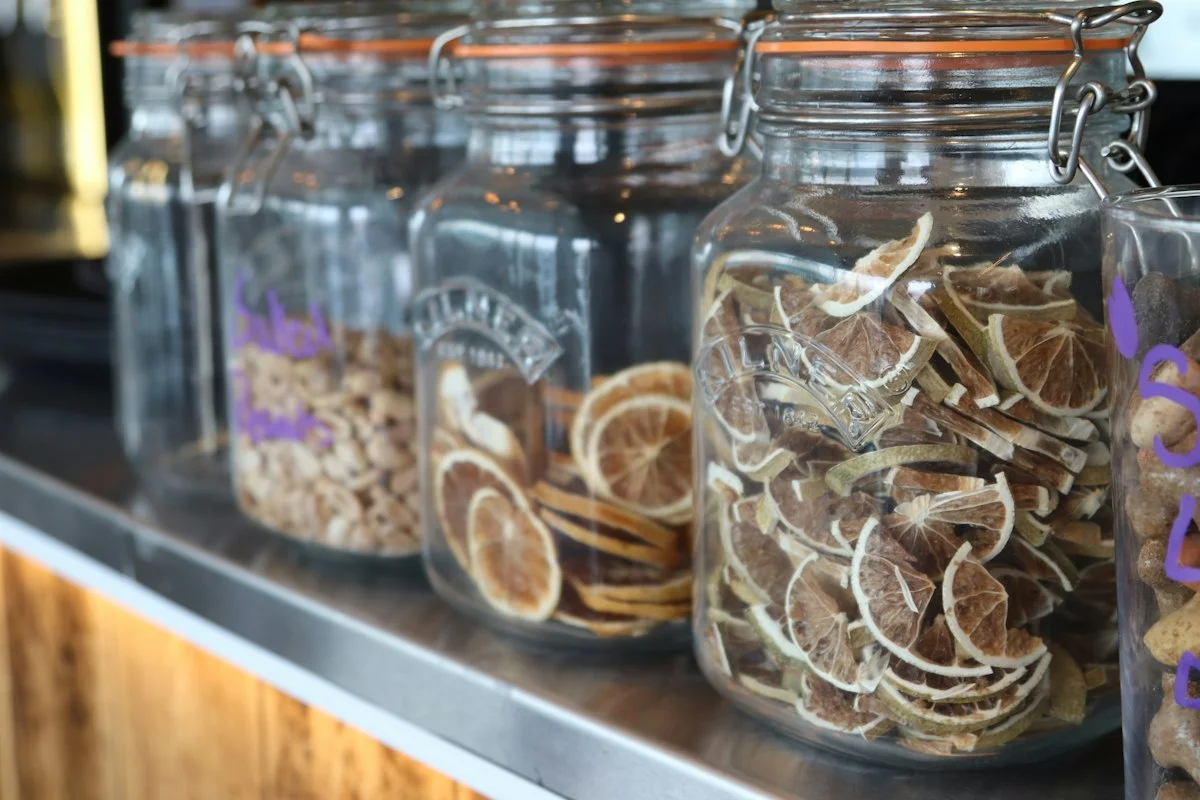
Fresh garnishes stay party-ready when they are stored by type, protected from air and excess moisture, and kept in small containers that can move directly from refrigerator to serving tray. The practical rule is simple: keep cut fruit cold and covered, keep herbs lightly protected rather than wet, and keep jarred garnishes in their own packing liquid with clean utensils.
The best approach to how to store cocktail garnishes is not to prep every garnish days ahead. Buy and store durable items first, prep citrus and herbs closer to service, and place only the amount you expect to use at the bar. That keeps the refrigerator orderly and avoids setting out a large tray of food that may sit untouched.
Start with a simple garnish-storage system
Use a few shallow, covered containers rather than one large mixed garnish box. Separate containers prevent olive brine from reaching citrus, stop herbs from being crushed, and make it easier to replenish the bar without handling every garnish at once.
A useful setup includes:
- A covered container for lemon and lime wedges
- A separate container for twists and peels
- A small container or jar for olives and cocktail onions, held in their liquid
- A separate jar or container for cocktail cherries and their syrup
- A container for herbs, protected with a lightly damp paper towel
- A dry, airtight container for dehydrated citrus and other fully dried garnishes
- A clean pair of tongs, cocktail picks, or a small spoon for each wet garnish
Labeling is helpful when you are making several drinks. A strip of painter’s tape marked “lime wedges,” “lemon twists,” or “dirty martini olives” is enough. It also reduces the chance that someone reaches for a garnish with wet hands and returns it to the wrong container.
Store whole citrus until you need it
Whole lemons, limes, oranges, and grapefruit are easier to store than cut fruit. Keep them clean, dry, and away from strong odors. If you are holding them beyond immediate use, refrigeration generally helps preserve their condition.
Do not wash citrus long before storage if it will remain damp in a closed bag or container. Instead, wash and dry it before cutting or peeling. A dry exterior is less likely to create unnecessary moisture in your produce storage.
Choose fruit with firm skin and no soft, damaged, or visibly moldy areas. A good garnish begins with good fruit; storage cannot restore a dried-out lime or a lemon with a dull, damaged peel.
How to store cut lemons for cocktails
Cut lemons dry out because their exposed surfaces lose moisture and absorb refrigerator odors. The goal is to limit both problems without trapping them in pooled liquid.
For wedges, wheels, and half-moons:
- Wash and dry the fruit before cutting.
- Use a clean knife and cutting board.
- Arrange the pieces in a shallow covered container in a single layer when possible.
- If stacking is necessary, separate layers with a clean paper towel or parchment.
- Cover promptly and refrigerate.
- Replace the liner if it becomes soaked with juice.
Avoid storing cut citrus in a bowl loosely covered with plastic wrap. It is easy for the wrap to shift, and the fruit can dry out or pick up refrigerator smells. A fitted lid is more reliable and easier to transport to the serving area.
For twists, cut or peel them close to service when you can. The aromatic oils are a major reason a twist belongs on a drink, and exposed peels gradually lose their lively scent. If you need to prep ahead, store twists in a small airtight container in the refrigerator, with enough room that they are not tightly crushed.
Do not store lemon wedges submerged in water. Water can make them look temporarily plump, but it dilutes surface flavor, creates mess, and does not solve the underlying issue of holding cut produce safely. When in doubt about how long cut fruit should be held, consult current guidance from your local food-safety authority.
How to keep lime wedges fresh
Limes tend to show drying quickly, especially when cut into narrow wedges. Cut them consistently so they are easy to grab and squeeze, then keep them covered in a shallow container rather than piled into a deep bowl.
A lightly damp paper towel can help create a less drying environment, but it should not leave the wedges sitting in water. Place the towel beneath or over the fruit, then check it before service. If the towel is saturated, replace it with a fresh one.
For drinks that need a lime wedge only as an optional accent, consider putting out a small batch and holding the rest in the refrigerator. A modest garnish dish looks neater, and you can replenish it as needed.
Keep citrus twists separate from wedges
Lemon, lime, orange, and grapefruit twists deserve their own container. They are delicate, aromatic, and easily damaged by wet wedges or salty olive brine.
Store twists flat or loosely coiled, with a lid that does not press down on them. If you are using long strips for Martinis, Old Fashioneds, or highballs, avoid folding them into a small round container. A rectangular deli-style container or shallow box gives them more room.
Before serving, discard any peel that looks dried, browned, slimy, or otherwise compromised. A garnish should look and smell fresh enough to improve the drink, not merely fill a visual requirement.
How to store cocktail olives and onions
Cocktail olives and onions are easiest to manage when they remain in their original jars or are transferred to a clean, covered container with their packing liquid. The brine or syrup protects their texture and flavor better than storing them dry.
Use a clean spoon, fork, or tongs to remove them. Do not reach into a jar with fingers, and do not return garnishes that have touched a guest’s drink or plate. Once a garnish has left the clean container, treat it as served.
For a party, decant only a small working amount into a bar dish or small jar. Keep the main container refrigerated and covered, then refill the service dish as needed. This avoids leaving an entire jar out for the duration of the gathering.
Follow the storage instructions on the jar label, especially after opening. Product labels can differ, and they are the best starting point for a specific brand’s handling guidance.
A note on blue cheese olives
Stuffed olives need a little more caution because their fillings are perishable. Keep them refrigerated, covered, and in their brine according to the package instructions. Put out a small amount at a time, and do not save olives that have been handled or left in a communal dish. For guidance on holding and discarding perishable foods, check current advice from an official food-safety agency in your area.
Store cocktail cherries in their syrup
Cocktail cherries should stay covered in their syrup or other packing liquid, following the package label after opening. Keep the jar rim clean so the lid closes properly, and use a clean spoon or cherry pick to remove them.
A separate small jar for service is worthwhile when making Manhattans, Old Fashioneds, Singapore Slings, or other cherry-garnished drinks. It prevents a sticky full-size jar from living on the counter and helps you control how much syrup reaches the drink.
If cherries become cloudy, develop an off odor, show visible mold, or no longer match the condition described on the product label, discard them. When a packaged garnish has specific storage instructions, those instructions take priority over general bar habits.
Treat fresh herbs as delicate produce
Mint, basil, rosemary, thyme, and other herbs can turn limp, dark, or soggy when stored carelessly. Keep them dry enough to avoid deterioration but protected from refrigerator air.
For loose herb sprigs, line a covered container with a lightly damp paper towel, place the herbs on top, and cover with another lightly damp towel if needed. The towels should be moist, not dripping. Check them before service and replace them if they become slimy or overly wet.
Avoid packing herbs tightly. Crushed mint bruises quickly, and bruised leaves are less attractive in a Mojito, Julep, or Gin Smash. If a drink calls for a slapped mint sprig or a herb bouquet, make that final preparation just before serving rather than hours ahead.
Keep dehydrated garnishes truly dry
Dehydrated citrus wheels are useful because they are ready to use, add visual polish, and do not add juice to a drink. They should be stored differently from fresh garnishes: dry, airtight, and away from humidity.
Before storing homemade dried citrus, make sure it is fully dry and has cooled completely. Any remaining moisture can compromise the batch in storage. Keep the slices in an airtight container or resealable bag in a cool, dark cupboard, not in the refrigerator where condensation can soften them.
If dried fruit becomes tacky, flexible in an unexpectedly damp way, moldy, or stale-smelling, discard it. For a longer-term homemade-storage plan, consult a trusted preservation resource or your local extension service, since drying equipment and fruit thickness can affect the result.
Set up a clean service station
A garnish station should make drinks easier to build, not create more work. Set out a small tray with only the garnishes planned for the menu, each with its own utensil. Keep backups chilled or sealed until needed.
A practical party arrangement might include:
- Lemon twists for Martinis and French 75s
- Lime wedges for Margaritas, Gin and Tonics, and highballs
- Olives or onions for Martinis and Gibsons
- Cherries for whiskey drinks
- Mint or rosemary for drinks that specifically call for herbs
- Dehydrated orange or lemon wheels for low-maintenance visual garnish
Place wet garnishes in stable, low-sided dishes or jars on a tray. This contains drips and makes the whole setup easy to move out of the way if the counter becomes crowded.
Common garnish-storage mistakes
Mixing everything together
Citrus, herbs, olives, and cherries have different moisture and odor needs. Separate containers keep flavors cleaner and make service faster.
Prepping more than the menu needs
Cutting every lemon and lime in advance creates waste. Prep a sensible first round, then keep whole fruit available for a quick refill.
Leaving a full garnish tray out all evening
Set out small amounts and replenish. This keeps garnishes looking better and limits how much food is exposed to handling.
Using one pair of tongs for every garnish
Separate utensils prevent cherry syrup, olive brine, and citrus juice from traveling through the station.
Ignoring package labels
Jarred olives, onions, and cherries may have product-specific instructions after opening. Read and follow them rather than relying on a general rule.
A calm prep order for party day
- Check the drink menu and count the garnishes each drink needs.
- Confirm you have covered containers, clean utensils, picks, and a serving tray.
- Refrigerate whole citrus and jarred garnishes as directed on their labels.
- Wash and dry citrus before cutting.
- Prep wedges, wheels, and twists closer to serving time, then cover and refrigerate.
- Keep herbs protected in their own container until the bar opens.
- Portion small amounts of olives, onions, cherries, and citrus for service.
- Hold replacements back in the refrigerator or pantry until needed.
The goal is not a dramatic display of every possible garnish. It is a small, clean set of ingredients that look good, smell fresh, and are easy to reach when someone asks for another drink.