
The Problem: Hours of Work, Seconds to Spill
You’ve simmered bones and vegetables for hours. The kitchen smells like patience and comfort. Now comes the moment of truth: separating the liquid from the solids. One wrong tilt and you’re mopping stock off the counter—or watching it swirl down the drain.
This is the most common stock-straining disaster, and it’s completely avoidable. The fix is simple: don’t pour. Ladle.
The Foolproof Method in One Sentence
Set a fine-mesh strainer over a large, stable bowl, then use a ladle to transfer the stock from the pot into the strainer. That’s it.
Why Ladling Works
When you pour hot stock directly from a heavy pot, you’re fighting gravity and momentum. The pot is hot, heavy, and often has a spout that encourages a fast, uncontrollable stream. Liquid sloshes, splashes, and can easily overflow a small strainer. A ladle puts you in control. You can pause, reposition the strainer if needed, and keep the flow at a manageable rate.
Equipment: What You Need
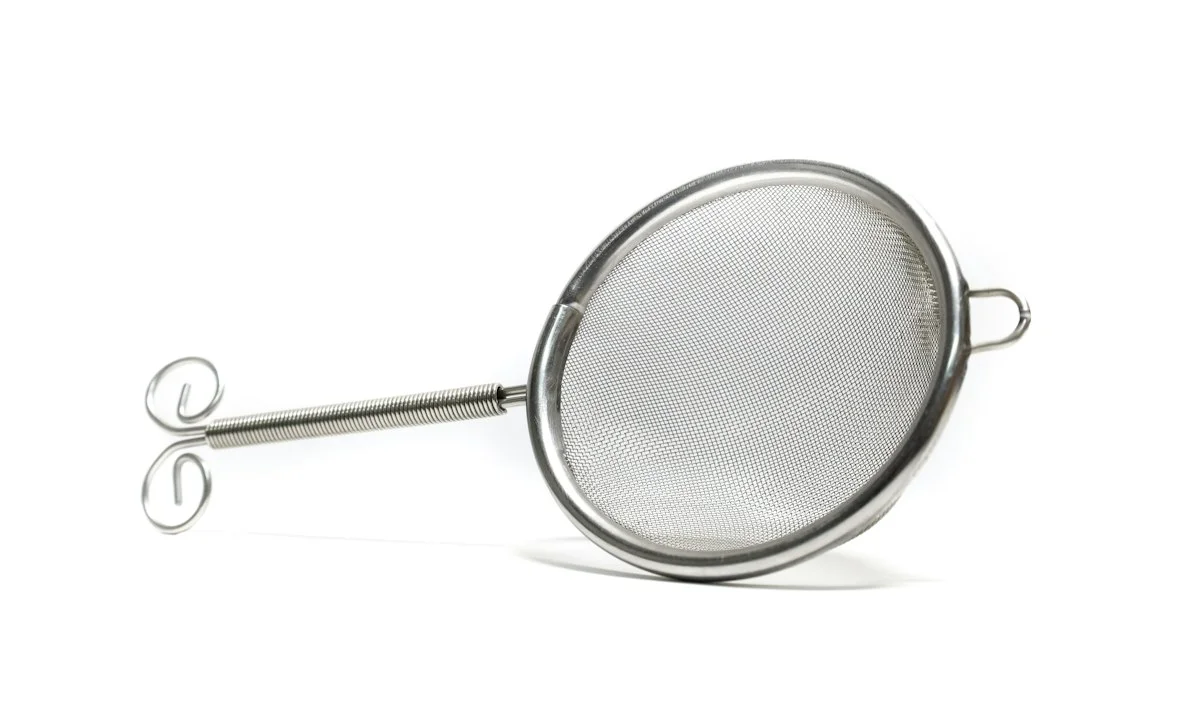
- A fine-mesh strainer—not a coarse colander. Fine mesh catches even small bits (peppercorns, herb stems). A conical “chinois” works beautifully but isn’t necessary.
- A large bowl—big enough to hold all the stock plus the strainer without the strainer’s base touching the liquid. A 4- to 6-quart stainless steel mixing bowl is ideal.
- A ladle—a standard 4- to 8-ounce ladle gives you good control.
- Optional: cheesecloth or a nut milk bag—if you want totally clear stock, line the strainer with a double layer of damp cheesecloth.
Step-by-Step: Strain Without Panic
1. Let the Stock Cool Slightly (But Not Too Much)
Hot stock is dangerous—180°F or more. Let it cool for 10–15 minutes off the heat. The liquid will still be hot enough to pour, but the risk of burns and steam burns decreases. Do not let it cool to room temperature; bacterial growth becomes a concern if it sits in the “danger zone” (40°F–140°F) for more than two hours.
2. Set Up Your Station
Place your bowl on a stable counter. Put the strainer inside the bowl, making sure the feet or rim hold it securely above the bottom. If the strainer wobbles, choose a different bowl.
3. Remove Large Solids First (Optional but Helpful)
Use tongs or a slotted spoon to lift out the largest bones, chunks of meat, and vegetable pieces. This clears space in the pot and reduces the amount you have to strain. It also prevents the strainer from clogging too quickly.
4. Ladle, Don’t Pour
Dip the ladle into the stock, scoop up a full measure, and slowly pour it into the strainer. Let it drain completely before adding more. Move around the strainer to distribute solids evenly. If the strainer starts to fill with debris, pause and discard the solids (or set them aside for another use).
5. Finish with a Gentle Pour
Once the pot is mostly empty and the strainer bowl is nearly full, you can carefully pour the last inch or two from the pot directly into the strainer—but only if you feel confident. Otherwise, keep ladling. There’s no prize for speed.
Common Mistakes and How to Avoid Them
- Using a bowl that’s too small. The strainer sits in the bowl; you need at least 2 inches of clearance between the strainer’s base and the bottom of the bowl so the liquid can collect without backing up.
- Setting the strainer on a glass bowl. A hot strainer can crack tempered glass. Use metal, ceramic, or heatproof plastic.
- Forgetting to pour off the bowl occasionally. If you’re straining a large batch, the bowl will fill up. Have a second container ready, and when the bowl is three-quarters full, stop, remove the strainer, and transfer the strained stock to a storage container. Then continue.
- Trying to strain too fast. The liquid needs time to flow through. Patience prevents overflow.
- Using a spouted bowl. Spouts are for pouring, not for catching. A straight-sided bowl gives the strainer a stable seat.
When You Need Clear Stock: Cheesecloth or Fine-Mesh
For consommé or a crystal-clear broth, line the strainer with a double layer of damp cheesecloth or use a very fine chinois. Wring out the cheesecloth before use so it doesn’t dilute the stock. Dampening also prevents the cloth from absorbing too much liquid.
What to Do with the Solids
The strained solids are spent—they’ve given their flavor to the stock. Compost them or discard. (Though if you’re feeling frugal, you can pick out any meat for a second-use broth or dog food, but it won’t have much flavor left.)
A Note on Safety
Hot stock can cause serious burns. Always use oven mitts or a dry towel when handling the pot, and never lean over the strainer. Keep children and pets away from the work area. If you’re straining a very large batch, do it in stages, and never fill the pot more than two-thirds full before starting.
The One-Container Alternative: The Colander-and-Spoon Method
If you don’t have a fine-mesh strainer, you can use a colander lined with cheesecloth placed over a large bowl. The same ladling technique applies. The cheesecloth catches the fine particles, and the colander provides structure.
Cleaning Up
Stock can leave a greasy film on your strainer. Wash the strainer and bowl with hot soapy water as soon as they’re cool enough to handle. A stiff brush helps remove stubborn bits. Rinse well and dry completely before storing.
Why This Method Belongs in Your Kit
Straining stock isn’t a performance. It’s a quiet, necessary step that rewards a methodical approach. The ladle-and-bowl setup requires no special gear—just patience and a steady hand. Once you learn it, you’ll never go back to the risky tilt-and-pour. And your countertops will thank you.
Further Reading
No additional sources were provided for this article. For more kitchen basics, browse The Kit section on Bar6.com.
Note: Cooking times and food safety guidelines vary. For precise recommendations on cooling and storing stock, consult your local food safety authority or a trusted cookbook.


