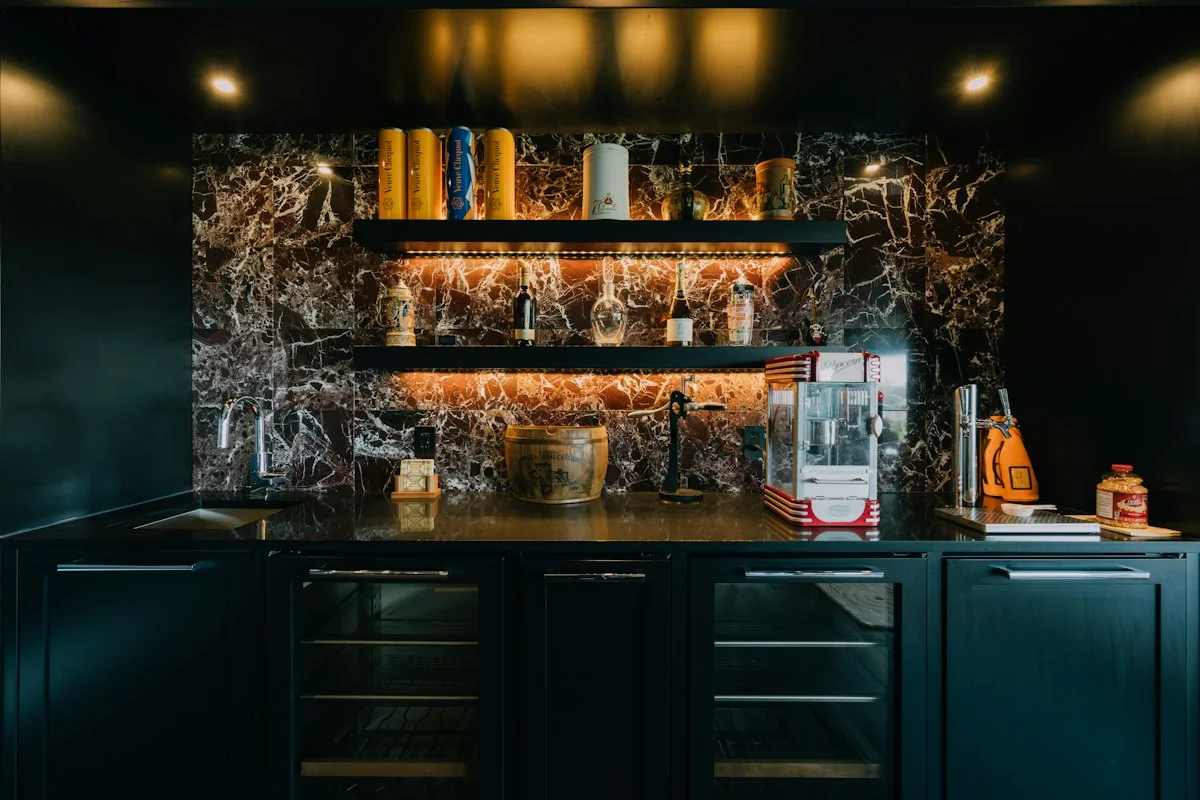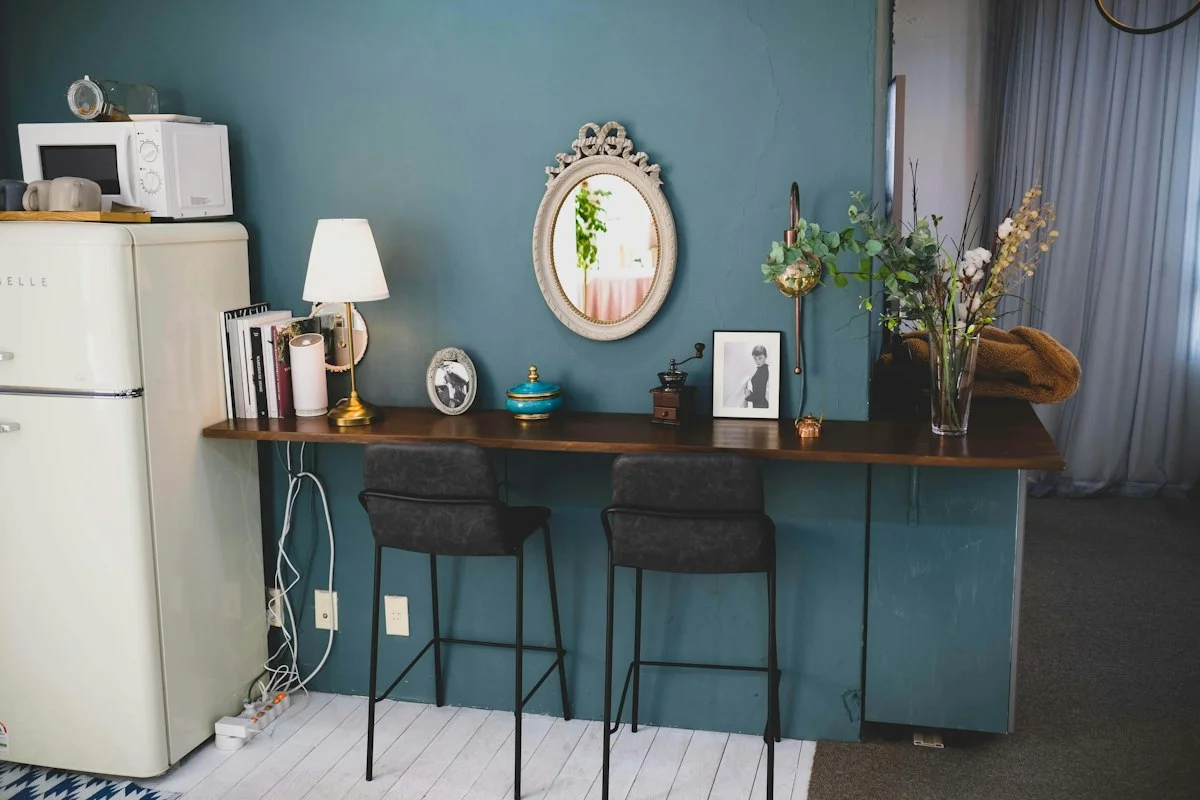
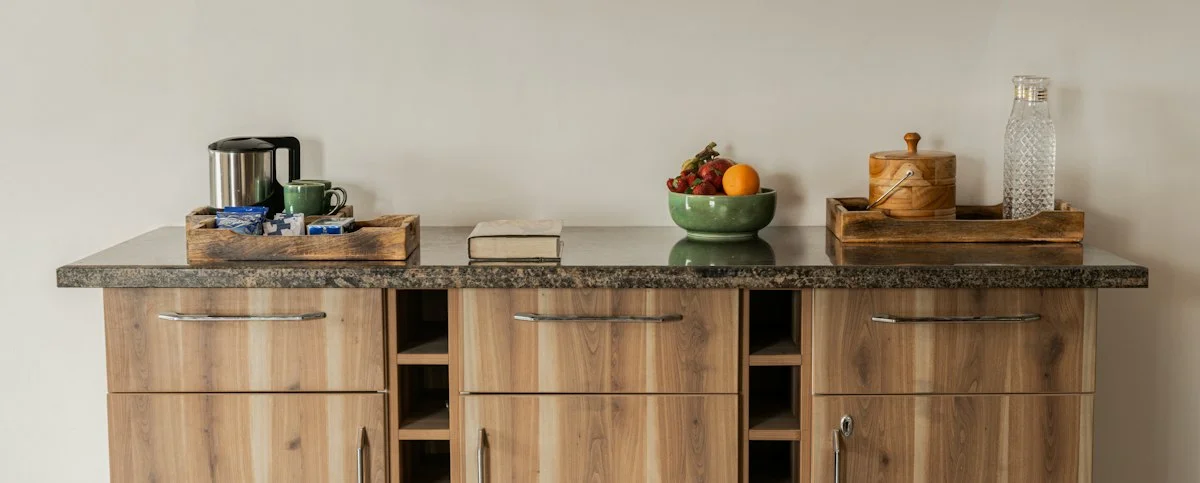
A sideboard makes an excellent home bar because it already solves the two problems most bar carts create: it provides a usable serving surface and hides the less attractive parts of drink storage. To turn a sideboard into a home bar without wasting storage space, divide it into working zones before adding bottles. Keep the top mostly clear for making and serving drinks; use drawers for small tools and cabinets for backstock, glassware, and larger bottles.
The goal is not to display everything you own. It is to create a station that works for a weeknight drink and can quickly serve a few guests. A small, organized selection will be easier to use than a cabinet packed with duplicate bottles, novelty glassware, and mixers that have no assigned home.
Start by assessing the sideboard
A sideboard, buffet, and credenza are closely related furniture forms: generally low, wide cabinets with a flat top and a mix of drawers, doors, or shelves. That combination makes them particularly useful for drinks service as well as storage.
Before moving bottles in, inspect the piece as furniture first.
Check stability and placement
Make sure the sideboard sits level and does not rock when cabinet doors or drawers are opened. If it is tall, narrow, or placed where children may climb on it, consider securing it appropriately to the wall according to the furniture maker’s guidance.
Choose a location that supports how you entertain:
- Near the dining table works well for pre-dinner drinks and wine service.
- Near, but not inside, the kitchen keeps guests from gathering in the cooking zone.
- In a living room, use the top for simple service and keep preparation supplies inside.
- Avoid direct sun, radiators, and damp areas, which are poor conditions for bottles, labels, and wood furniture.
Measure the storage you actually have
Open every drawer and cabinet door fully. Note shelf height, depth, and whether doors need clearance around nearby furniture. A shallow credenza may be ideal for glassware and tools but awkward for tall bottles stored upright.
Do not assume shelves can handle unlimited weight. Bottles, glassware, and ice buckets add up quickly. Use the furniture maker’s stated limits if available. If the piece is older or its shelves bow, keep the heaviest bottles low and avoid concentrating all weight in one cabinet.
Assign zones before you buy organizers
The most effective buffet cabinet bar setup follows the order in which you make and serve a drink: choose a bottle, reach for a glass, use a tool, add a mixer or garnish, then clear away the used items.
A practical sideboard can be divided into five zones.
| Zone | Best location | What belongs there |
|---|---|---|
| Serving zone | Top surface | A small tray, a few currently useful bottles, napkins, water, and a bowl for citrus or garnish waste |
| Pouring zone | Cabinet closest to the working side | Everyday spirits, wine, vermouth or aperitifs, and frequently used mixers |
| Glassware zone | Upper shelf or easy-access cabinet | Everyday tumblers, wine glasses, coupes, and a few guest extras |
| Tool zone | Top drawer | Jigger, opener, corkscrew, strainer, peeler, bar spoon, small knife, and coasters |
| Reserve zone | Lowest or least accessible cabinet | Backup bottles, party supplies, unopened mixers, extra napkins, and rarely used glassware |
Choose one end of the sideboard as the working side. If you are right-handed, many people find it convenient to keep tools and the main bottle cabinet to the right; left-handed hosts may prefer the reverse. The exact direction matters less than keeping it consistent.
Keep the top surface clear enough to work
The top is the visual center of a sideboard home bar, but it should not become permanent bottle parking. A crowded top makes it hard to pour, encourages spills, and turns every gathering into a search for space.
Reserve the top for a small number of active items:
- A tray with two or three bottles you are currently serving
- A decanter or ice bucket when you are actively hosting
- A water carafe and glasses
- A small bowl of citrus or shelf-stable garnishes
- Napkins and coasters in a contained holder
Everything else should have a place inside.
Use a tray rather than arranging loose objects across the whole top. It creates a clear boundary, catches small drips, and can be lifted away when you need the entire surface for a buffet, dessert, or coffee service.
Protect wood, veneer, and painted finishes with coasters, a washable bar mat, or a tray with a moisture-resistant base. Wipe condensation and spills promptly, particularly around bottle bottoms and metal shakers. If your sideboard has a delicate finish, check its care instructions before using cleaners or adhesive liners.
Organize liquor storage in a sideboard by frequency
Liquor storage in a sideboard works best when bottles are arranged by use, not by category alone. Put the bottles you reach for most often at the front, with occasional bottles and backups behind or below them.
A restrained everyday collection might include a few base spirits, one or two lower-proof options, and bottles that suit the drinks you genuinely make. The right number depends on your habits, but every bottle should earn its space.
Store bottles upright
Keep spirits, liqueurs, wine, and mixers upright unless a producer specifically indicates otherwise. Use a low-sided bin or tray inside the cabinet to group bottles and contain a leak if a cap fails. Tall bottles may need their own cabinet shelf rather than a drawer.
If you keep wine or sparkling wine, make sure the cabinet has enough vertical clearance and that opening a door will not disturb the bottles. A sideboard is usually more useful for short-term, ready-to-serve wine than for building a large collection.
Separate opened and unopened stock
Keep opened bottles in the active pouring zone. Put unopened replacements in the reserve zone, ideally with labels facing forward. This simple separation helps you avoid opening a second bottle before finishing the first.
Review your stock every few months. Move overlooked bottles forward, discard anything clearly past its best, and stop replacing bottles that are never used.
Make drawers do the small-item work
Drawers are valuable DIY home bar storage because they prevent tools from spreading across the counter. They are also where a bar station often becomes messy, so give each drawer a narrow purpose.
A top drawer can hold the everyday tool kit:
- Jigger
- Corkscrew and bottle opener
- Hawthorne or fine strainer
- Bar spoon
- Citrus peeler
- Small paring knife with a blade cover or dedicated organizer
- Matches or lighter, if used for candles rather than drink preparation
- Cocktail napkins and coasters
Use simple drawer dividers, shallow bins, or folded cloth liners to keep metal tools from rattling around. Avoid filling the drawer with gadgets that duplicate one another. A reliable jigger and a basic strainer are more useful than several specialty tools used once a year.
Use a second drawer, if available, for non-tool supplies: paper napkins, reusable picks, bottle stoppers, wine markers, small menus, and labels. Keep batteries, chargers, household paperwork, and unrelated kitchen items elsewhere. Mixing categories is how a bar drawer becomes unusable.
Plan glassware for daily use and guests
Store sturdy, everyday glassware where it is easiest to reach. Put delicate or rarely used pieces farther back, higher up, or in a separate cabinet section. If shelves are tall, stackable shelf risers can help, but do not create unstable towers of glass.
For a compact home bar, prioritize versatile glasses over a different shape for every drink. Tumblers, wine glasses, and one stemmed or cocktail option cover most casual occasions. Keep a small number of extra glasses for guests rather than storing large sets that only appear once a year.
If your sideboard has glass doors, remember that visible storage still needs editing. Display a neat row of attractive glasses or a few special bottles; conceal mismatched extras, cleaning cloths, and plasticware behind solid doors or in drawers.
Set up a guest-ready routine
When guests are coming, do not put every bottle on display. Build a short menu around two or three easy choices, then set out only what supports those drinks.
A useful pre-guest checklist:
- Clear the top and wipe it dry.
- Put out coasters, napkins, water, and a small waste bowl.
- Chill what needs chilling and confirm you have enough ice close by.
- Move active bottles to a tray rather than lining them across the surface.
- Set out the glasses guests will use, keeping extras inside.
- Check openers, corkscrews, and the tools required for the planned drinks.
- Keep reserve bottles and replacement mixers in the cabinet, not on the counter.
For larger gatherings, use the sideboard as a self-serve station for simple drinks and water, while keeping shaken or more complicated cocktails in the kitchen. This reduces congestion and lets guests help themselves without handling every bottle you own.
Common mistakes to avoid
Treating the sideboard like a bottle display
A wall of labels can look impressive but often wastes the flat top and makes cleaning harder. Display only a few bottles with a current purpose.
Storing every bar item together
A cocktail shaker, table linens, batteries, serving platters, and random bottles should not compete for the same drawer. Divide storage by task.
Putting heavy bottles on weak or high shelves
Keep substantial weight low and distributed. If a shelf seems strained, reduce the load rather than adding more organizers.
Buying containers before setting the system
Bins and risers can help, but they cannot fix an unclear inventory. First decide what belongs in the bar; then choose containers sized to those items.
Leaving refrigerated ingredients in the cabinet
Shelf-stable supplies can live in the sideboard, but ingredients that require refrigeration should stay refrigerated until serving. Check package labels for storage guidance, especially after opening.
A simple layout for most sideboards
If your piece has two cabinets and a center drawer bank, use one cabinet for active bottles and mixers, the other for glassware, and the drawers for tools and supplies. Put backups, party-sized items, and seasonal glassware on the lowest shelves or farther back.
That layout keeps the visible top calm, protects valuable storage space, and allows the sideboard to return to regular dining-room duty when needed. The best home bar furniture does not announce itself with clutter. It makes pouring a drink, hosting a few people, and putting everything away feel straightforward.