
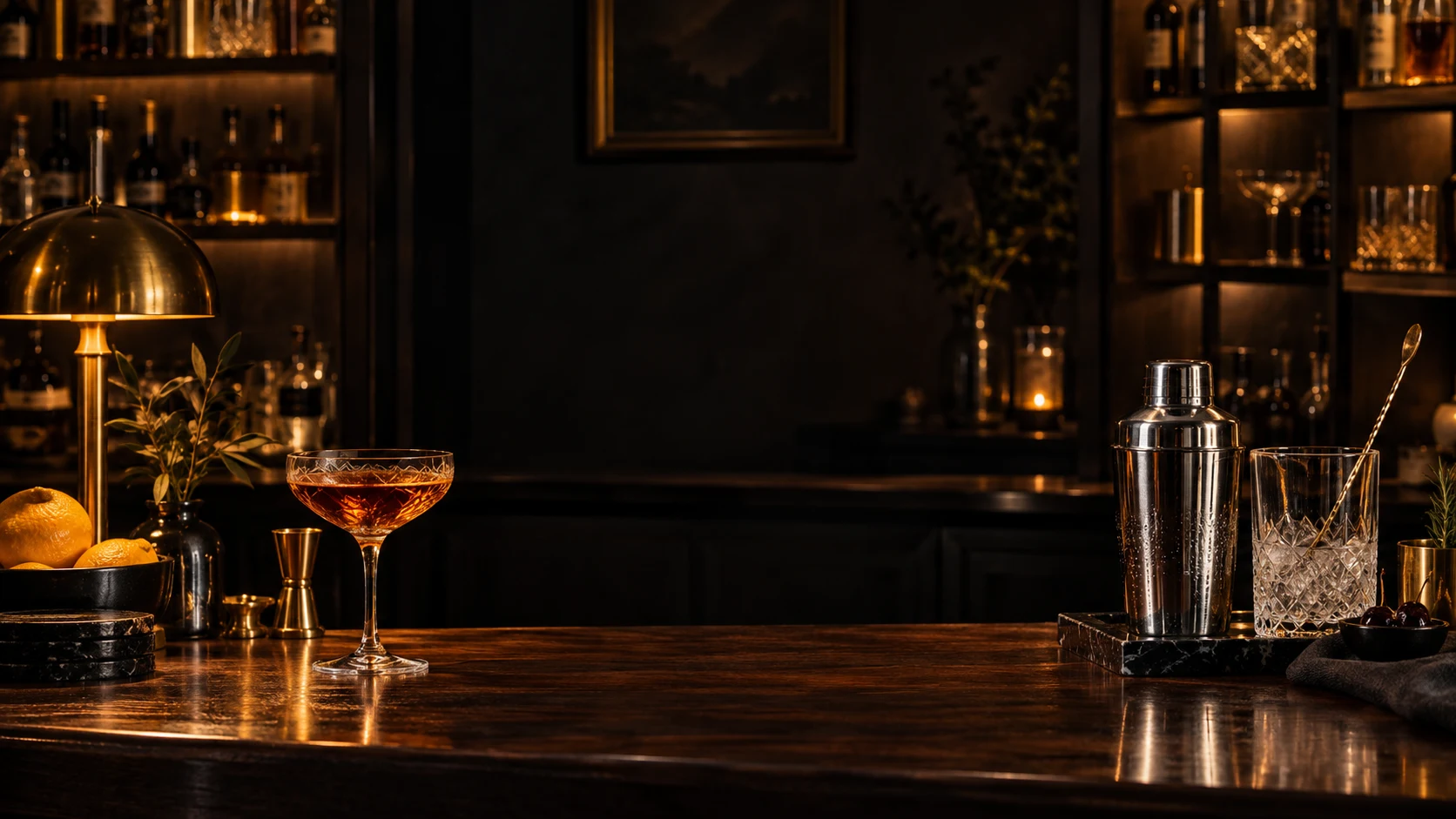
The most reliable Vieux Carré recipe uses equal parts rye whiskey, cognac, and sweet vermouth, with a smaller measure of Benedictine and a few dashes of bitters. For one drink, stir ¾ ounce each of rye, cognac, and sweet vermouth with ½ ounce Benedictine, two dashes of Peychaud’s bitters, and two dashes of Angostura bitters. Stir with ice until cold and properly diluted, then strain over one large cube in a rocks glass and garnish with a lemon twist.
The drink is spirit-forward, but it should not taste hot, syrupy, or dominated by one ingredient. Rye supplies structure and spice; cognac adds roundness; sweet vermouth brings wine-like depth; Benedictine contributes sweetness and herbal richness; the bitters keep the finish focused.
Vieux Carré recipe
Ingredients
- ¾ ounce rye whiskey
- ¾ ounce cognac
- ¾ ounce sweet vermouth
- ½ ounce Benedictine
- 2 dashes Peychaud’s bitters
- 2 dashes Angostura bitters
- Lemon twist, for garnish
- Ice
Equipment and glassware
- Mixing glass
- Bar spoon
- Julep strainer or other strainer
- Chilled rocks glass
- One large ice cube, if available
Method
- Add the rye, cognac, sweet vermouth, Benedictine, Peychaud’s bitters, and Angostura bitters to a mixing glass.
- Fill the mixing glass with ice.
- Stir steadily for about 20 to 30 seconds, or until the drink is thoroughly chilled and slightly diluted.
- Strain over one large cube in a chilled rocks glass.
- Express a lemon twist over the surface, rub it around the rim if you like, and place it in the drink.
This makes one generously sized cocktail before dilution. If you prefer a smaller pour, use ½ ounce of each base ingredient and ¼ ounce Benedictine, keeping the bitters to taste.
How to balance a Vieux Carré
The classic structure can look busy on paper, but each component has a clear job. Treat the recipe as a series of adjustments rather than five competing flavors.
Rye whiskey: the backbone
Rye gives the drink its dry, peppery frame. A moderately assertive rye works well because it can stand up to Benedictine and sweet vermouth without making the cocktail taste rough. Very high-proof rye may need a little more stirring, while a softer rye can make the finished drink rounder and sweeter.
If the cocktail tastes too sweet, the first adjustment is usually not to remove the Benedictine. Try a spicier or drier rye, stir a little longer, or reduce the sweet vermouth slightly on the next pour.
Cognac: weight and texture
Cognac smooths the rye’s sharper edges and adds fruit, oak, and a fuller mid-palate. It should support the whiskey rather than disappear behind it. A straightforward VS or VSOP-style cognac is a practical choice; there is no need to use a particularly old or expensive bottle in a cocktail with several other strong flavors.
If you substitute brandy, choose one with enough body to match the rye. A very light brandy may leave the drink tasting thin, while an especially sweet or heavily flavored brandy can push the cocktail toward dessert territory.
Sweet vermouth: the wine-based center
Sweet vermouth connects the two base spirits and gives the drink its darker, more layered character. Because vermouth is a significant part of the recipe, its freshness matters. Store an opened bottle refrigerated and pay attention to whether it still smells lively and herbal. Flat vermouth can make the cocktail taste dull even when the spirits are in good condition.
A rich, sweet vermouth will produce a rounder drink. A more bitter or herbaceous style will make the Vieux Carré feel drier and more complex. If your vermouth is particularly rich, begin with a slightly smaller pour and adjust after tasting.
Benedictine: sweetness and herbal lift
Benedictine is concentrated, so the smaller measure is intentional. It adds honeyed sweetness, baking spice, and herbal notes. Increasing it by even a small amount can make the cocktail noticeably heavier.
For a more restrained drink, use ¼ ounce Benedictine. For a richer after-dinner version, the full ½ ounce will give the cocktail a deeper, sweeter profile—but only if the rye and dilution provide enough counterweight.
The bitters: shape, not decoration
Peychaud’s bitters bring an aromatic, lightly anise-like quality, while Angostura adds spice and bitterness. Together they keep the drink from reading as simply a sweet whiskey cocktail. Measure by dashes rather than pouring freely; the small quantity has a large effect in a drink this concentrated.
Why stirring and dilution matter
A Vieux Carré is not shaken because it contains no citrus, dairy, egg, or other ingredient that needs rapid aeration. Stirring chills the drink while gradually adding water from the melting ice. That water is part of the recipe: without it, the spirits can taste hot and the Benedictine and vermouth may seem overly concentrated.
Use plenty of cold ice in the mixing glass. A few small, wet cubes may dilute the drink quickly without chilling it evenly, while a full glass of solid ice gives you better control. Stir until the outside of the mixing glass is cold and the drink tastes integrated. If the first sip is sharp or heavy, stir a little longer before changing the recipe.
Serving the drink over one large cube slows further dilution. If you prefer a colder, more elegant presentation, strain it into a chilled coupe or Nick and Nora glass. That version will warm more quickly, so chill the glass thoroughly and serve it immediately.
Practical substitutions
No rye whiskey
Use bourbon for a softer, sweeter Vieux Carré. To keep the drink from becoming too rich, consider reducing the Benedictine to ¼ ounce or choosing a drier sweet vermouth.
Canadian whisky can also work if it has enough spice and body. The result will generally be lighter and less peppery than the rye version.
No cognac
A good grape brandy is the closest substitute. Armagnac can add a more rustic, assertive character; use it when you want the brandy component to be more noticeable. Avoid replacing the cognac with another whiskey unless you specifically want a substantially different drink.
No Peychaud’s bitters
The cocktail will still work with Angostura alone, but it will lose some of its distinctive aromatic lift. Use a few additional dashes of Angostura cautiously rather than trying to match the volume one-for-one.
No large ice cube
Strain the drink over regular fresh ice. It may dilute somewhat faster, so serve it promptly and avoid topping up the glass repeatedly.
Common mistakes
- Using equal parts of everything: Benedictine is sweeter and more concentrated than the base spirits, so it belongs in a smaller measure.
- Skipping dilution: A Vieux Carré served straight from the bottle will taste hot and disjointed.
- Over-stirring with poor ice: Warm, rapidly melting ice can make the drink watery before it becomes properly cold.
- Using tired vermouth: Oxidized vermouth can flatten the drink’s herbal and wine-like character.
- Adding a large garnish: A lemon twist is enough. Too much peel or juice can shift the cocktail away from its stirred, spirit-forward profile.
A simple ratio to remember
For the standard build, remember:
3 parts rye and cognac, 3 parts sweet vermouth, 2 parts Benedictine, and bitters to taste.
In practical terms, that is ¾ ounce each of rye, cognac, and sweet vermouth, plus ½ ounce Benedictine. If the result feels too sweet, adjust the vermouth or Benedictine first. If it feels too hot, improve the chilling and dilution before changing the spirit ratio.
The best Vieux Carré is not the strongest possible version. It is the one where the rye remains distinct, the cognac fills out the middle, the vermouth gives the drink depth, and Benedictine adds sweetness without taking over.