
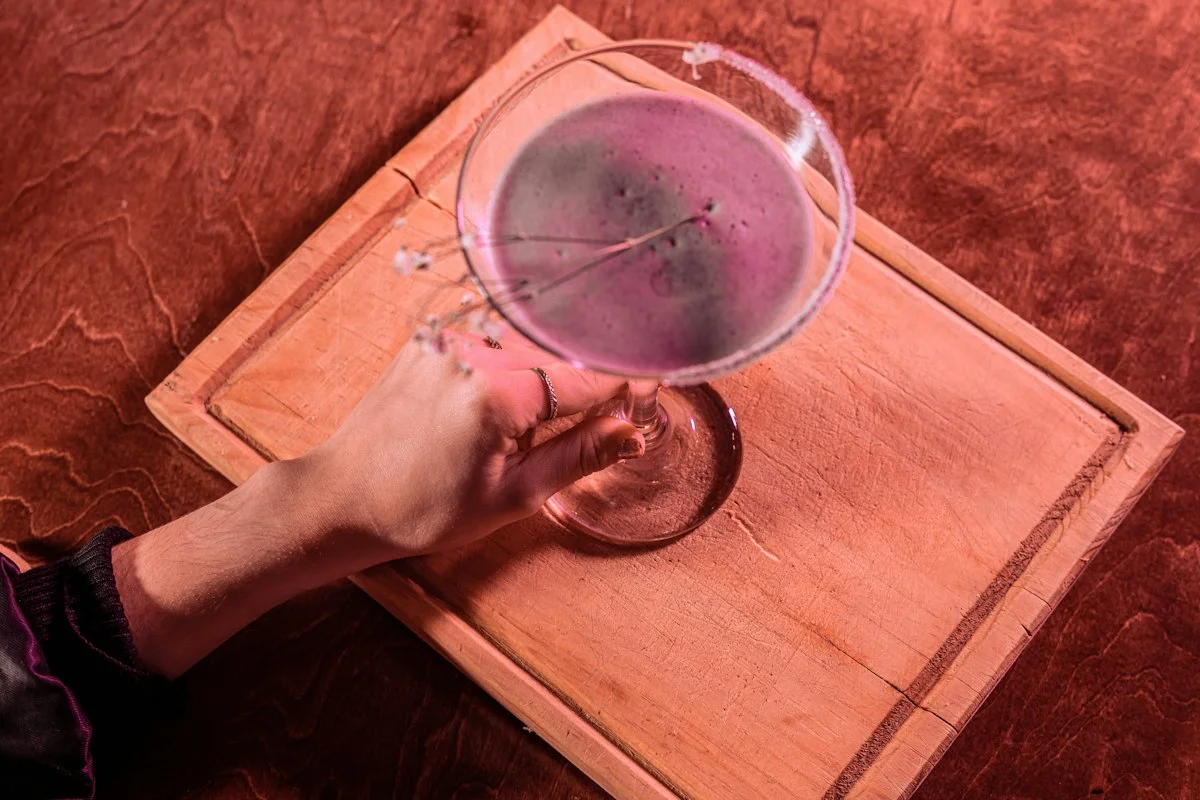
Crème de violette is easiest to use when you treat it as an accent: usually a small pour added to gin, lemon, sparkling wine, or another dry, citrus-led ingredient. Its color is dramatic, but its flavor is more powerful still. A little can bring a soft violet aroma and pale lavender hue; too much can make a drink taste sweet, soapy, or like potpourri.
The most useful answer to what to make with crème de violette is an Aviation cocktail. Once you have that balance in mind, the same bottle can also make a simple gin sour, a sparkling aperitif, or a lemon-and-tonic highball. The common rule is straightforward: begin with less violet liqueur than you think you need, then adjust only after tasting.
What is crème de violette?
Crème de violette is a sweet floral liqueur made with violets. Despite the word “crème,” it does not contain dairy; in liqueur terminology, the word generally refers to a sweet style. It is usually purple or blue-violet and has an assertive floral perfume.
That intensity is why crème de violette cocktails need structure. Gin gives it botanical backbone, lemon gives it acidity, and sparkling wine or tonic can dilute and lift its sweetness. Maraschino liqueur is a particularly good partner because its dry, bittersweet cherry character helps round out violet’s floral notes without making a drink taste like fruit punch.
The Aviation is the best-known example. As Liquor.com notes in its Aviation recipe, gin, maraschino liqueur, fresh lemon, and crème de violette create a floral drink that needs careful measuring because the violet liqueur can quickly dominate.
How to use crème de violette without overwhelming a drink
Use these practical guidelines before opening the bottle:
- Start with a quarter-ounce. This is often enough to add color and floral character to a single drink.
- Pair it with acid. Fresh lemon juice is the most reliable counterweight to its sweetness and perfume.
- Choose a dry base. London dry gin, dry sparkling wine, tonic water, and dry vermouth keep the drink from becoming cloying.
- Avoid piling on floral ingredients. Lavender syrup, rosewater, elderflower liqueur, and heavily perfumed gin can make violet harder to control.
- Use a jigger. Free-pouring is the quickest route to an overly sweet, overly floral cocktail.
- Taste before increasing the amount. Color is not a reliable guide; a small pour can look subtle while contributing a lot of flavor.
If you mainly want the aroma, one bartender suggestion is to decant a little liqueur into a small atomizer and spray the finished drink lightly rather than adding more liquid. Tasting Table describes this approach as a way to capture violet fragrance without letting the flavor take over.
1. Aviation cocktail recipe
The Aviation is the essential crème de violette cocktail: dry gin and bright lemon keep the drink sharp, maraschino adds depth, and a restrained measure of violet liqueur gives it its distinctive floral finish.
Yield: 1 cocktail
Glass: Chilled coupe
Equipment: Cocktail shaker, jigger, fine strainer
Ingredients
- 2 ounces gin
- 1/2 ounce fresh lemon juice
- 1/2 ounce maraschino liqueur
- 1/4 ounce crème de violette
- Lemon twist or cocktail cherry, for garnish
Method
- Chill a coupe glass.
- Add the gin, lemon juice, maraschino liqueur, and crème de violette to a shaker filled with ice.
- Shake until very cold.
- Fine-strain into the chilled coupe.
- Garnish with a lemon twist or a cherry.
Balance and common mistakes
The drink should be tart, cool, lightly floral, and only moderately sweet. If it tastes like violet candy, reduce the crème de violette slightly on the next round. If it tastes thin or very sour, check the lemon measurement before adding more liqueur; maraschino is sweet enough that the Aviation rarely needs simple syrup.
Some historical and modern Aviation recipes omit crème de violette altogether, so leaving it out is a reasonable option if you prefer a drier gin-and-maraschino sour. But if violet liqueur is the reason the bottle came home, this restrained version is the most useful place to begin.
2. Violet Gin Sour
This is a simpler alternative when maraschino liqueur is not in the cabinet. It makes the violet flavor slightly more obvious than an Aviation, so keep the pour small.
Yield: 1 cocktail
Glass: Coupe or small rocks glass
Ingredients
- 2 ounces dry gin
- 3/4 ounce fresh lemon juice
- 1/4 ounce crème de violette
- 1/4 ounce simple syrup
- Lemon peel, for garnish
Method
Shake all ingredients with ice and strain into a chilled coupe, or strain over fresh ice in a rocks glass. Express a lemon peel over the surface and discard it or use it as garnish.
Adjustment: If your gin is notably soft or floral, begin with a little less crème de violette. A crisp, juniper-forward gin gives the drink clearer definition.
3. Violet French 75-Style Sparkler
Sparkling wine is a good route for violet liqueur because bubbles spread the aroma while the wine keeps the drink light. This is best served as an aperitif rather than a very sweet brunch drink.
Yield: 1 cocktail
Glass: Flute or small wine glass
Ingredients
- 1 ounce gin
- 1/2 ounce fresh lemon juice
- 1/4 ounce crème de violette
- 3 ounces chilled dry sparkling wine
- Lemon twist, for garnish
Method
Shake the gin, lemon juice, and crème de violette briefly with ice. Strain into a chilled flute, then top with sparkling wine. Give the drink one gentle stir and garnish with lemon.
Keep it balanced: Use dry sparkling wine. A sweeter sparkling wine combined with violet liqueur can make the drink feel heavy.
4. Violet Collins
For a long, low-effort drink, use tonic or soda water to stretch a small amount of liqueur. Tonic adds bitterness; soda water makes a cleaner, more citrus-led highball.
Yield: 1 cocktail
Glass: Collins or highball glass
Ingredients
- 1 1/2 ounces gin
- 3/4 ounce fresh lemon juice
- 1/4 ounce crème de violette
- 3 to 4 ounces chilled tonic water or soda water
- Lemon wheel, for garnish
Method
Fill a highball glass with ice. Add gin, lemon juice, and crème de violette. Top with tonic or soda water and stir gently once or twice. Garnish with a lemon wheel.
Choose tonic for a more bitter, slightly more complex drink. Choose soda water if you want the gin and violet to stay more transparent.
5. Violet Vermouth Spritz
This option is useful when you want a lower-intensity drink with less citrus. Dry vermouth supplies herbal, wine-like bitterness that reins in the liqueur’s sweetness.
Yield: 1 cocktail
Glass: Wine glass
Ingredients
- 2 ounces dry vermouth
- 1/4 ounce crème de violette
- 3 ounces chilled dry sparkling wine
- 1 ounce soda water
- Lemon peel or grapefruit peel, for garnish
Method
Fill a wine glass with ice. Add dry vermouth and crème de violette, then top with sparkling wine and soda water. Stir gently and garnish with a citrus peel.
This is not meant to be deeply purple. A paler drink is usually a sign that the vermouth, wine, and violet liqueur are still in proportion.
Substitutions and pantry workarounds
Crème de violette is difficult to duplicate exactly, but the cocktails above are forgiving when adjusted thoughtfully.
- No maraschino liqueur: Make the Violet Gin Sour instead of forcing a substitute into an Aviation. Cherry brandy and regular cherry syrup are usually much sweeter and less dry than maraschino liqueur.
- No sparkling wine: Use soda water for a lighter highball, or tonic water for a more bitter one.
- No gin: Vodka makes a cleaner but less structured drink. A dry, lightly herbal vodka-and-lemon build can work, though gin is generally the stronger match.
- No fresh lemon: Wait until you have it. Bottled lemon juice can taste flat or harsh in a cocktail where citrus provides much of the balance.
- Too much violet flavor: Add more gin, lemon, or chilled soda water rather than more syrup or another sweet liqueur.
A short buying and serving checklist
Before planning violet liqueur cocktails for guests, make sure you have:
- A jigger for small measurements
- Fresh lemons
- A dry gin
- Ice in enough quantity for shaking and serving
- One dry modifier: maraschino liqueur, dry vermouth, sparkling wine, tonic, or soda water
- Chilled coupe glasses or highball glasses
A single bottle goes further than its color suggests because most drinks use only a modest measure. Keep the rest of the recipe dry, acidic, or gently bitter, and crème de violette becomes a flexible accent rather than a one-cocktail novelty.


