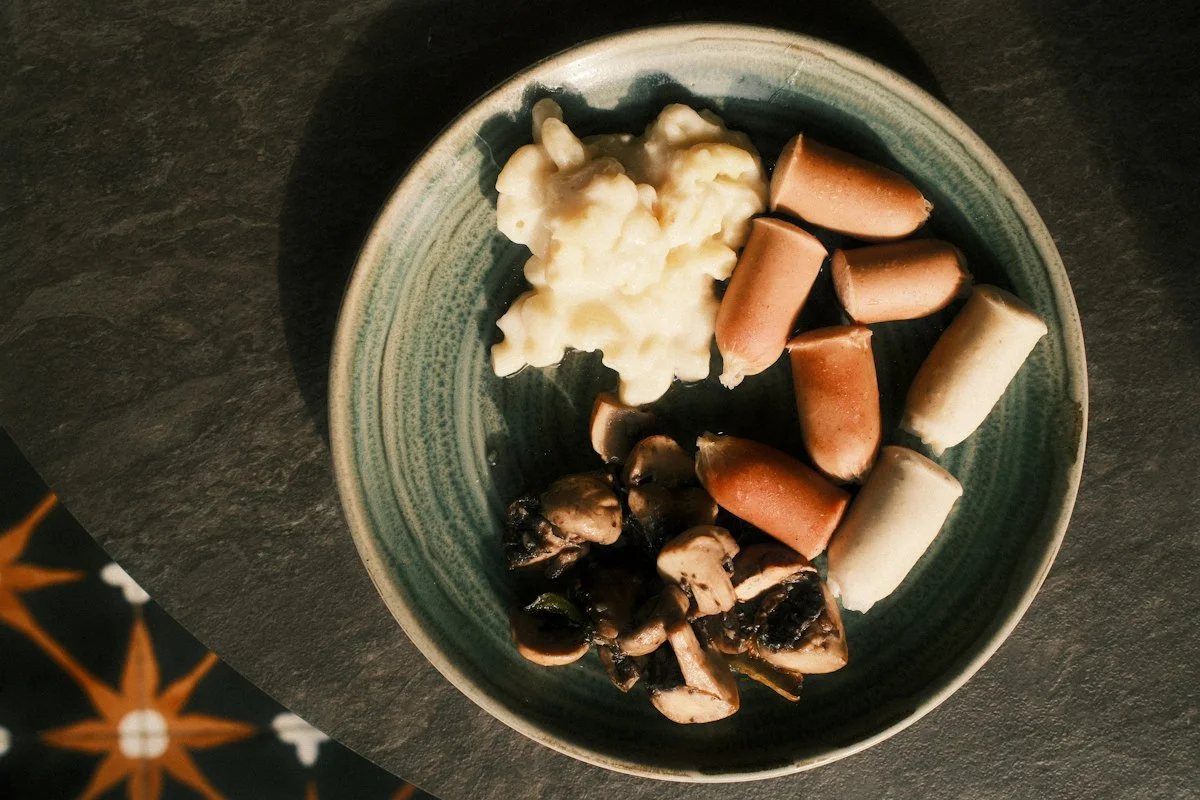

A successful dinner party for guests with dietary restrictions does not require several separate meals. The easier approach is to build one menu from dishes that are naturally flexible, keep the most sensitive ingredients out of the main preparations, and offer a few clearly labeled additions at the table.
Start by asking guests what they can and cannot eat, then plan around the strictest requirement that affects the meal. A shared base—such as roasted vegetables, rice, potatoes, beans, or a simple salad—can support several kinds of diners without feeling like a compromise. Add sauces, garnishes, bread, cheese, or a protein separately so people can assemble a plate that works for them.
Ask better questions before you plan
“Do you have any dietary restrictions?” is a useful start, but it may not provide enough detail for cooking for food allergies or other serious needs. Ask privately and early:
- Is this an allergy, an intolerance, a medical diet, a religious restriction, or a preference?
- Which ingredients or categories must be avoided?
- Is cross-contact a concern?
- Are there packaged ingredients, sauces, or shared cooking surfaces that should be avoided?
- What would make the meal comfortable for you?
Do not ask the guest to defend the restriction or decide whether an ingredient is “probably fine.” If the answer is unclear, choose another ingredient or ask the guest what they prefer. For a serious allergy, follow the guest’s instructions and verify packaged ingredients and preparation guidance through an appropriate official food-safety or health authority.
It also helps to ask whether the guest is comfortable with a menu that is mostly plant-based, naturally gluten-free, dairy-free, or another shared format. This turns a restriction into a planning detail rather than a surprise at the table.
Build one flexible menu
The strongest inclusive dinner party menu usually has four parts:
- A dependable base: rice, potatoes, polenta, quinoa, beans, or vegetables.
- A main component: roasted fish, chicken, tofu, lentils, or another option that suits the group.
- A fresh element: salad, herbs, citrus, or raw vegetables.
- Separate finishes: dressings, sauces, cheese, nuts, bread, or spicy condiments served on the side.
For example, a simple dinner could include roasted vegetables, herbed rice, a green salad with dressing served separately, and one main protein. A plant-based guest can eat the vegetables and rice with beans or lentils; a guest avoiding dairy can skip cheese; and a guest avoiding gluten can choose the rice instead of bread—provided every packaged ingredient and preparation step has been checked for the relevant concern.
This structure works because the meal does not depend on one substitute product. It also gives every guest some choice without placing a special plate in front of one person.
Choose naturally adaptable dishes
Some dishes are easier to adapt than others. Favor:
- Grain and vegetable bowls with toppings served separately
- Taco or lettuce-wrap spreads with several fillings
- Roasted vegetables with a protein and starch
- Soups or stews whose base does not rely on cream, flour, or a restricted stock
- Large salads with dressing on the side
- Fruit-based desserts with optional cream or ice cream
Be cautious with dishes where one ingredient is structural, such as a pastry, creamy gratin, filled pasta, or sauce made with a specific stock. Substituting at the last minute can change the texture and may introduce another restricted ingredient.
Keep the main dish simple
A complicated centerpiece creates more opportunities for hidden ingredients and cross-contact. A straightforward roast, tray of vegetables, pot of rice, or legume-based main is easier to inspect and explain.
Read labels on stock, spice blends, sauces, marinades, breads, desserts, and prepared ingredients. Words such as “seasoning,” “natural flavors,” or “may contain” can matter, depending on the restriction. If you cannot confirm an ingredient, leave it out or choose a product with clearer information.
For serious allergies, use clean equipment and work surfaces as directed by the guest or an appropriate official source. Keep questionable ingredients away from the food rather than trying to remove them after cooking. A garnish added at the end, a shared utensil, a cutting board, or a smear of sauce can matter as much as the main recipe.
Prevent cross-contact at the table
Cross-contact is different from simply serving an ingredient on the side. It can happen when the same spoon, knife, cutting board, pan, or serving utensil moves between foods.
Use separate serving utensils for each dish. Put sauces, butter, cheese, nuts, croutons, and bread on their own plates with their own spoons or knives. Do not place a restricted ingredient directly on a shared platter if guests may serve from it.
If the meal includes an ingredient that presents a serious concern, explain how it was prepared and where it is served. Do not promise that a dish is safe unless you can support that statement. Say what you know: “This dish contains no ingredients from the list you gave me, and I used separate utensils,” or “I could not verify this packaged sauce, so I left it out.”
If a guest has a severe allergy, ask what precautions they need before you begin cooking. General kitchen advice cannot replace the person’s medical guidance, and rules vary by allergen and situation.
Label without making anyone feel singled out
Small cards or a brief menu note can make dinner easier for everyone. Label dishes by what they contain or omit, rather than by a person’s name:
- Roasted carrots with herbs — contains no dairy
- Rice with lemon and parsley — gluten-free ingredients checked
- Green salad — dressing served separately
- Peanut sauce — contains peanuts
Avoid labels that suggest a dish is “special,” “safe for everyone,” or “allergy-proof” unless you can substantiate them. A clear ingredient note helps guests make their own decisions and prevents repeated questions while you are serving.
You can also mention the menu in advance. This gives guests a chance to flag an overlooked ingredient before dinner, when changing the plan is still easy.
Handle substitutions in the kitchen, not at the plate
The best substitution is often an omission. Serve the dressing separately instead of mixing it into the salad. Put cheese on the table instead of folding it into the vegetables. Use herbs, citrus, olive oil, or a simple sauce in place of a garnish that creates a problem.
When a replacement is necessary, test the whole menu for balance rather than treating it as a direct one-for-one swap. A dairy-free sauce may need more acidity; a gluten-free coating may brown differently; a meatless main may need a substantial sauce, beans, grains, or another source of richness. The goal is not to reproduce a restricted dish exactly. It is to serve a complete plate.
Keep one backup option available. This might be plain rice, vegetables, fruit, or a clearly verified packaged item. A backup is useful when a label is ambiguous, a dish is accidentally contaminated, or a guest’s needs change during the evening. It should be part of the plan, not presented as an apology.
Serve drinks with the same care
Dietary restrictions can affect drinks, mixers, garnishes, and shared bar tools too. Ask whether the guest avoids particular ingredients in cocktails, wine, beer, or nonalcoholic drinks. Keep a simple option available, such as sparkling water with citrus, and identify any drink containing a relevant ingredient.
Use clean glassware and separate garnishes when cross-contact matters. If alcohol is medically unsuitable or simply unwanted, offer the same thoughtful presentation in a nonalcoholic drink rather than making the guest request one.
A calm hosting checklist
Before shopping:
- Confirm each restriction and whether cross-contact matters.
- Choose a menu with a shared base and separate finishes.
- Check labels on packaged ingredients.
- Plan a backup food and drink.
Before cooking:
- Clean and organize the work area.
- Set aside separate utensils where needed.
- Prepare the dishes with the most restrictive requirements first, following the guest’s guidance.
- Keep ingredient packaging available for questions.
Before serving:
- Label dishes clearly.
- Place separate utensils with every dish.
- Keep restricted ingredients away from shared platters.
- Explain anything uncertain instead of guessing.
The aim is not to make every dish suitable for every person. It is to create a meal with enough shared food, clear information, and sensible choices that nobody has to arrive with a separate dinner—or spend the evening negotiating every bite.