
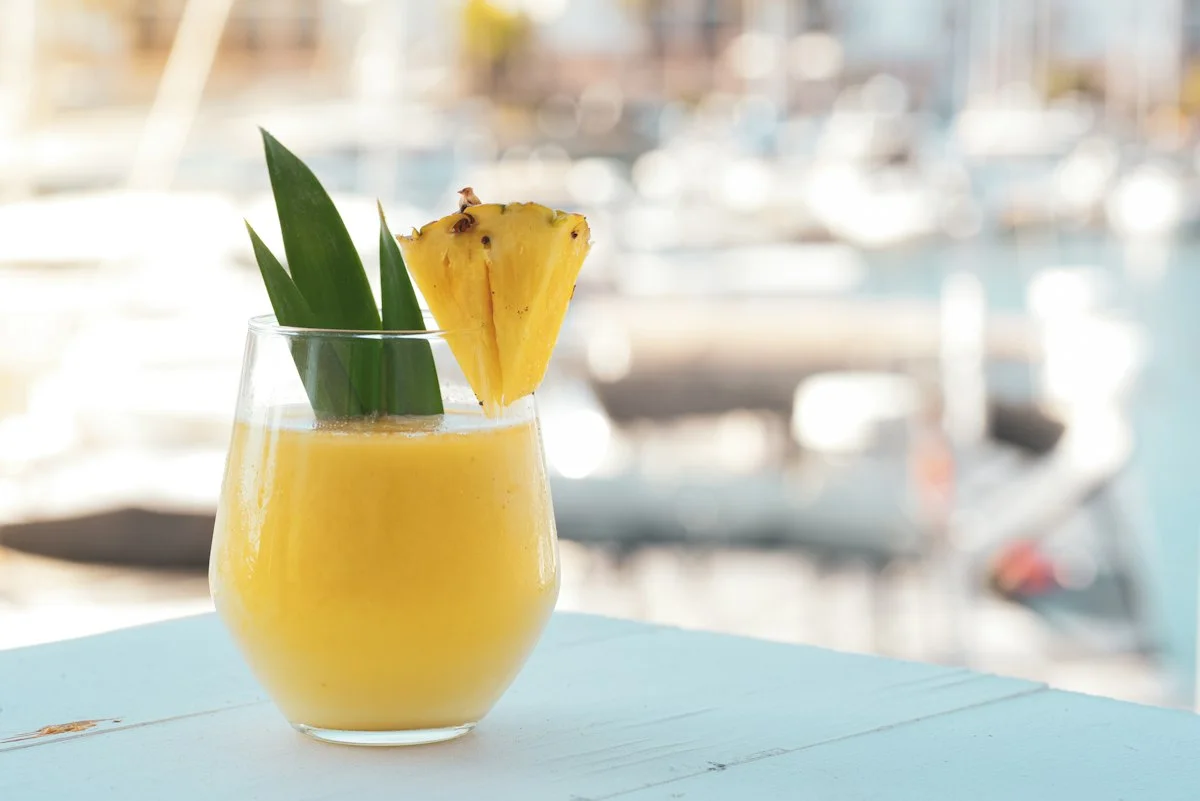
A good piña colada should taste like pineapple first, with rum underneath and coconut rounding everything out. The most reliable way to avoid a drink that is cloying, thin, or aggressively coconut-heavy is to use sweetened cream of coconut in a measured amount, choose pineapple juice with real tartness, and blend only until the drink is smooth and frosty.
This classic piña colada recipe makes one generous drink. It uses white rum, cream of coconut, pineapple juice, fresh lime juice, and crushed ice. The lime is a small but useful addition: it sharpens packaged pineapple juice and keeps the sweetness in check without turning the drink into a daiquiri.
Classic Piña Colada Recipe
Yield: 1 large drink
Equipment: Blender, measuring jigger or liquid measure, chilled hurricane glass or tall glass
Ingredients
- 2 ounces white rum
- 1 1/2 ounces cream of coconut
- 2 ounces pineapple juice
- 1/2 ounce fresh lime juice
- 1 cup crushed ice
- Pineapple wedge, pineapple leaf, or maraschino cherry, for garnish (optional)
Method
- Chill your serving glass while you prepare the drink. A hurricane glass is traditional, but any tall, roomy glass works well.
- Add the rum, cream of coconut, pineapple juice, lime juice, and crushed ice to a blender.
- Blend until completely smooth and frosty, stopping as soon as the ice is evenly broken down. Overblending warms the mixture and can make it loose.
- Taste before pouring. If the drink seems overly sweet, add a small squeeze of lime and blend briefly. If it is too tart or intense, add a small splash of pineapple juice.
- Pour into the chilled glass. Garnish simply, if desired, and serve immediately.
The Ingredient That Matters Most: Cream of Coconut
Cream of coconut and coconut cream are not always the same product, and confusing them is one of the most common reasons a piña colada goes wrong.
Cream of coconut is sweetened and formulated for drinks. It is thick, rich, and usually contains sugar. This is the ingredient intended for the recipe above.
Coconut cream is generally the thick, fatty portion of canned coconut milk. It may be unsweetened, and brands vary considerably in richness and texture. It can make a good drink, but it will not provide the sweetness of cream of coconut. If using unsweetened coconut cream, expect to add sweetener gradually to taste.
Coconut milk is thinner than either option. It can be useful when you want a lighter drink, but replacing all of the cream of coconut with coconut milk usually produces a piña colada that tastes less lush and less complete.
Before measuring, stir cream of coconut thoroughly in its container. It can separate in storage, leaving dense sweetness at the bottom and a thinner layer on top. An unstirred product can make one drink bland and the next excessively sweet.
How to Choose the Rum and Pineapple Juice
A clean white or lightly aged rum is the easiest choice for a classic piña colada. Its job is not to dominate the fruit and coconut, but to give the drink structure and a dry, cane-like finish. A fuller aged rum can work if you prefer more vanilla, oak, or caramel notes, though it will move the drink away from the light classic profile.
Avoid assuming coconut rum is a direct substitute for regular rum. It can be enjoyable, but it often adds sweetness and coconut flavor at the same time. If using it, consider reducing the cream of coconut slightly, then taste before adding more.
For pineapple juice, use a juice you would happily drink on its own. Fresh juice has a brighter, more aromatic flavor, but a good refrigerated or canned pineapple juice can still make an excellent cocktail. If your juice is notably sweet or flat, the lime juice becomes especially important.
Getting the Texture Right
The ideal blended piña colada is creamy, cold, and lightly aerated, not stiff enough to stand up on a straw and not thin enough to separate immediately.
Crushed ice blends more evenly than large cubes. If you only have cubes, pulse them briefly before adding the liquid ingredients, or use a blender powerful enough to process them quickly. Large ice pieces take longer to break down, which can lead to extra dilution.
Use this simple adjustment guide if the texture is off:
| Problem | Likely cause | Fix |
|---|---|---|
| Too thin | Too much ice melted or too much juice | Blend in a small handful of crushed ice |
| Too thick | Too much ice or very cold, dense cream of coconut | Add pineapple juice a small splash at a time |
| Grainy or icy | Ice has not fully blended | Blend briefly again, using a little more liquid if needed |
| Separating quickly | Drink is warm, underblended, or very thin | Use chilled ingredients and serve at once |
| Too sweet | Sweet pineapple juice or too much cream of coconut | Add lime juice in small increments |
A piña colada is best served as soon as it is made. As the ice melts, the drink becomes thinner and the pineapple, coconut, and rum can begin to separate.
Piña Colada Without a Blender
A shaken piña colada will not have the frozen texture of a blended version, but it can be just as balanced and often tastes cleaner. This is the practical choice when you do not have a blender or do not want to make a full frozen drink.
Shaken Piña Colada Recipe
Yield: 1 drink
Equipment: Cocktail shaker, strainer, chilled glass
- 2 ounces white rum
- 1 1/2 ounces cream of coconut
- 1 1/2 ounces pineapple juice
- 1/2 ounce fresh lime juice
- Crushed or pebble ice
- Add the rum, cream of coconut, pineapple juice, and lime juice to a shaker with ice.
- Shake hard for about 20 seconds, until the shaker is very cold and the cream of coconut is fully incorporated.
- Fill a chilled tall glass with crushed or pebble ice.
- Strain the drink over the ice and give it a brief stir.
- Garnish and serve immediately.
The shaken version benefits from a little less pineapple juice because it receives dilution from shaking and from the ice in the glass. It is a good option for anyone who prefers a less filling, more spirit-forward piña colada.
Common Piña Colada Mistakes
Using too much coconut
More cream of coconut does not necessarily make a drink creamier. It often makes it sweeter and mutes the pineapple. Start with the stated measure and adjust only after tasting.
Skipping acid entirely
Pineapple has natural acidity, but bottled or canned juice can vary. A small amount of fresh lime juice gives the drink a clearer finish and helps prevent a syrupy impression.
Adding too many extra flavors
Banana, coconut rum, flavored syrups, whipped cream, and multiple garnishes can all be pleasant, but they quickly obscure the basic rum-pineapple-coconut structure. Make the classic version first, then vary one element at a time.
Treating garnish as a requirement
A pineapple wedge and cherry are traditional-looking, but the drink does not need them to be complete. A simple pineapple leaf or no garnish at all is perfectly appropriate for an at-home serve.
Easy Variations
Stronger rum character: Use a lightly aged rum in place of white rum. Keep the rest of the formula unchanged.
Fresh pineapple version: Blend fresh pineapple chunks with a little water, then strain if you want a smoother drink. Use the resulting juice in place of packaged pineapple juice.
Less sweet version: Reduce cream of coconut to 1 ounce, keep the lime juice, and add more only if needed after tasting.
Virgin piña colada: Omit the rum. Blend the remaining ingredients with ice, then taste. A small extra splash of pineapple juice may help replace the volume and keep the drink from becoming too dense.


