

Dry chicken is usually not a seasoning problem. It is a measurement problem. The meat stays over heat until the cook feels emotionally certain that it is safe, and by then the breast has moved far beyond its best texture.
The reliable solution is not to guess more confidently. It is to use a fast thermometer, place it correctly, and understand that different cuts want different final textures.
The safe target for home cooks
USDA consumer guidance says all poultry should reach a safe minimum internal temperature of 165°F (74°C) as measured with a food thermometer. Color is not a dependable safety test: properly cooked chicken can remain pink, while overcooked chicken can still show pink near bones.
For ordinary home cooking, use 165°F as the final verified temperature. You can remove a large piece from heat slightly before that only when you have confirmed that carryover cooking will bring the coldest point to 165°F during the rest. Check again before serving.
Time-and-temperature pasteurization at lower temperatures is real, but it requires validated tables, accurate equipment, and controlled holding times. It is not the same as briefly touching 150°F in a skillet and assuming the meat is safe.
Where to place the thermometer
Insert the probe into the thickest part of the meat without touching bone, pan, or a large pocket of fat.
For a chicken breast, enter from the side when possible. This places more of the sensing area in the center and makes it easier to find the coldest point. Move the probe slowly through the thickest section and watch for the lowest stable reading.
For a whole chicken, check:
- The thickest part of the breast
- The innermost thigh without touching bone
- The area near the wing joint
One reading is not enough when the bird has several differently shaped sections.
Why chicken breast dries out
Breast meat is lean. As its temperature rises, muscle proteins tighten and squeeze out moisture. A few extra minutes in a hot pan can move it from juicy to chalky.
Dark meat contains more connective tissue and fat. Thighs are safe at 165°F, but they often taste better at a higher temperature—roughly 175°F to 190°F—because additional heat softens connective tissue and produces a more tender texture.
This is why whole birds are difficult: breast and thigh do not reach their ideal eating texture at the same temperature.
The best methods for juicy chicken breast
Even the thickness
Pound thick breasts to an even 1/2 to 3/4 inch, or slice them horizontally into cutlets. Even pieces cook at one rate instead of leaving a dry thin end attached to a barely done center.
Salt ahead
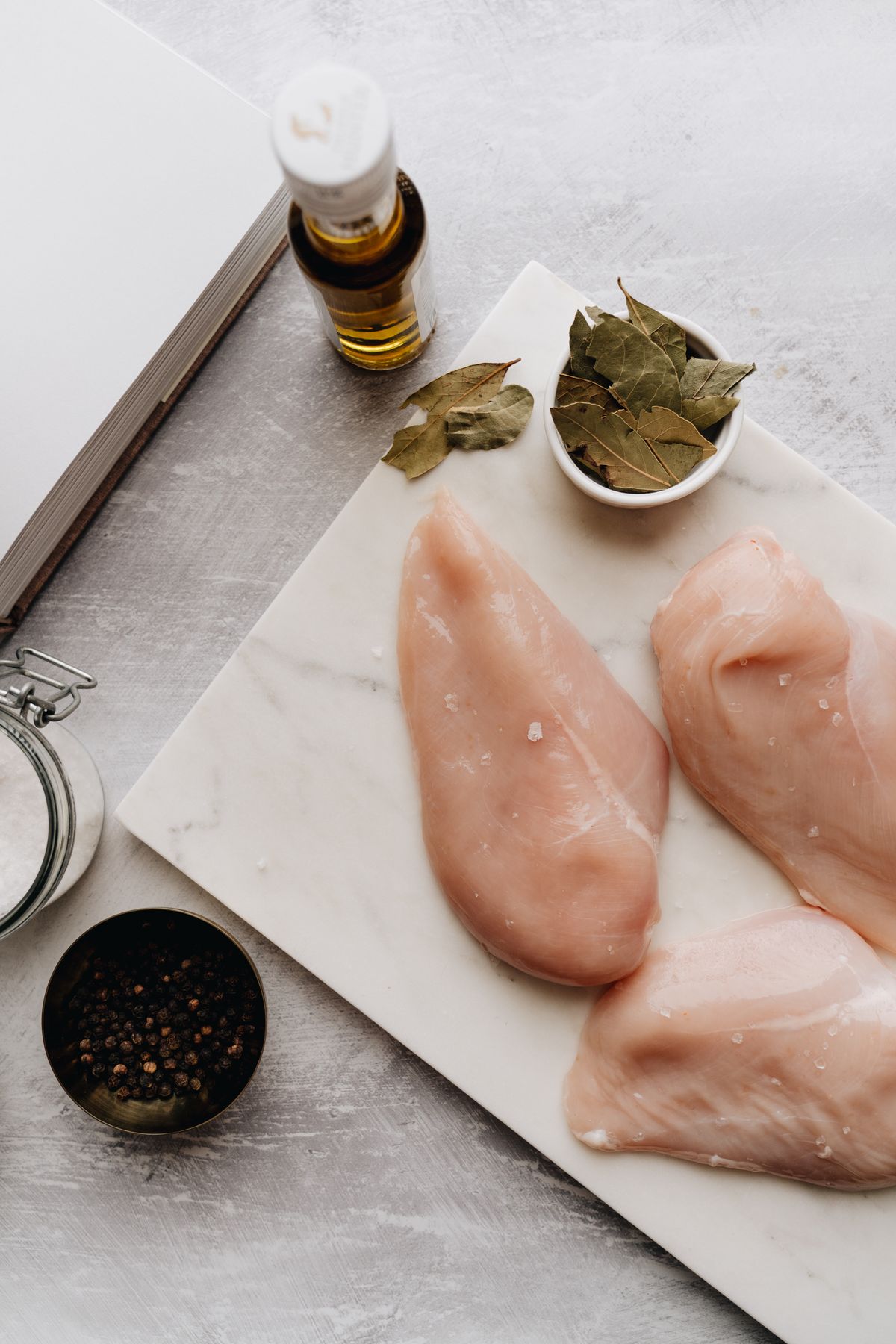
Salt the chicken at least 30 minutes before cooking, or up to a day ahead in the refrigerator. Salt improves seasoning and helps the meat retain moisture. A practical starting point is about 3/4 teaspoon Diamond Crystal kosher salt per pound, or less when using denser table salt.
Use moderate heat after browning
High heat is useful for color, but it should not remain high for the entire cook. Sear the first side, reduce the heat, flip, and finish gently.
Rest briefly
Rest a breast for five minutes. The temperature becomes more even and juices are less likely to run onto the board. Resting does not repair overcooked meat, but it improves a properly cooked piece.
Pan-seared chicken breast method
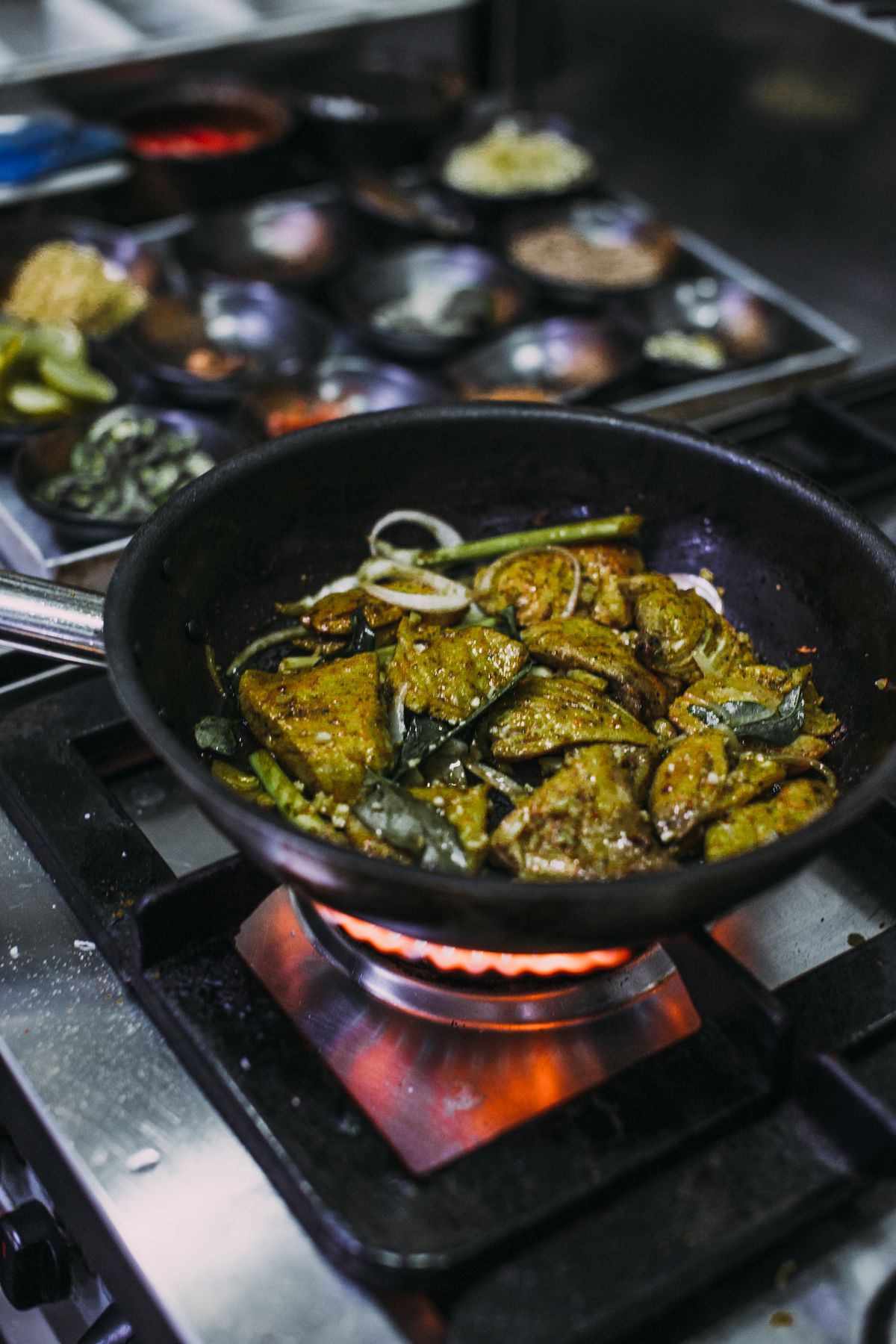
- Pound two breasts to an even thickness.
- Salt 30 minutes ahead and pat dry.
- Heat a thin film of oil in a heavy skillet over medium-high heat.
- Add chicken and cook without moving until browned, about three minutes.
- Flip, reduce heat to medium-low, and continue cooking.
- Begin checking early. Remove the chicken when carryover is likely to bring the coldest point to 165°F.
- Rest five minutes and verify the final temperature.
The exact minute count changes with thickness, pan material, starting temperature, and burner strength. A thermometer replaces the false precision of a universal time chart.
Roasting chicken without drying it out
For bone-in breasts or a whole bird, roast hot enough to brown the skin—around 425°F is a useful starting point—but monitor the breast early.
A whole chicken cooks more evenly when:
- It is spatchcocked so breast and legs lie on the same plane.
- The legs face the hotter rear or sides of the oven.
- The breast is not placed directly over a scorching pan surface.
- Temperature is checked in several locations.
If the skin is pale when the meat is nearly done, use the broiler briefly rather than leaving the chicken in the oven for another 20 minutes.
Why “clear juices” is a poor test
Juice color depends on pigments, age, freezing, bone structure, and cooking method. It cannot tell you whether the coldest part of the meat reached a safe temperature.
The same is true of cutting into the center. A visual check loses heat and juices but still provides no precise temperature.
Carryover cooking: useful but easy to misuse
Large pieces continue warming after they leave the oven because heat moves from the hot exterior toward the cooler center. Thin cutlets have very little carryover. A whole roast chicken can rise several degrees.
Do not assume a fixed five- or ten-degree increase. Measure it in your own kitchen:
- Record the temperature when the chicken leaves the heat.
- Check again after two minutes.
- Check at the end of the rest.
After a few cooks, you will know how much carryover your preferred method actually produces.
What to do with chicken thighs
Thighs are more forgiving than breasts. Cook them until safe, then continue if needed until a probe slides in with little resistance and the connective tissue has softened.
For crisp skin, start skin-side down in a skillet and render slowly. For boneless thighs, use medium-high heat and let the surface brown deeply before turning.
Food-safety habits that matter beyond temperature
- Wash hands after handling raw poultry.
- Do not wash raw chicken in the sink; splashing can spread contamination.
- Keep raw poultry and its utensils away from ready-to-eat food.
- Refrigerate cooked chicken within two hours, or within one hour when the surrounding temperature is above 90°F.
- Store leftovers in shallow containers so they cool quickly.
Frequently asked questions
Can chicken be pink and still safe?
Yes. USDA notes that color is not a reliable indicator. Temperature is the test.
Why is my chicken dry at 165°F?
It may have spent too long above 165°F, or the thermometer may have been placed in a cooler spot while thinner areas overcooked. Even thickness and earlier checking help.
Should chicken be room temperature before cooking?
It does not need to sit out for a long period. A short temper while the pan heats may reduce the chill, but food-safety rules still apply. Even thickness matters more than reaching room temperature.
Is a leave-in probe useful for chicken breast?
Yes, especially in the oven. Position it in the thickest part and confirm the reading with an instant-read thermometer in another location.


