For most home parties, choose a glass pitcher for groups of roughly six to eight people and a drink dispenser for a larger, self-serve crowd. A pitcher is easier to chill, stir, carry, refill, and clean. A dispenser reduces the host’s pouring workload, holds more liquid, and gives guests a clear place to serve themselves.
The practical difference in the glass pitcher vs drink dispenser decision is not appearance. It is how the drink behaves once guests arrive. A pretty punch with berries, muddled herbs, or loose citrus slices is usually more dependable in a pitcher or bowl. A filtered batch cocktail, lemonade, iced tea, or water is often well suited to a dispenser.
The quick decision
| Choose a glass pitcher when… | Choose a drink dispenser when… |
|---|---|
| You are serving a small group. | You expect a steady flow of guests. |
| You need to stir, taste, or adjust the drink during the party. | You want guests to pour their own drinks. |
| The drink contains ice, fruit, berries, herbs, or pulp. | The drink is strained or has only large garnish pieces. |
| Refrigerator space is limited. | You have a stable drinks station and enough counter or table space. |
| You may need to move the drink between kitchen, table, and patio. | The container can stay in one place for the event. |
If you are uncertain, start with two pitchers rather than one large dispenser. Two vessels let you keep a chilled backup batch in the refrigerator, refresh ice without diluting the entire supply, and avoid depending on a spigot.
Why a glass pitcher is often the easier choice
A glass pitcher for batch cocktails is the low-fuss option. It is built for active serving: add ice, stir, taste, pour, and return it to the refrigerator. That makes it especially useful for dinner parties, small patios, and gatherings where the host is serving drinks rather than setting out a self-service bar.
Pitchers also handle ingredients that can cause trouble in a dispenser. Floating berries, chopped herbs, pulp, and small bits of citrus can collect around a spigot. Testing cited by Food & Wine notes that smaller fruit can clog a spigot, while larger citrus pieces and herb sprigs tend to be less problematic. Even so, a pitcher is more forgiving when the drink includes visible garnish.
A pitcher has limits. It must be refilled more often, and guests may create a small queue if everyone wants the same drink. It is also less useful for a casual open-house format, where people arrive and serve themselves over several hours.
Best uses for a pitcher
- A stirred batch cocktail, such as a Negroni variation or a spirit-forward aperitif
- Sangria with lots of fruit, provided you serve it with a ladle or strainer nearby
- Lemonade, iced tea, or mocktails for a meal table
- A drink that needs fresh ice added in smaller rounds
- A party where the drink moves from kitchen to dining table
When a drink dispenser is worth the space
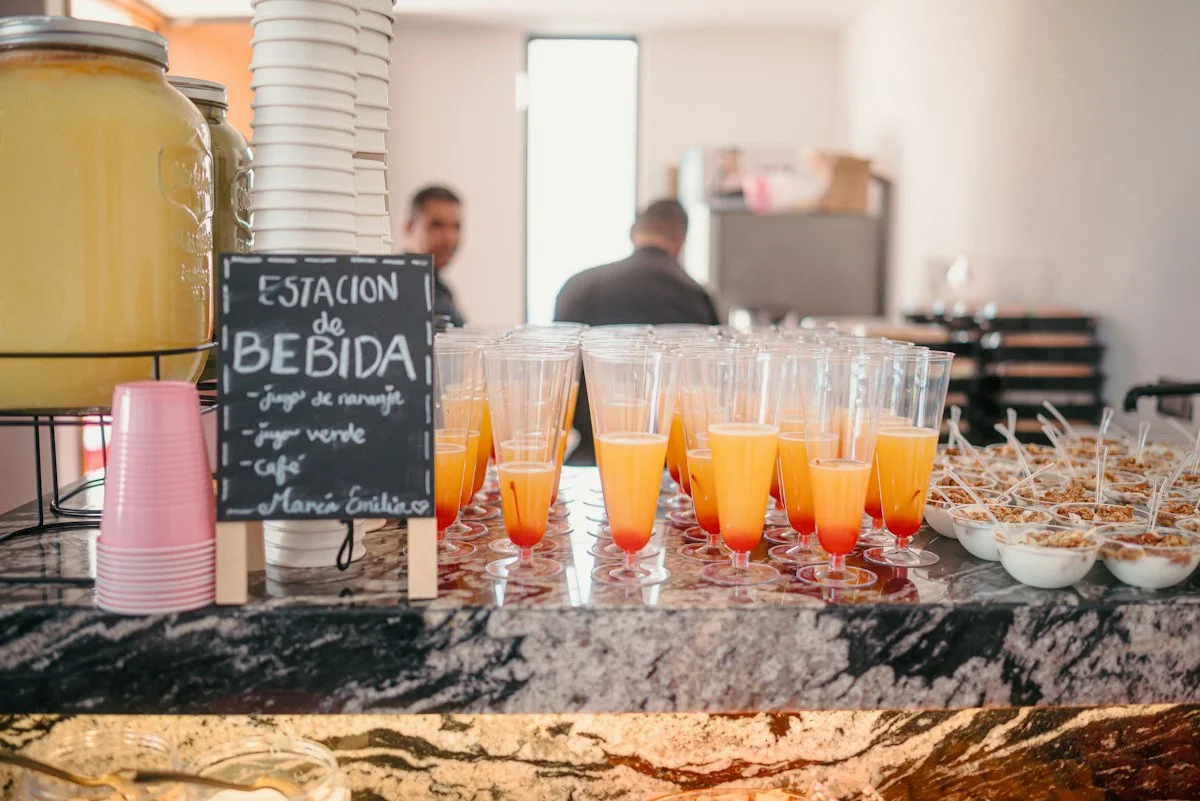
A drink dispenser for cocktails is useful when serving itself is the problem. At a buffet, shower, barbecue, or open-house party, a dispenser lets guests help themselves instead of waiting for the host to pour every glass. It also establishes a dedicated beverage station, which can keep traffic away from the kitchen.
Capacity is the main advantage. Some dispensers hold substantially more than a typical pitcher; for context, one model in Food & Wine’s dispenser guide holds 1.5 gallons. The right capacity depends on your menu, guest count, and whether the drink is the only non-water option, but a larger vessel can reduce mid-party refilling.
The tradeoff is that a dispenser is less flexible once filled. It is heavy, awkward to relocate, and not easy to fit into many refrigerators. Glass versions are particularly best treated as stationary. Restaurant Warehouse notes that glass does not absorb odors or flavors, but also points out its weight and breakage risk when full.
Best uses for a dispenser
- Filtered punch without small fruit pieces
- Lemonade, iced tea, and flavored water
- A pre-diluted, strained batch cocktail
- A clearly labeled nonalcoholic option at a larger gathering
- A party with a fixed indoor or outdoor drinks table
The spigot is the deciding detail
Do not choose a dispenser based on capacity alone. Its spigot determines whether it feels effortless or irritating.
A good spigot should pour smoothly, shut off cleanly, and sit high enough above the table that a guest can fit a glass underneath. A low spigot may leave a frustrating amount of drink behind at the bottom. A leaky one creates sticky rings, wet napkins, and a drink station that needs constant attention.
Southern Living’s dispenser testing emphasizes both drip-free performance and spigot placement. Before guests arrive, fill the dispenser with water and test it over a tray or sink. Check for drips after closing the valve, confirm that the flow is not weak, and make sure the vessel sits securely on its stand or table.
Keep a small towel or absorbent bar mat under the spigot regardless. It is an easy precaution, especially with sweet drinks.
Ice, garnish, and dilution
Neither container automatically keeps a drink cold. A dispenser’s larger volume may stay cool for longer than a small pitcher, but it can also become diluted if you fill the entire vessel with loose ice. A pitcher may warm faster, yet it is easier to refresh with a new cold batch.
For both options, chill the batch before serving whenever possible. Then decide whether ice belongs in the vessel or in individual glasses.
Putting ice in guest glasses is usually the cleaner choice for batch cocktails. It keeps the base batch from becoming progressively weaker and lets guests choose their own level of chill. For lemonade, tea, water, and other forgiving drinks, ice in the vessel can be perfectly practical if you expect the drink to be served promptly.
Treat garnish separately from the liquid when using a dispenser. Put citrus wheels, mint, berries, or cucumber slices in a bowl beside the cups, or use only large pieces that cannot reach the spigot. This preserves the look without risking a blockage.
Refrigerator fit and refilling
A pitcher wins easily here. It can usually be chilled on a shelf, tucked behind food, or swapped for a cold backup. A tall dispenser may not fit at all, particularly once its lid and stand are included.
For a dispenser, make the drink in a separate container, chill it there, then fill the dispenser shortly before guests arrive. Keep extra chilled batch in covered bottles or pitchers in the refrigerator. Refill the dispenser before it is completely empty rather than trying to mix a new batch into the last few servings.
That approach also gives you a chance to check the spigot, wipe the station, and replace garnish without interrupting the party.
A simple setup for each party size
Dinner or drinks for 4 to 8
Use one or two glass pitchers. Serve cocktails from one pitcher and water or a nonalcoholic drink from another. Keep extra chilled batch in the refrigerator. This setup is compact, easy to manage, and better for drinks that need stirring.
Casual gathering for 8 to 15
Use a dispenser for water, lemonade, tea, or one strained house drink. Set out a pitcher of a second option, especially if it contains fruit or herbs. This avoids putting every beverage decision on one spigot.
Open house, shower, barbecue, or buffet
Use a dispenser only if it has a stable base, a tested spigot, and a drink that will not clog it. Keep a separate pitcher or bottle of plain water nearby. For outdoor events, place the station in a shaded, steady area and use a lid when the dispenser has one.
Cleanup and storage
A pitcher is generally simpler to wash because it has no valve, gasket, or narrow spigot channel. A dispenser needs more attention: empty it fully, rinse promptly, and clean the spigot according to the maker’s instructions. Sweet drinks and pulp are reasons not to leave the vessel until the next day.
If you use a glass dispenser, avoid moving it when full. Set it in its final location first, then fill it. A full dispenser is heavy, and a stable, level table matters. If portability is important, a lighter non-glass dispenser may be more practical, though plastic can be more prone to staining or retaining odors over time, as Southern Living notes.
Bottom line
Choose a glass pitcher when you value control, refrigerator flexibility, and easy cleanup. It is the better all-around vessel for batch cocktails, drinks with loose garnish, and smaller gatherings.
Choose a drink dispenser when self-service matters more than flexibility. It is the best container for party punch, lemonade, tea, water, and strained cocktails at larger gatherings—so long as the spigot is reliable, the drink is properly chilled, and small garnish pieces stay out of the valve.