
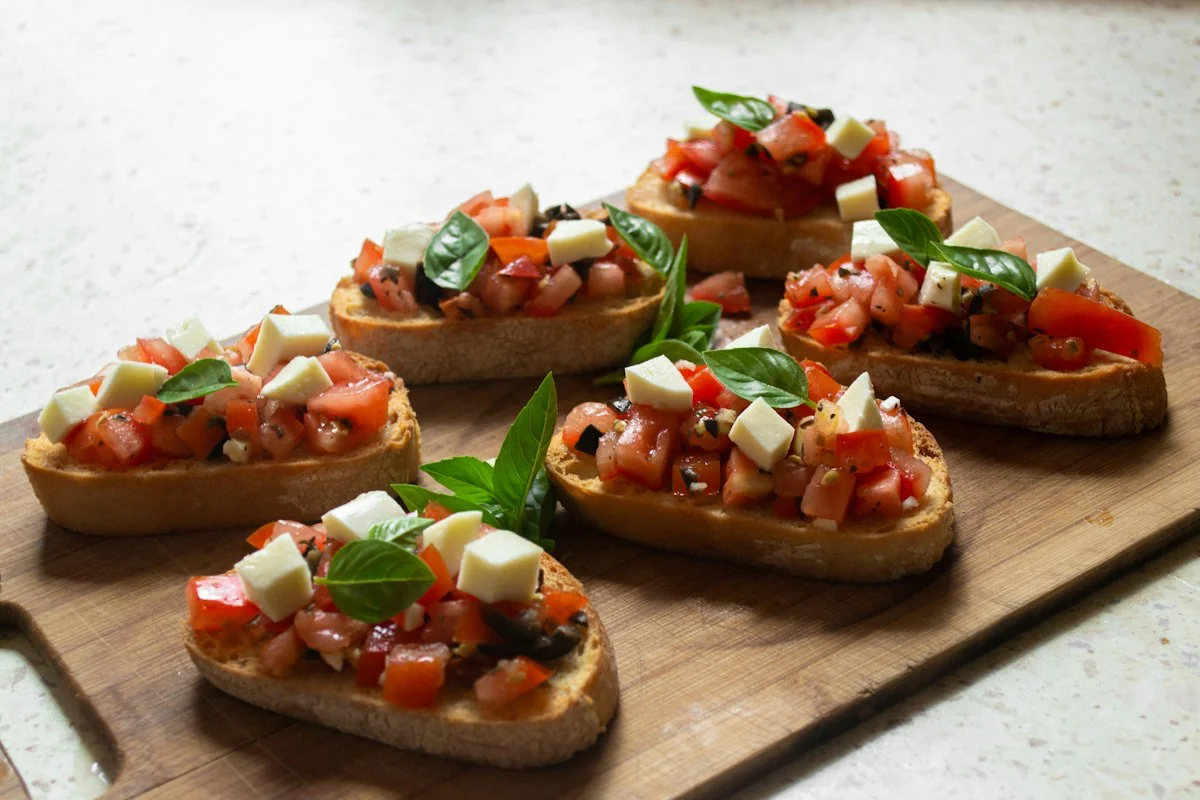
Tomato bruschetta for a crowd works best when you treat it as a two-part appetizer: crisp garlic toast in one serving vessel, juicy tomato topping in another. The bread stays crisp because it never sits under the tomatoes, and guests can spoon on as much topping as they like.
The essential move is to salt and drain the tomatoes before mixing them with oil, basil, and garlic. Then toast the bread until it is dry and crisp at the center, not merely browned at the edges. Assemble only a few pieces at a time if you prefer a plated look, or make it a simple bruschetta bar for a cocktail party.
The no-soggy method
Tomatoes release liquid once cut and salted. That liquid is flavorful, but it is what softens toast. Rather than trying to solve the problem with extra-crusty bread alone, manage the moisture before it reaches the bread.
- Cut the tomatoes and salt them lightly.
- Let them drain in a colander or fine sieve set over a bowl.
- Mix the drained tomatoes with olive oil, basil, garlic, and seasoning shortly before serving.
- Keep the topping and toast separate until guests arrive.
- Refill the serving platter in small batches rather than putting out every assembled piece at once.
This approach also makes hosting easier. You do not need to assemble dozens of individual bites while guests are walking in, and the last piece on the table is as crisp as the first.
Tomato bruschetta for a crowd
Yield
Plan on about 2 to 3 small pieces per guest when bruschetta is one of several appetizers. For a party where it is the main savory snack, allow more. One narrow baguette generally produces roughly 18 to 24 small slices, depending on its size and how thickly it is cut.
For approximately 12 guests as part of a larger spread, prepare:
- 4 narrow baguettes
- About 3 pounds ripe tomatoes, preferably firm, flavorful tomatoes with relatively low water content
- 1 small red onion or a few shallots, finely diced, optional
- 1 generous handful fresh basil, thinly sliced
- 2 to 4 garlic cloves
- Extra-virgin olive oil
- Kosher salt and black pepper
- Balsamic vinegar or balsamic glaze, optional
The exact tomato quantity matters less than the serving ratio: aim for a spoonful of topping that sits on the toast rather than spills over it. Overloading each slice is a fast route to sogginess and messy cocktail napkins.
Equipment
- Two sheet pans, or more if your oven allows
- Fine-mesh sieve or colander
- Large bowl
- Serrated knife
- Pastry brush or spoon for oil
- Wide serving bowl for the topping
- Baskets, platters, or boards for the toast
Method
1. Cut, salt, and drain the tomatoes
Core the tomatoes and dice them into small, even pieces. If the tomatoes are especially seedy or watery, remove some of the seeds and pulp before dicing. Transfer the tomatoes to a sieve or colander over a bowl and season lightly with salt.
Leave them to drain while you prepare the bread. Stir once or twice so the liquid can escape. Do not press the tomatoes hard; you want to remove excess water, not turn them into pulp.
2. Toast the bread in batches
Heat the oven to a moderate-high setting suitable for toasting bread. Slice the baguettes on a slight diagonal, around finger-width thick. Slices that are too thin can become brittle; slices that are too thick can be difficult to eat standing up.
Arrange the slices in a single layer on sheet pans. Brush or drizzle lightly with olive oil. Toast, turning if needed, until the bread is golden, dry, and crisp through the center.
For a larger party, work in batches and transfer cooled toast to a clean basket or tray. Avoid stacking hot bread tightly, which can trap steam and soften it.
3. Season the toast with garlic
While the bread is still warm, cut one garlic clove in half and rub the cut side lightly over each toast. This gives the bread a clear garlic aroma without making the tomato mixture aggressively garlicky.
If you are making a large amount, rub a sample slice first. Garlic strength varies, and a lighter touch is usually better for a crowd.
4. Finish the topping close to serving
Transfer the drained tomatoes to a bowl. Add the basil, optional onion, a small amount of finely minced garlic if desired, olive oil, pepper, and more salt only as needed. Taste before adding vinegar or balsamic glaze; ripe tomatoes may need little more than oil, salt, and basil.
Keep the finished topping chilled until serving if your kitchen is warm. For storage and holding guidance, follow current food-safety advice from an official local public-health or food-safety source, especially when preparing food well ahead or serving outdoors.
Make-ahead bruschetta timeline
Earlier in the day
- Dice and drain the tomatoes.
- Slice the bread.
- Wash and dry the basil.
- Set out serving bowls, spoons, napkins, and trays.
Before guests arrive
- Toast the bread and let it cool without trapping steam.
- Rub the toast with garlic.
- Mix and taste the tomato topping.
- Keep topping and toast separate.
At serving time
- Put out a portion of the toast and one bowl of topping with a spoon.
- Refill the toast as needed.
- If you want some ready-to-eat pieces, assemble only enough for the first round.
How to keep bruschetta from getting soggy: common mistakes
Mixing in tomatoes that have not drained
Fresh tomatoes are naturally juicy. Salting and draining them first is the most useful preparation step for a party-sized batch.
Toasting bread too lightly
A pale slice may look toasted but still have a soft center. Bruschetta needs a dry, sturdy surface that can handle olive oil and tomato juices for a few minutes.
Assembling the full platter too early
Even well-drained topping eventually softens bread. Pre-assemble only when the platter will be served immediately.
Adding too much oil or balsamic glaze
Olive oil adds richness, and balsamic can add contrast, but both contribute moisture. Use a light hand and let the tomato flavor remain central.
Chopping basil far ahead
Basil darkens and loses its fresh aroma when cut too early. Slice it shortly before mixing the topping when possible.
Bruschetta bar ideas
A build-your-own station is the most practical format for a cocktail party. Put the tomato mixture in a shallow bowl with a slotted spoon, which helps guests leave excess liquid behind. Place the toast nearby, along with a few restrained additions.
Good options include:
- Fresh mozzarella or burrata, served separately
- Shaved Parmesan
- Ricotta with lemon zest
- White beans dressed with olive oil and herbs
- Marinated olives
- Roasted peppers
- Prosciutto or salami on a separate board
- Balsamic glaze in a small squeeze bottle
Keep the choices limited. The point of a bruschetta bar is flexibility, not a crowded buffet. One tomato topping, one creamy element, one salty element, and one finishing condiment is usually enough.
A final serving note
Bruschetta is at its best when the toast is warm or room temperature, the tomatoes are fresh and well seasoned, and each bite is assembled close to eating. For a crowd, separation is not a compromise; it is the method that protects the texture everyone expects.


