
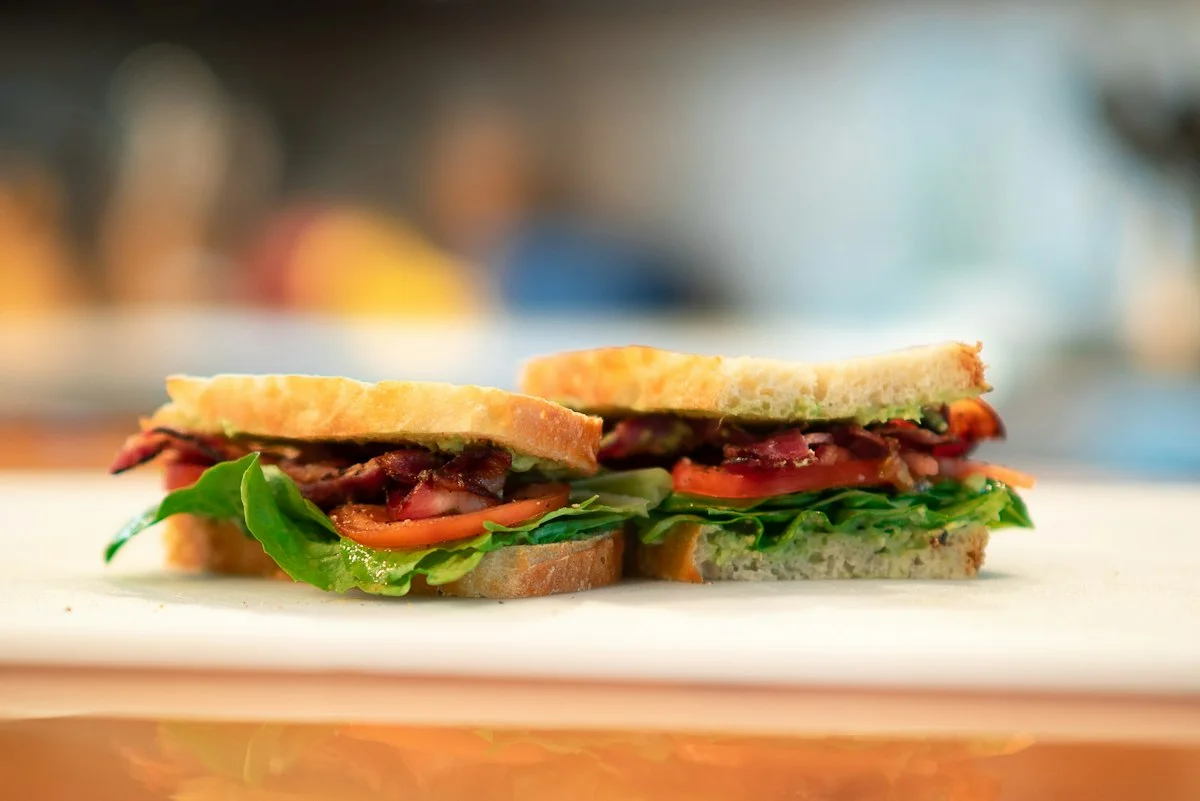
A BLT bar for a party works best when it is treated as a small assembly line, not a fully styled grazing board. Cook the bacon in advance, put out bread and produce in modest batches, keep condiments easy to reach, and let guests build their own sandwiches. The result is faster than assembling individual BLTs, and it avoids the two usual problems: cold, limp bacon and soggy bread.
For planning, a useful starting point is three strips of bacon per guest, a guideline also used by Bon Appétit for a BLT party. Saveur suggests planning roughly one-third to one-half pound of bacon, one-third loaf of bread, two-thirds of a tomato, and one-seventh of a head of lettuce per person. Those figures are best used as a range rather than a rigid formula: appetite, side dishes, bacon thickness, and the size of the bread all matter.
Start with the essential BLT bar
A good build-your-own BLT bar does not need a dozen novelty toppings. The classic components should be abundant, clearly arranged, and in good condition.
Bacon
Choose regular or thick-cut bacon based on the kind of sandwich you want. Regular bacon is easier to layer and tends to make neater sandwiches. Thick-cut bacon gives a more substantial result but can overwhelm soft bread or make a sandwich difficult to bite through.
For a party, oven cooking is the practical method. It allows you to cook many strips at once and gives the bacon space to render and crisp evenly. Cook it close enough to serving that it is still appealing, then hold back part of the batch for replenishing the table rather than putting every strip out at once.
After cooking, drain bacon on a rack or paper-lined tray as appropriate, rather than piling it in a deep bowl where steam can soften it. Break or cut strips only if you are serving smaller sandwiches; otherwise, guests can decide how much to use.
Bread
Use bread with enough structure to hold juicy tomato and mayonnaise without falling apart. Sourdough, country white, sturdy sandwich bread, brioche-style bread, and soft rolls can all work.
Offer one main bread choice unless you know guests need an alternative. A second option can be useful for dietary needs, but too many breads slow the line and leave partial loaves drying out.
Toast only what you can replenish. Warm toast is pleasant, but a large stack left out too early loses its texture. If you have a toaster that can safely sit near the serving area and be supervised, it can be part of the station. Otherwise, toast bread in batches shortly before guests eat and set out fresh slices as needed.
Lettuce
Choose a crisp lettuce that will not collapse under tomato juices. Romaine, Little Gem, Boston lettuce, and iceberg are all workable options. Wash and dry leaves thoroughly, then keep them whole or tear them into sandwich-sized pieces. Wet lettuce is a direct route to soggy bread, so dry it carefully before arranging it on a platter.
Tomatoes
Use ripe but firm tomatoes. Slice them shortly before service, season them lightly if you like, and place them in a shallow dish so guests can lift a slice without fishing through accumulated juice.
Avoid cutting all tomatoes far ahead of the party. Instead, prepare a first platter and keep additional tomatoes ready for a later refill. This makes the bar look better and keeps the bread station from becoming damp.
Mayonnaise and basic seasoning
Mayonnaise belongs near the bread, with a serving spoon, spreader, or squeeze bottle for easy use. Set out black pepper and a small bowl of flaky or kosher salt if desired. Salt is especially helpful for tomato lovers, but use it lightly: salted tomatoes release more juice as they sit.
How much bacon for a BLT bar
The bacon is usually the limiting ingredient, so plan it first. Three strips per guest is a sensible baseline for standard BLTs. Move toward the higher end of Saveur’s one-third- to one-half-pound-per-person range when BLTs are the full meal, your crowd has hearty appetites, or you expect people to build extra-large sandwiches.
Use the rest of the menu to judge whether you need more. A BLT bar with substantial sides, such as potato salad, corn, fruit, or a bean salad, can require less bacon than a lunch or dinner built around sandwiches alone. If the table includes several breads and numerous toppings, do not assume they will replace bacon; guests generally still expect a BLT to contain enough bacon to taste like one.
Bread is harder to calculate by loaf because loaf size varies so much. Saveur’s one-third-loaf guideline is a useful starting point, but count slices when shopping. Make sure there is enough bread for the number of sandwiches you expect guests to make, plus a modest reserve for torn slices, seconds, and guests who prefer open-faced sandwiches.
BLT party toppings worth offering
Keep optional toppings to a short, intentional list. A crowded table creates indecision and makes the classic sandwich less appealing.
Good BLT party toppings include:
- Avocado slices or mashed avocado
- Thinly sliced red onion
- Pickled onions
- Dill pickles or cornichons
- Jalapeño slices
- Fresh basil
- Arugula
- Sliced cucumber
- Sharp cheddar or pepper jack
- Lemon-herb mayonnaise
- Sriracha mayonnaise
- Dijon mustard
- Hot sauce
Avocado is the most useful addition because it adds richness without changing the BLT’s basic character. Pickled onions and jalapeños provide contrast, but serve them in small bowls with separate utensils so their liquid does not spread across the bar.
If you are serving vegetarians, a separate platter of meat-free fillings is more useful than simply leaving off the bacon. Consider roasted mushrooms, sliced avocado, cheese, marinated tempeh, or a plant-based bacon alternative. Keep vegetarian items and their utensils separate from the bacon tray.
Set up the table in the order people build
Arrange the station from left to right, or in the direction guests naturally approach it:
- Plates and napkins
- Bread and toaster access, if using one
- Mayonnaise, mustard, and spreaders
- Lettuce and tomatoes
- Bacon
- Optional toppings
- Salt, pepper, hot sauce, and extra napkins
Put bacon after the produce. This encourages guests to build the sandwich in a sensible order and prevents a cluster around the first, most popular item. Keep backup trays in the kitchen and replenish rather than overfilling every platter at the start.
Use tongs for bacon, lettuce, and tomato. Spoons work better for spreads and wet toppings. Give guests enough room to set down a plate while assembling; a narrow counter crowded with bowls creates more bottlenecks than a slightly longer, simpler table.
A practical bacon timeline
Before guests arrive
Wash and dry lettuce, prepare spreads, slice onions or other dry toppings, and set out serving dishes. Keep perishable ingredients appropriately chilled until it is time to serve. Check official local food-safety guidance for current handling and holding recommendations, especially if food will sit outdoors or in a warm room.
Closer to serving
Cook the first bacon batch in the oven. Slice tomatoes, toast an initial batch of bread if desired, and arrange only enough ingredients for the first wave of guests.
During the party
Replace bacon, tomatoes, lettuce, and bread in smaller rounds. This is more effective than trying to keep one large platter perfect for hours. Remove empty or messy dishes, wipe drips around the tomato station, and bring out clean serving utensils if needed.
Common BLT bar mistakes
Putting all the bacon out at once. A deep pile traps steam and loses crispness. Replenish smaller trays instead.
Pre-assembling sandwiches. Tomatoes and mayonnaise soften bread quickly. The whole advantage of a BLT bar is that guests can assemble immediately before eating.
Using wet lettuce. Dry leaves provide crunch and protect the bread from tomato moisture.
Offering too many toppings. A few strong additions are enough. The main table should still read as bacon, lettuce, tomato, bread, and mayo.
Skipping a backup plan for bread. Keep extra unopened loaves or covered slices ready. Bread disappears faster than expected when guests make seconds or sample multiple combinations.
A BLT bar is most successful when the host focuses on freshness and flow rather than elaborate choices. Good bacon, sturdy bread, crisp lettuce, ripe tomatoes, and regular replenishing are more important than decorative extras.


