
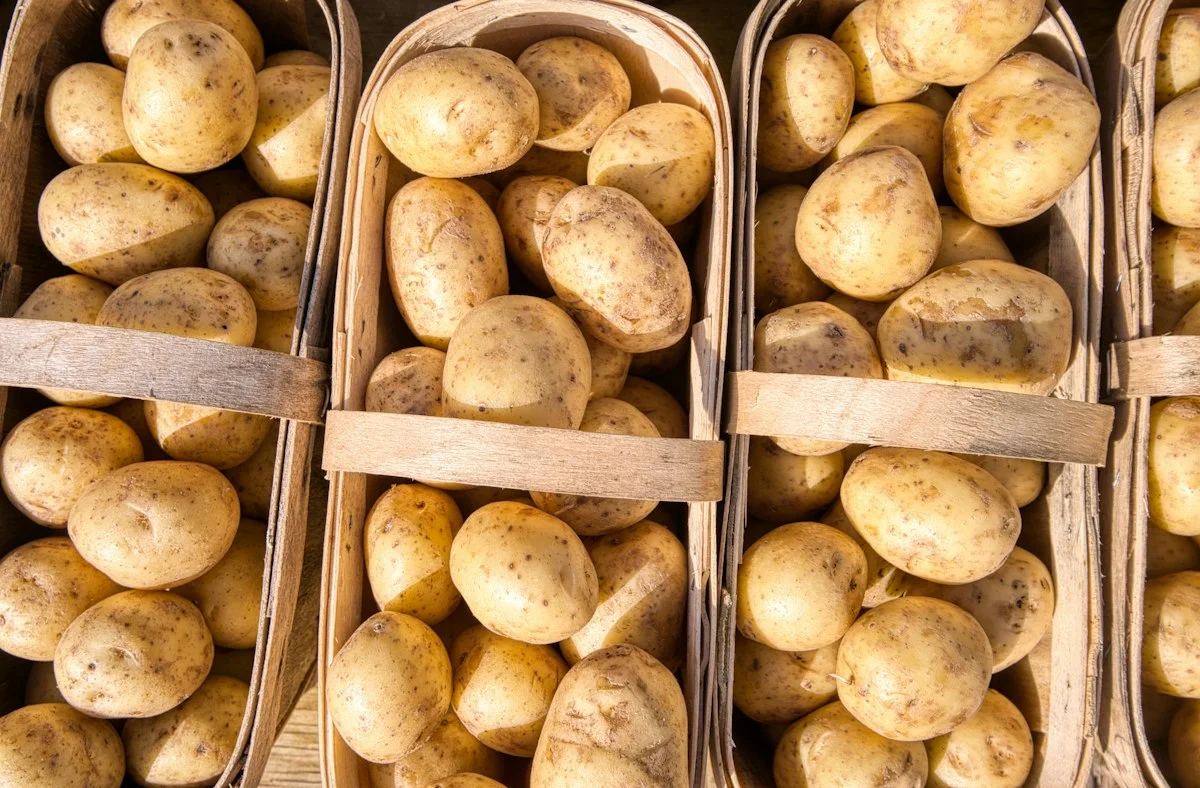
The single most important rule for how to store onions and potatoes is simple: keep them apart. Onions release ethylene gas, and when potatoes are exposed to it, they sprout faster and shrivel. Research from the USDA ARS shows that ethylene can shorten potato dormancy by nearly 50% (source). The second rule is environment — both vegetables need cool, dark, and ventilated conditions, but their ideal temperatures differ slightly. Here’s how to get it right without fuss.
Why Separate Storage Matters
Onions emit ethylene at a rate of about 1.8 μL/kg·hr (source). When stored side by side with potatoes, that gas triggers early sprouting and weight loss. The University of California Davis Postharvest Research and Extension Center notes that even low levels of external ethylene can cause potatoes to shrivel, while high concentrations may force sprouting (source). Since most commercial potatoes are already treated with sprout inhibitors at the farm, home storage conditions matter even more for the organic ones you buy from the farmers market.
Moisture is another issue. Onions and potatoes release different amounts of humidity. Mixing them in the same bin creates microclimates that encourage rot. The solution: give each its own space, ideally at least six feet apart if you have the room.
The Best Way to Store Potatoes
Potatoes keep longest in a cool, dark, dry place with good airflow. The sweet spot is 45–50°F (7–10°C) — a basement or unheated pantry often works better than a warm kitchen cabinet. Avoid the refrigerator: the cold converts starch into sugar, giving potatoes an off sweetness and causing them to darken when cooked.
Containers – Use paper bags, burlap sacks, or wire baskets. Plastic bags trap moisture and accelerate rot. A cardboard box with holes poked in the sides is fine too. The goal is breathability.
Light – Darkness is critical. Light triggers greening, which indicates the formation of solanine, a toxic alkaloid. If you see green patches, cut them off generously before cooking. Small, firm white sprouts (under 5 mm) can be removed along with half an inch of surrounding flesh; discard potatoes with long green sprouts or rubbery texture.
Don’t wash before storing – Moisture invites mold and bacteria. Brush off loose dirt, but keep potatoes dry until you’re ready to use them.
Check regularly – One rotten potato can spoil a whole batch. Inspect every week and remove any that are soft, sprouted, or showing signs of decay.
The Best Way to Store Onions
Whole onions prefer slightly warmer and drier conditions than potatoes: 55–60°F (13–16°C) and low humidity. A pantry shelf or a mesh bag hung in a dry corner works well.
Containers – Mesh bags, net produce bags, or open baskets. Avoid closed plastic or sealed containers. Onions need air circulation to stay firm. If you use a bin, spread them in a single layer so bulbs don’t touch each other.
Location – Keep onions away from potatoes, as mentioned, and also away from fruit. Apples and pears produce ethylene too, which can shorten onion shelf life. A cabinet near the stove is too warm; under the sink is too humid.
Cut or peeled onions – Once you cut into an onion, refrigerate the unused portion in an airtight container or wrapped tightly in plastic. Use within a few days. Green onions (scallions) store well upright in a glass with an inch of water, with a loose plastic bag over the tops.
Curing homegrown onions – If you grow your own, cure them before storage. Brush off soil, leave roots intact, cut tops to one inch, and spread bulbs in a warm, dry, ventilated spot for three weeks. This hardens the skins and prevents rot.
Common Mistakes to Avoid
- Storing together – Already covered, but it’s the most common error. Keep them in separate bins, drawers, or shelves.
- Using plastic bags – They trap moisture and cause mold. Switch to paper or mesh.
- Storing under the sink – The humidity from pipes and cleaning supplies accelerates spoilage.
- Stacking too deep – Several layers of potatoes or onions can bruise the ones at the bottom and cut off airflow. Keep piles shallow.
- Neglecting inspections – A single soft onion can infect its neighbors. Remove any that smell off or feel damp.
FAQ
Can I store onions and potatoes together if I don’t have much space?
It’s not recommended. If you have no choice, at least place them in separate breathable containers and put an open box of baking soda nearby to absorb some ethylene. But the best practice is to keep them apart.
Is it safe to eat sprouted potatoes?
If the sprouts are small (under 5 mm), firm, and white, and the potato has no green patches or bitterness, you can remove the sprouts plus a half inch of surrounding tissue. Discard any potato with elongated green sprouts, rubbery texture, or a bitter taste — these indicate elevated glycoalkaloid levels.
Should I refrigerate potatoes in summer?
If your pantry gets above 60°F in hot months, you may need to move potatoes to the fridge for short periods. Expect some flavor change due to sugar conversion, but it’s better than rapid spoilage. Use them sooner.
How long do onions and potatoes last with proper storage?
Onions: 2–3 months for cured storage onions, 1–2 weeks for cut onions in the fridge. Potatoes: 2–3 months at 45–50°F, less at room temperature.
Further Reading
- Should You Refrigerate Onions and Potatoes? The Ultimate Guide – AppliancesFirst
- Potato Storage Tips: Science-Backed Methods to Prevent Sprouting & Spoilage – Alibaba Life Tips
- How to Store Potatoes So They Last Longer – Serious Eats
- Long Term Storage of Your SFG Potatoes, Onions, Winter Squash – Square Foot Gardening


