
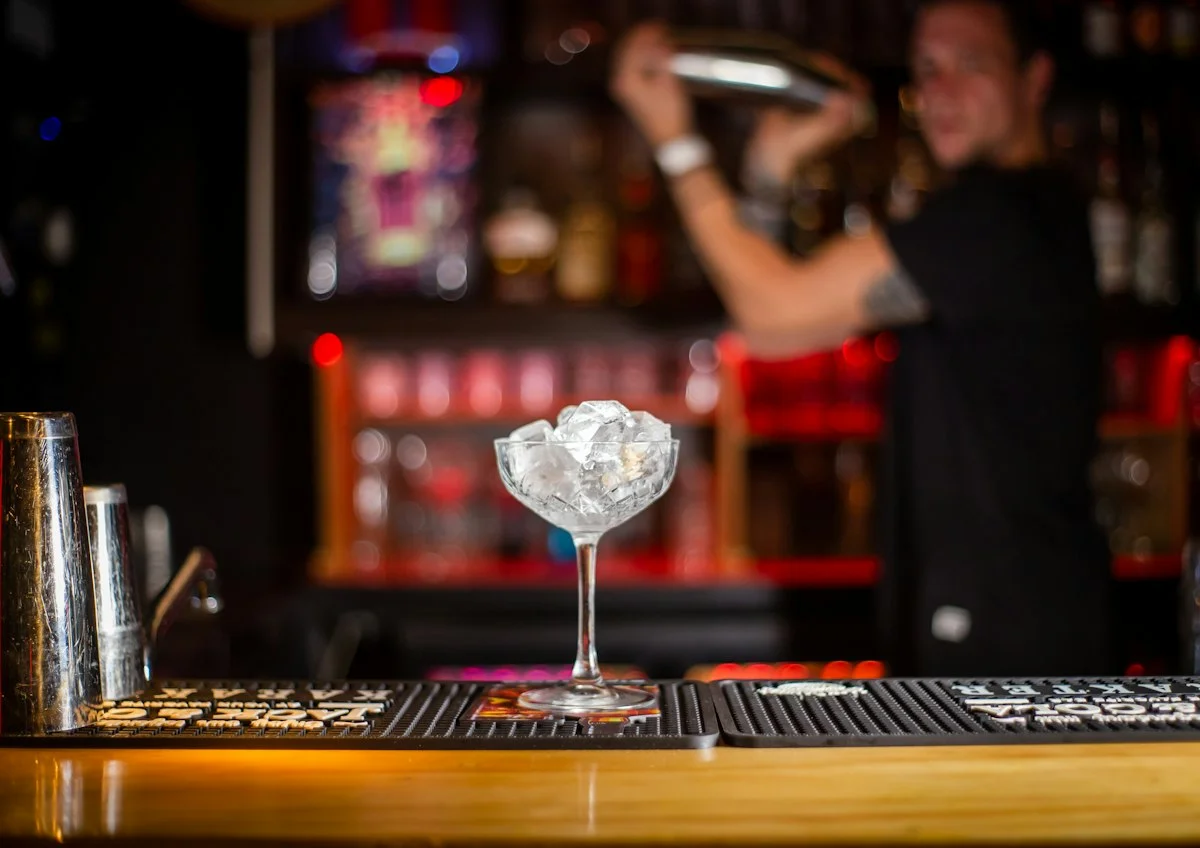
A mixing glass is the simplest tool for making clear, cold, properly diluted stirred cocktails at home. Add the ingredients, fill the glass generously with solid ice, stir smoothly with a bar spoon, then strain into a chilled serving glass. It is most useful for drinks such as a Martini, Manhattan, Negroni, Old Fashioned, and Boulevardier.
If you are deciding whether you need one, the practical answer is: a dedicated mixing glass is helpful, but not essential. A sturdy pint glass can work for occasional use. A purpose-made mixing glass is easier to hold, gives a spoon more room to move, and is usually better suited to a Julep strainer.
What a mixing glass does
A cocktail mixing glass chills and dilutes a drink without adding the air and froth created by shaking. That matters for cocktails made mostly with clear spirits and clear modifiers, where clarity and a smooth, silky texture are part of the finished drink.
Use a mixing glass when the recipe contains ingredients such as whiskey, gin, vodka, tequila, vermouth, bitters, liqueurs, and syrups that dissolve easily. Shake drinks containing citrus juice, cream, egg, fruit purée, or other ingredients that need vigorous mixing or aeration.
The distinction is not a rule for its own sake. It is a useful way to choose the texture you want:
- Stirred cocktails are clear, cold, and composed.
- Shaken cocktails are colder initially, more aerated, and often cloudy.
Choose the right mixing glass size
The best mixing glass size is one that holds a single cocktail and a generous amount of ice without crowding the rim. Ice needs room to move around the spoon; a vessel filled too tightly makes stirring awkward and can cause splashing.
For most home bars, choose a glass intended for one or two stirred drinks, depending on how you normally serve guests. Check the maker’s stated capacity rather than relying on appearance alone. A larger vessel is useful when making two drinks at once, but an oversized one can feel clumsy for a single drink.
Look for these practical details:
- A wide enough opening for a bar spoon and strainer.
- A stable, substantial base that is comfortable to hold.
- A pouring lip, if you prefer extra control when straining.
- Walls thick enough for regular kitchen use, without visible chips or cracks.
A mixing glass should not be filled to the brim. Leave enough headroom that the ice and liquid can circulate as you stir.
Can you use a pint glass instead?
Yes. A clean, sturdy pint glass is an acceptable substitute when you are learning or making drinks occasionally. It can hold the ingredients and ice, and it works with a Hawthorne strainer or, in many cases, a Julep strainer.
The tradeoff is convenience rather than cocktail quality. Pint glasses may be narrow at the base, less stable, or less comfortable to strain from than a proper mixing glass. Avoid using thin, damaged, or mismatched glassware for vigorous stirring.
How much ice to use in a mixing glass
Use more ice than seems necessary. Fill the mixing glass generously, ideally leaving only enough room to stir comfortably.
This may seem counterintuitive, but a full glass of cold, solid ice generally chills the drink efficiently and gives you more control than a small amount of ice does. Too little ice melts quickly, making dilution harder to manage. Small, wet, or already melting ice can also produce a watery drink before it is fully chilled.
For the cleanest result:
- Use fresh, solid ice from the freezer.
- Discard ice that is heavily cracked, wet, or sitting in melted water.
- Add the cocktail ingredients before or after the ice according to your preferred workflow, but avoid letting the finished drink sit unnecessarily before stirring.
- If the glass is warm from storage or a hot kitchen, briefly chill it first, then discard the chilling ice or water before building the cocktail.
Large, dense cubes are especially comfortable for stirring because they move predictably and shed fewer small fragments. Regular freezer cubes can still make good drinks if they are fresh and cold.
How to stir cocktails in a mixing glass
Good stirring is quiet and controlled. You are moving the liquid around the ice, not beating the ice into the drink.
The basic method
- Chill the serving glass. Put it in the freezer briefly, fill it with ice and water, or otherwise cool it before you begin.
- Build the cocktail in the mixing glass. Add spirits, vermouth, liqueurs, bitters, and other stir-friendly ingredients.
- Add plenty of ice. The ice should sit high in the glass while still leaving room for the spoon.
- Place the bar spoon against the inside wall. Keep the back of the spoon in light contact with the glass.
- Stir with a smooth, circular motion. Let your fingers and wrist do most of the work. The spoon should travel around the interior while the ice turns gently.
- Stop when the drink is thoroughly chilled and lightly diluted. The outside of the glass should feel very cold, and the drink should look integrated rather than separate or syrupy.
- Strain immediately into the chilled serving glass. Garnish only after straining, unless the recipe calls for a garnish expressed over the drink.
A long bar spoon helps because it reaches beneath the ice and gives you control without putting your hand close to the rim. A regular teaspoon can work in a pinch, though it is less comfortable and may not move cleanly around the glass.
The most common stirring mistakes
Stirring too aggressively. Fast, choppy stirring breaks ice and can create excess water and small chips. Slow down and keep the spoon close to the glass wall.
Using too little ice. A sparse handful melts quickly and leaves the drink less cold than it should be. Start with a generously filled vessel.
Letting the drink sit after stirring. Once the drink has reached its intended chill and dilution, strain it. Leaving it on the ice continues dilution.
Skipping the chilled serving glass. A room-temperature coupe or Nick and Nora glass warms a stirred drink quickly. Chill it while you prepare the cocktail.
Trying to stir a citrus drink. Stirring will not properly combine or aerate fresh citrus juice. Shake those recipes instead.
Which strainer works with a mixing glass?
A Julep strainer is the traditional and most natural choice for a mixing glass. It rests inside the vessel at an angle, above the ice, allowing the cocktail to pour while holding back cubes and most fragments. Keep it secure with a finger on the bowl or by using the handle for leverage, especially with a wider glass.
A Hawthorne strainer also works, particularly if you already own one for a shaker. Set it over the rim with the spring facing down toward the drink. Its coiled spring is useful for catching small pieces of ice.
For a very polished, clear serve, pour through your primary strainer and then through a small fine-mesh sieve. This double-straining step is optional for spirit-forward drinks but can remove tiny ice chips and botanical debris.
When to build a stirred drink in the serving glass
Some drinks are convenient to build directly in the glass they will be served in. An Old Fashioned or Negroni on the rocks can be stirred in its serving tumbler, particularly when you want fewer tools to wash.
The compromise is that the drink remains on the same ice used for stirring, so it keeps diluting as it sits. For a more controlled result, stir in a mixing glass and strain over fresh ice in the serving glass.
A simple first-use checklist
Before making your first stirred cocktail, set out:
- A mixing glass or sturdy pint glass
- A long bar spoon
- Fresh ice
- A Julep strainer or Hawthorne strainer
- A chilled serving glass
- A measured cocktail recipe
Once this setup becomes familiar, a mixing glass is not fussy equipment. It is simply a reliable way to control temperature, dilution, and clarity in the drinks that benefit from stirring.